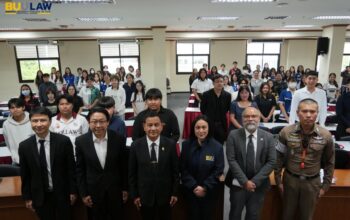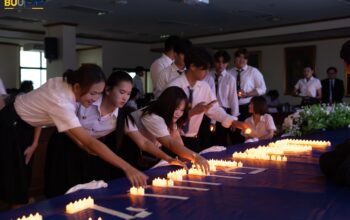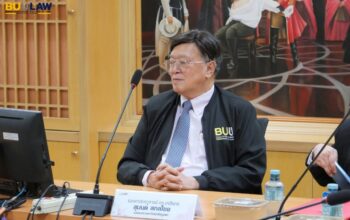
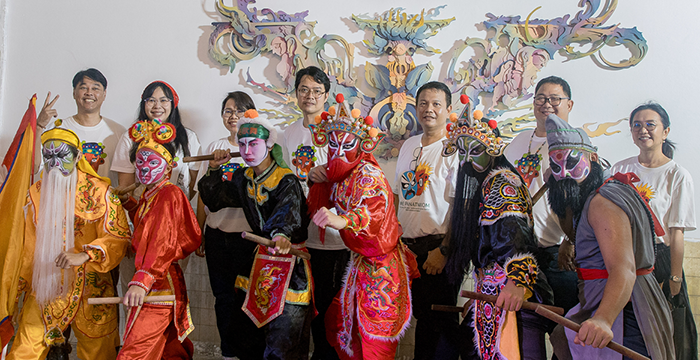
Phanat Nikhom Municipality in Chonburi Province is facing the challenge of becoming a “shrinking city” due to a rapidly aging population. The decreasing proportion of working-age residents has led to a slowdown in economic activity and a decline in quality of life. Despite the city’s strengths in cultural heritage and environmental management, it has struggled to engage younger generations in local development. A major issue is the lack of spaces that align with the lifestyles, creativity, and aspirations of young people. This led to the idea of transforming underutilized urban areas—such as the long-abandoned municipal slaughterhouse—into an “Innovative & Creative Space” for youth engagement and community development. The initiative places participatory processes at its core and incorporates local cultural assets, such as the unique “Eng Kor” art, to establish a contemporary urban identity. The project titled “Space Management for the Integrating Young Generation under the Participatory Approach of Phanat-Nikhom Municipal Development Area” was initiated through collaboration between Phanat Nikhom Municipality, Burapha University, and King Mongkut’s Institute of Technology Ladkrabang (KMITL), with research funding support from the Program Management Unit for Area-Based Development (PMU-A). It aims to create a model for youth-centered urban revitalization by encouraging the return and participation of young people in shaping the future of their city—economically, socially, and culturally. This initiative not only seeks to address immediate spatial and demographic challenges, but also to serve as a blueprint for other mid-sized cities in Thailand confronting similar issues in the context of demographic shifts and socio-economic transformation.
The aims
- To assess the potential of local spaces and cultural assets in Phanat Nikhom Municipality for developing creative spaces for young people 2. To renovate and transform an underutilized site (the old municipal slaughterhouse) into an innovative and creative space for youth engagement 3. To promote the participation of the young generation in urban design and collaborative city development planning 4. To establish a youth network and local development stakeholders for long-term participatory action in the community 5. To develop a strategic urban development plan and policy recommendations to address urban shrinkage in mid-sized cities 6. To create a model city that integrates local heritage, modern technology, and youth creativity through participatory approaches for improving the quality of life for all generations
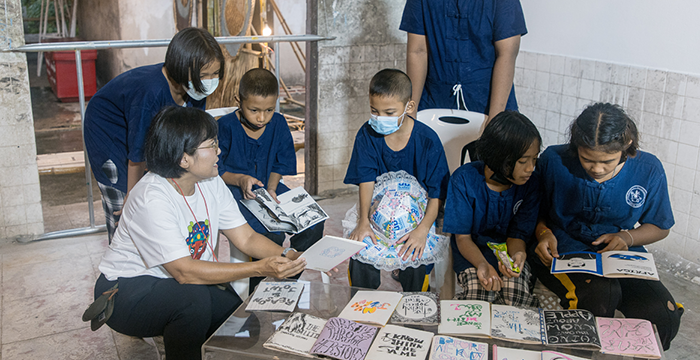
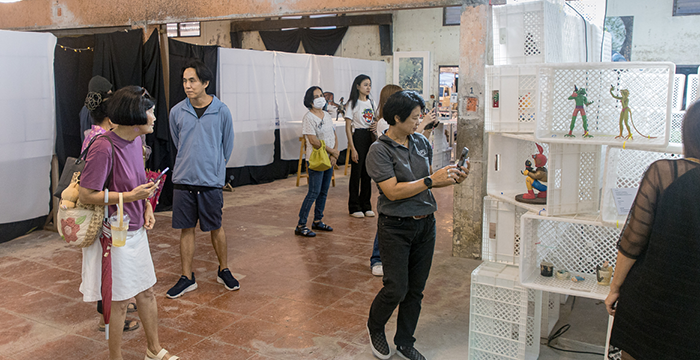
The project “Space Management for the Integrating Young Generation…” was implemented through a participatory approach. It began with field studies to assess the local context, focusing on young people’s perspectives on living, working, and thriving in Phanat Nikhom Municipality. Workshops and idea-sharing sessions were then conducted to co-design the transformation of an abandoned municipal slaughterhouse into a creative and inclusive space called “Innovative & Creative Spaces.” The site was divided into themed zones, including an art room, photo gallery, cinema room, stage performance room, and multimedia studio. Local youth played a key role in designing and curating each space. From May 23–25, 2025, the project hosted a showcase event titled “We Dream, We Share, We PANATINKOM”, allowing the public and local stakeholders to explore youth-led exhibits and creative works. The official opening ceremony took place on May 24. The entire initiative was supported by the Program Management Unit for Area-Based Development (PMU-A) and aimed to develop a model for revitalizing mid-sized cities through youth engagement and participatory urban development strategies.
Impacts:
- A creative space prototype was successfully established by transforming an abandoned slaughterhouse into an “Innovative & Creative Space” that supports youth expression, innovation, and community engagement. 2. Youth played a central role in urban development, actively participating in the design, curation, and implementation of activities—enhancing their sense of ownership and capacity to influence the city’s future. 3.A network of local youth and stakeholders was formed, fostering ongoing collaboration between the municipality, educational institutions, and the community. 4.Increased public awareness of participatory urban revitalization, highlighting the potential of underutilized spaces to generate positive social and economic impact. 5.Policy recommendations were developed, offering scalable strategies for addressing urban shrinkage in other mid-sized cities across Thailand.