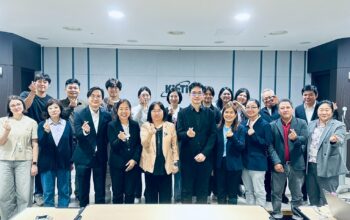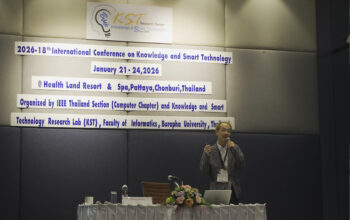
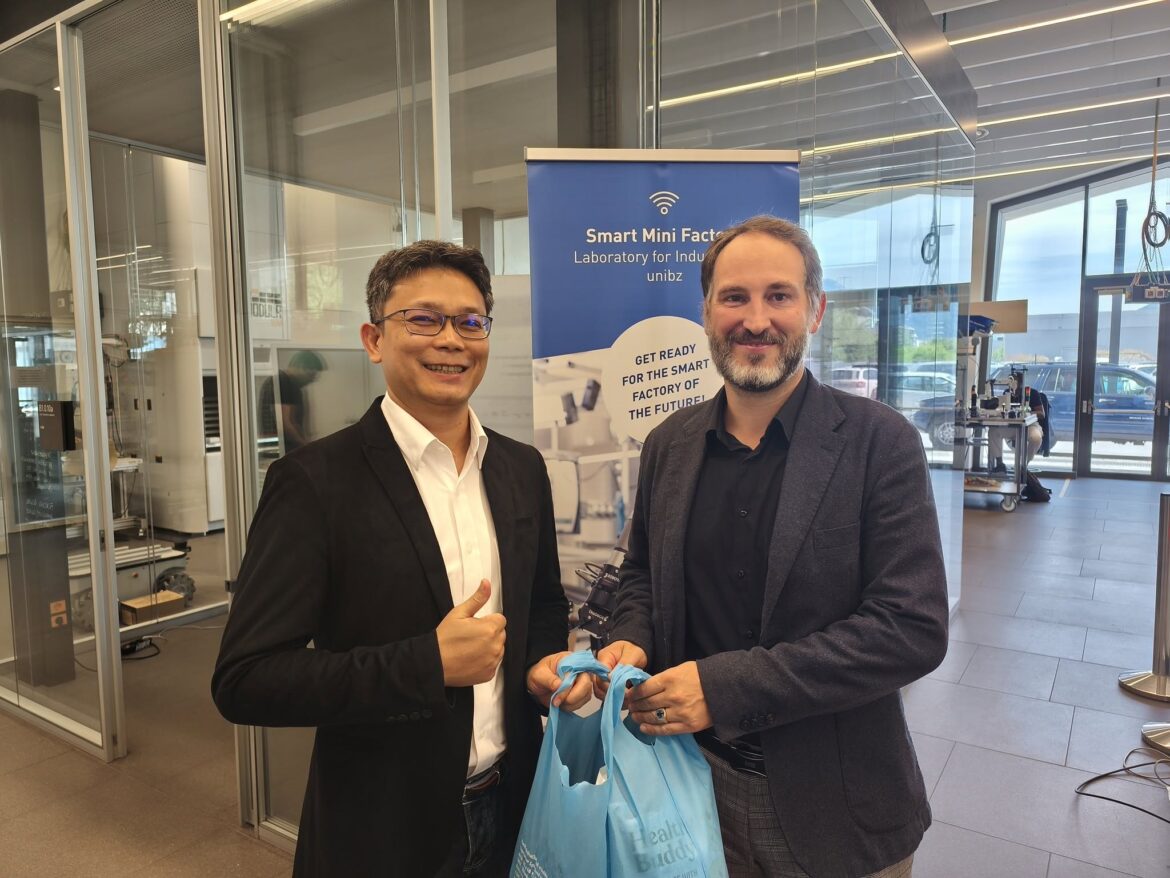
The Faculty of Informatics at Burapha University sent a team of researchers and students from the Digital Media and Interaction (DMI) Laboratory to the Free University of Bozen-Bolzano in Italy for a one-month intensive research program. The research focused on Digital Twin technology and Artificial Intelligence (AI) for Smart Manufacturing (Industry 4.0). While the DMI Lab possesses robust expertise in Virtual Reality (VR) and Augmented Reality (AR), optimal sensor placement for Digital Twin applications remains a challenge. Therefore, collaborating with the Smart Mini Factory Lab in Italy—a leading European institution—is crucial for exchanging knowledge in data processing and digital modeling to elevate Thailand’s research capabilities to an international standard.
The aims:
• To elevate research in Digital Twin technology and sustainable manufacturing to a modern, internationally recognized standard.
• To foster knowledge exchange between students and researchers of the Digital Media and Interaction (DMI) Lab, Faculty of Informatics, Burapha University, and the Smart Mini Factory Lab, Free University of Bozen-Bolzano, Italy.
• To establish an academic and educational network that will lead to sustainable future collaborations.
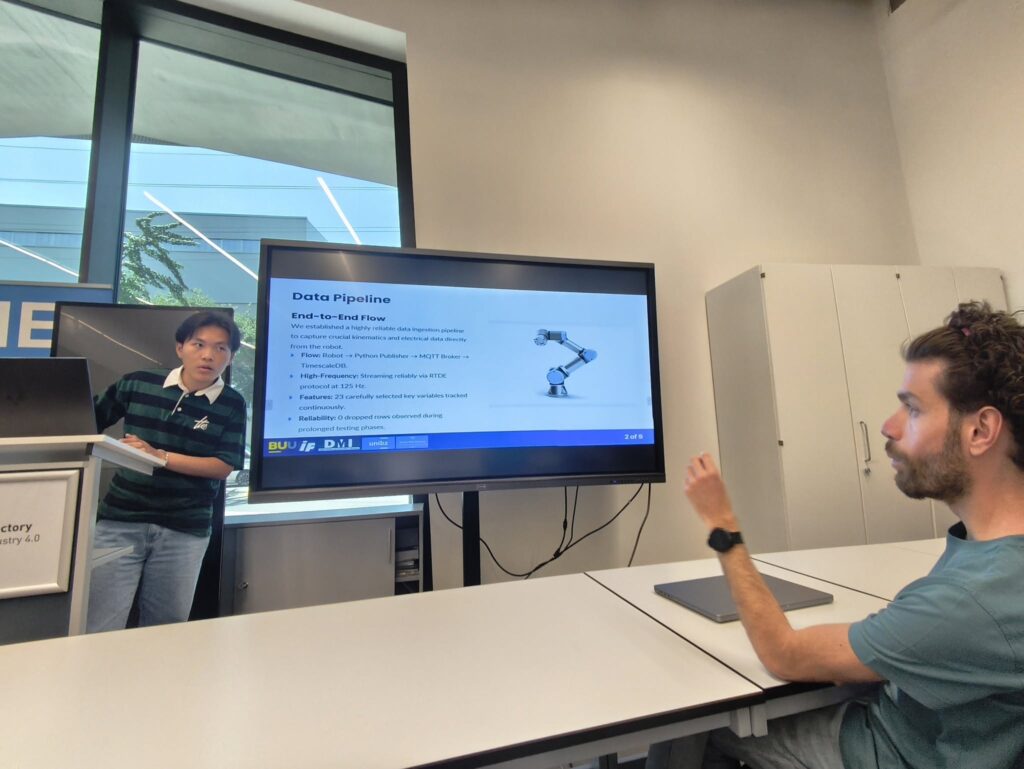
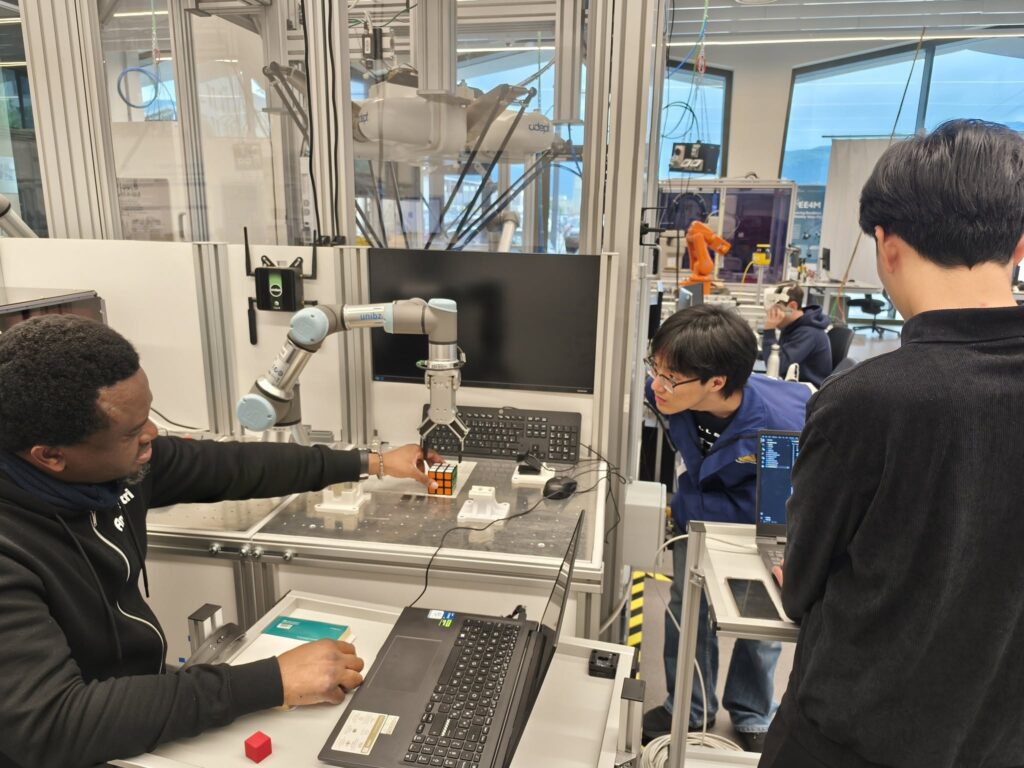
The project was conducted as an Action Research initiative, with faculty representatives and students working on-site at the Smart Mini Factory (SMF) Lab, Free University of Bozen-Bolzano, Italy, for one month. During this period, the research team focused on studying and developing a shadowing-based Digital Twin system for a UR3 robotic arm using Unity software. They also generated and analyzed data to address data imbalance issues for AI training in the industrial sector, receiving close mentorship from the host university’s researchers and experts. Beyond laboratory research, participants exchanged knowledge on sensor data processing, attended presentations at the CLF 2026 international academic conference, and visited the NOI Techpark innovation hub and other advanced research labs. These facilities serve as vital models for integrating real-world industrial and private sector challenges into sustainable education.
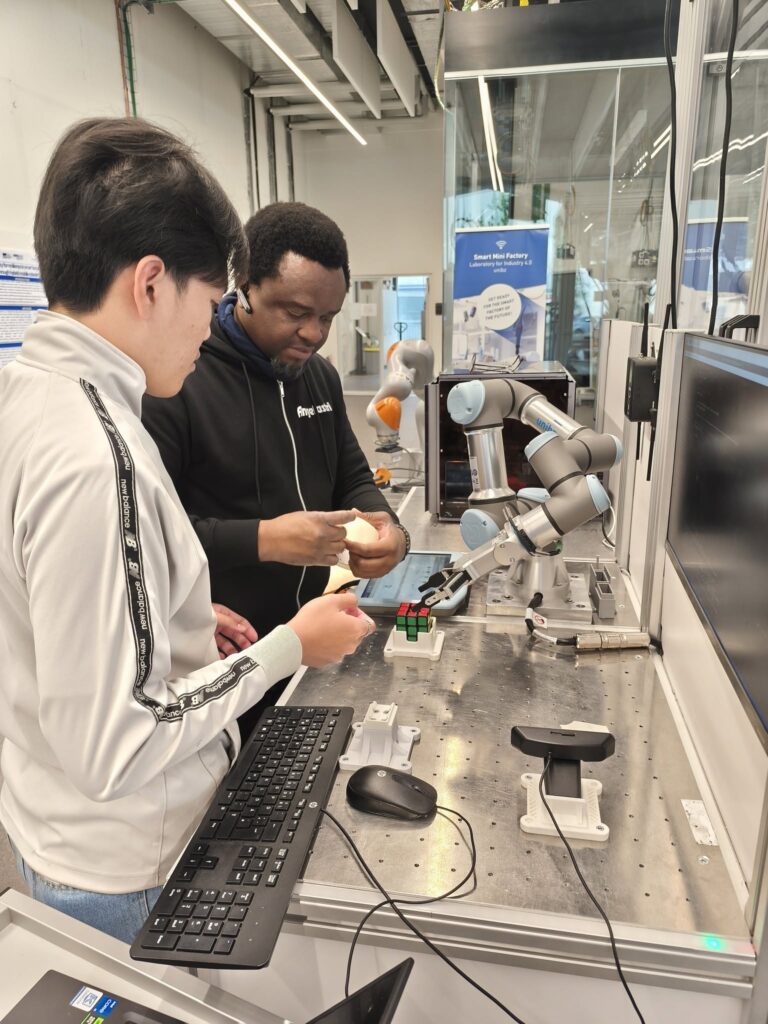
This project comprehensively encompasses innovation creation, human capital development, and global networking. Academically, the research team successfully extracted data from the physical robot and developed a 3D model (Digital Twin) that accurately replicates the robotic arm’s movements. This achievement will be extended into a comprehensive manual on importing CAD models, which will be published to benefit the broader engineering and developer communities. Furthermore, the team aims to produce at least three research papers for presentation at international academic conferences. Ultimately, this project broadened the students’ horizons and enhanced their potential by allowing them to solve real-world industrial problems. It also cultivated strong relationships with the host university’s faculty executives, laying a crucial foundation for future collaborative research opportunities, including potential support from the Erasmus+ program.
Project Leader: Asst.Prof. Prajaks Jitngernmadan
Dates: April 30 – Jun 1, 2026