The Faculty of Engineering, Burapha University, has been awarded funding for two research projects under the Industrial Research and Technology Capacity Development Program (IRTC), Fiscal Year 2026 (Round 2). The program is implemented by the Eastern Science Park (EAST), Burapha University, with financial support from the Office of the Permanent Secretary, Ministry of Higher Education, Science, Research and Innovation (MHESI), Thailand.
The two projects aim to translate university research into practical industrial applications by applying research knowledge and technological innovation to develop internationally competitive products and manufacturing processes. The projects are expected to create added value for industrial products, strengthen the competitiveness of local enterprises, and support Thailand’s S-Curve industries while promoting the principles of the Circular Economy and sustainable development.
These research initiatives were developed in response to the growing need to bridge academic research and industrial applications. By transforming industrial waste into high-value composite products and advancing automated manufacturing technologies, the projects contribute to enhancing industrial competitiveness in the Eastern Economic Corridor (EEC) while demonstrating Burapha University’s commitment to innovation-driven sustainable development.
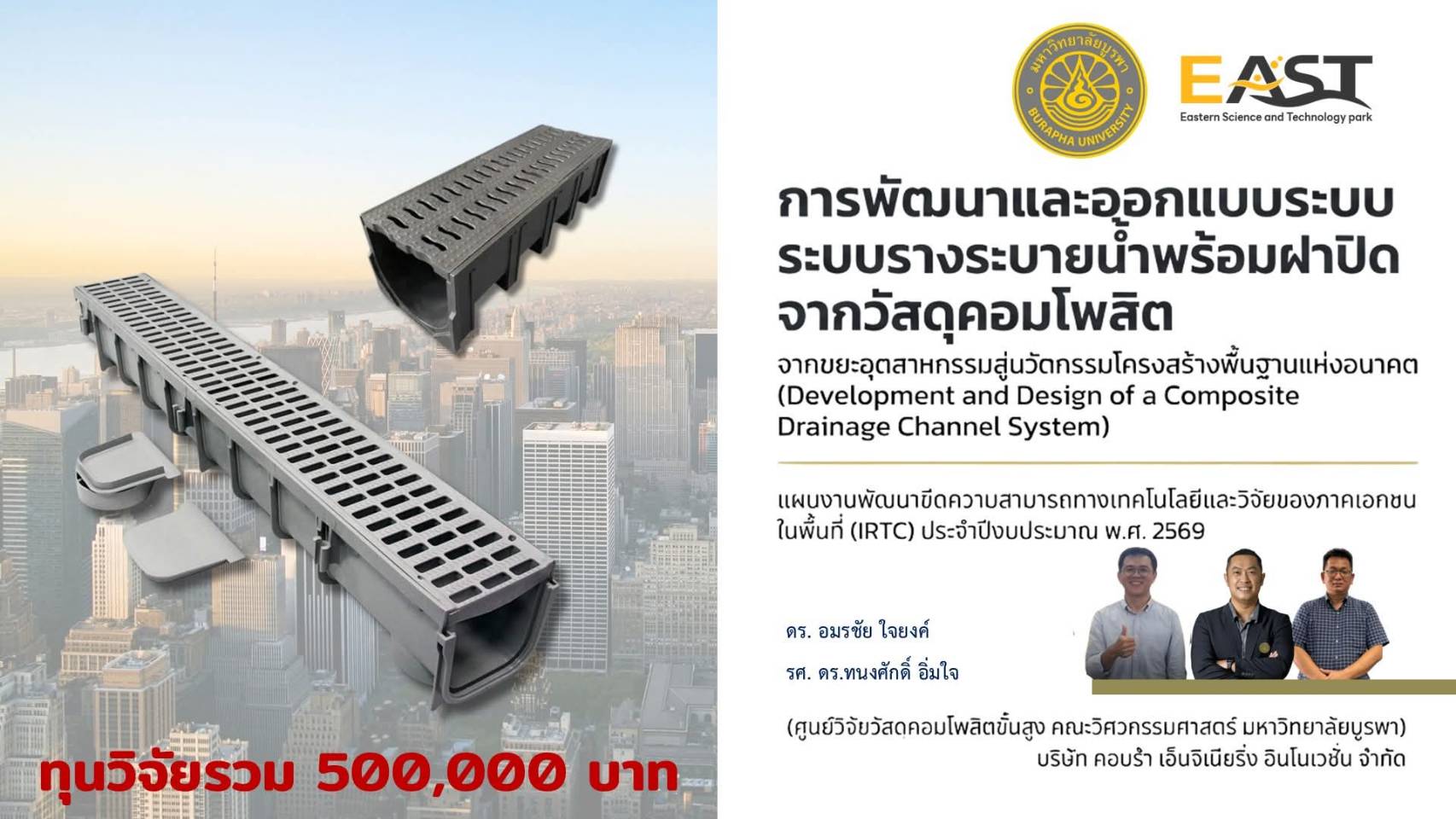
The first project, “Development and Design of a Composite Drainage Channel System,” is led by Dr. Amornchai Jaiyong, a lecturer at the Faculty of Engineering, in collaboration with Associate Professor Dr. Thanongsak Imjai from the Advanced Composite Materials Research Center and Cobra Engineering Innovation Co., Ltd. The project has received a research grant of THB 500,000.
The project focuses on converting industrial waste into value-added composite drainage channels and covers that are lightweight, durable, high-strength, and environmentally friendly. By transforming industrial waste into innovative construction materials, the project helps reduce industrial waste generation while promoting efficient resource utilization and circular economy practices.
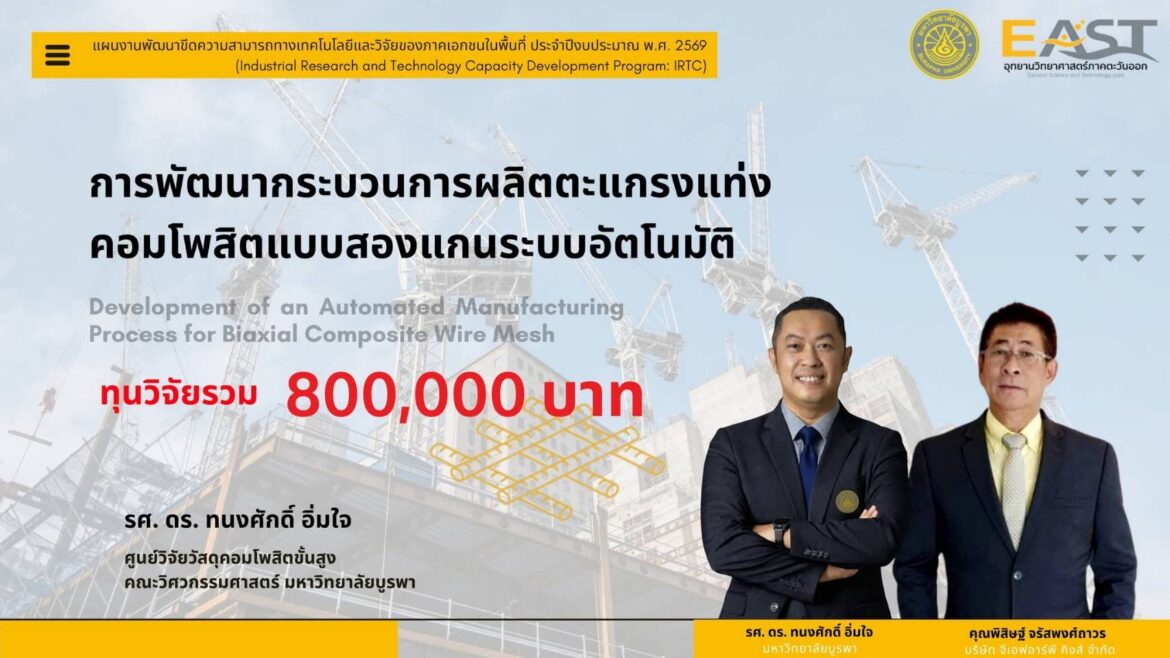
The second project, “Development of an Automated Manufacturing Process for Biaxial Composite Wire Mesh,” is led by Associate Professor Dr. Thanongsak Imjai in collaboration with GFRP Kings Co., Ltd. The project received THB 400,000 in funding from the Eastern Science Park and an additional THB 400,000 from the industrial partner, bringing the total project budget to THB 800,000. The project will be implemented over a six-month period from 7 April to 7 October 2026.
This project aims to develop an industrial-scale automated manufacturing system for biaxial composite wire mesh to improve production efficiency, enhance product quality, reduce manufacturing costs, and meet the growing demand of modern industries. The innovation is expected to strengthen the competitiveness of Thai manufacturers in both domestic and international markets.
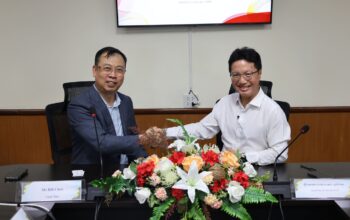
Both projects exemplify the successful commercialization of university research through close collaboration with industry under a Matching Fund mechanism, combining in-cash and in-kind contributions from industrial partners. This collaborative model strengthens partnerships between academia and industry while facilitating technology transfer and accelerating the commercialization of research outcomes.
Furthermore, the projects contribute to Thailand’s targeted S-Curve industries by increasing the value of industrial waste, promoting advanced automated manufacturing technologies, and developing environmentally friendly composite products. These outcomes are expected to enhance the competitiveness of enterprises in the Eastern Economic Corridor (EEC), generate greater economic value, reduce environmental impacts, and foster sustainable development across the economic, social, and environmental dimensions.
Contribution to the United Nations Sustainable Development Goals (SDGs)
The IRTC research projects directly contribute to several Sustainable Development Goals (SDGs), including:
- SDG 9 – Industry, Innovation and Infrastructure: Advancing industrial research, technological innovation, automation, and technology transfer to strengthen industrial competitiveness and sustainable infrastructure.
- SDG 12 – Responsible Consumption and Production: Promoting resource efficiency through industrial waste valorization, developing value-added composite materials, and supporting Circular Economy practices.
- SDG 17 – Partnerships for the Goals: Strengthening collaboration among universities, government agencies, and private-sector partners through a Matching Fund mechanism to accelerate research commercialization and innovation.
- SDG 8 – Decent Work and Economic Growth: Enhancing industrial productivity, creating higher-value products, supporting local enterprises, and contributing to sustainable economic growth.