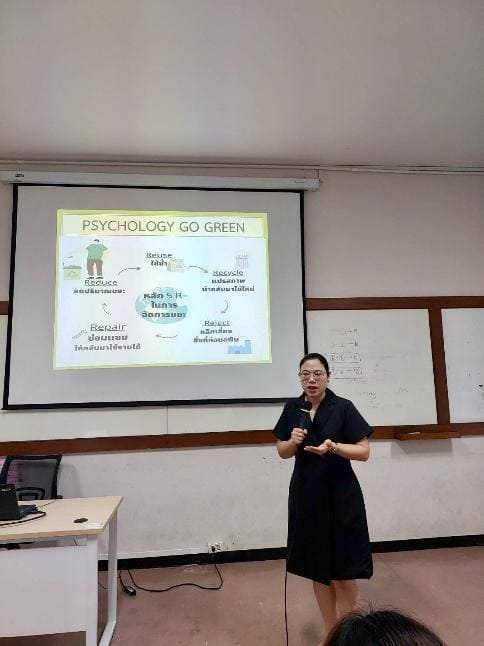
Recognising the urgency of environmental challenges, the project Psycho Go Green was launched to promote sustainable practices within the university. This project integrates the Green Office framework introduced by the Department of Environmental Quality Promotion, Ministry of Natural Resources and Environment, with a focus on cultivating environmentally responsible behaviour through the 5R principles: Reduce, Reuse, Recycle, Repair, and Reject. The project also emphasises the preservation of green spaces within the university and the reduction of greenhouse gas emissions, in line with Burapha University’s vision of becoming a Green University and its commitment to the United Nations Sustainable Development Goals (SDGs). Importantly, the initiative connects psychological principles with environmental action, aiming to encourage long-term behavioural change toward sustainability.
Project Coordinator: Lecturer Paweena Changprachak and Asst. Prof. Bongkoch Naksiang, Ph.D.
Objectives:
– To raise awareness of the value of energy conservation and environmental protection, both within and beyond the university.
– To provide knowledge of the 5R principles and practical approaches to environmental conservation.
– To encourage the application of the 5R principles and sustainable practices in daily life.

Program Activities:
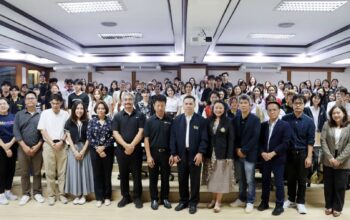
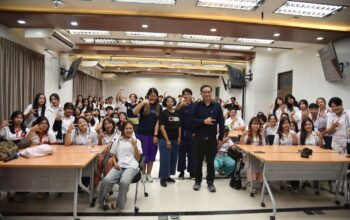
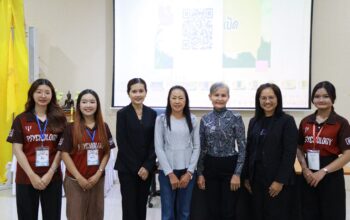
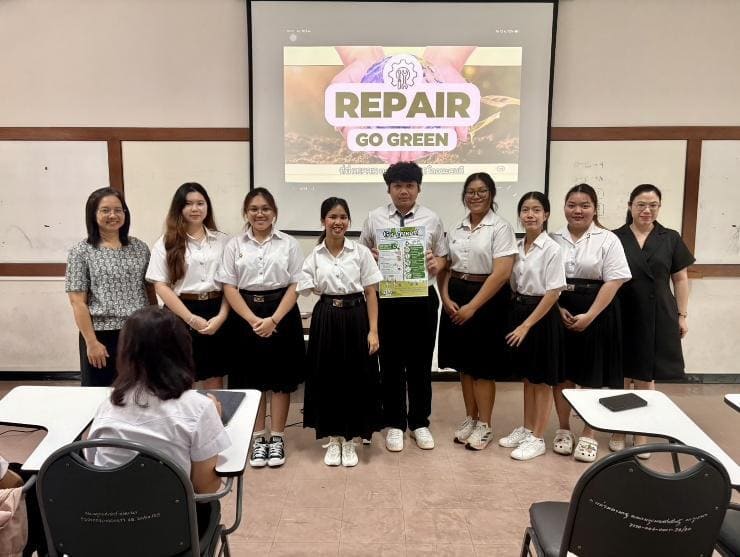
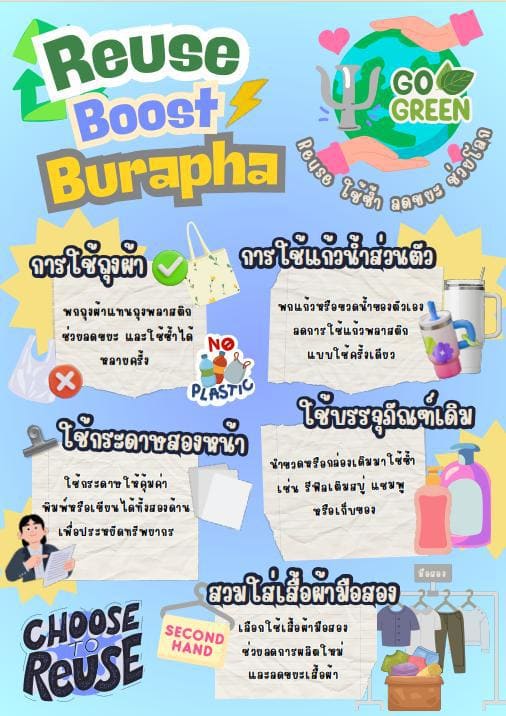
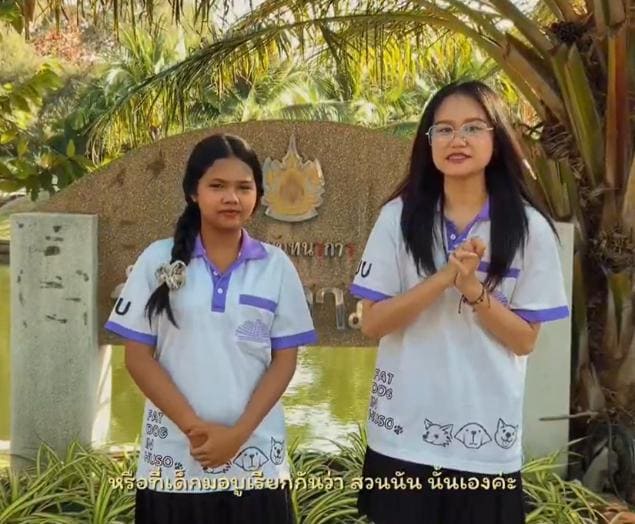
Students from the Department of Psychology presented creative works as video performances and campaign posters based on the 5R framework and environmental conservation themes. The activities were organised into six thematic groups: Repair (fixing instead of discarding), Recycle (transforming plastic bottle caps into keychains), Reject (avoiding environmentally harmful products), Reduce (minimising resource use), Reuse (repurposing used materials under the concept “Reuse Boost Burapha”), and environmental conservation at the university’s recreational park. Following the presentations, faculty members and participating students engaged in discussions to exchange ideas and reflect on the effectiveness of each approach. Selected works were further developed for dissemination through the Faculty’s communication channels.
Expected Outcomes (Impacts):
– Participants developed a stronger awareness of environmental issues and the importance of sustainable practices.
– Students gained practical understanding of the 5R principles and how they can be applied in everyday contexts.
– The project encouraged environmentally responsible behaviour and contributed to a sustainability-oriented culture within the university.
Date of Implementation: March 12, 2026