Realising the environmental impacts of chemical substances in watercolour and its packaging, the Department of Sociology, Faculty of Humanities and Social Sciences, held a watercolour-based art activity. This project promoted the use of locally available natural materials, such as bougainvillaea and yellow elder flowers and pandan leaves, to produce natural pigments. The approach reduces dependence on synthetic materials while minimising waste from classroom activities. The project also introduces environmental concepts to young learners through hands-on practice. By engaging directly with natural resources, students begin to develop an understanding of conservation and responsible use from an early age. The initiative supports SDG 12: Responsible Consumption and Production, and is further related to SDG 4: Quality Education and SDG 3: Good Health and Well-being.
Project Coordinator: Lecturer Rattana Wingworn
Objectives:
- To encourage the use of natural materials as alternatives to chemical-based art supplies. 2. To promote waste reduction and responsible resource use among students. 3. To raise awareness of environmental conservation through practical learning.
Program Activities:
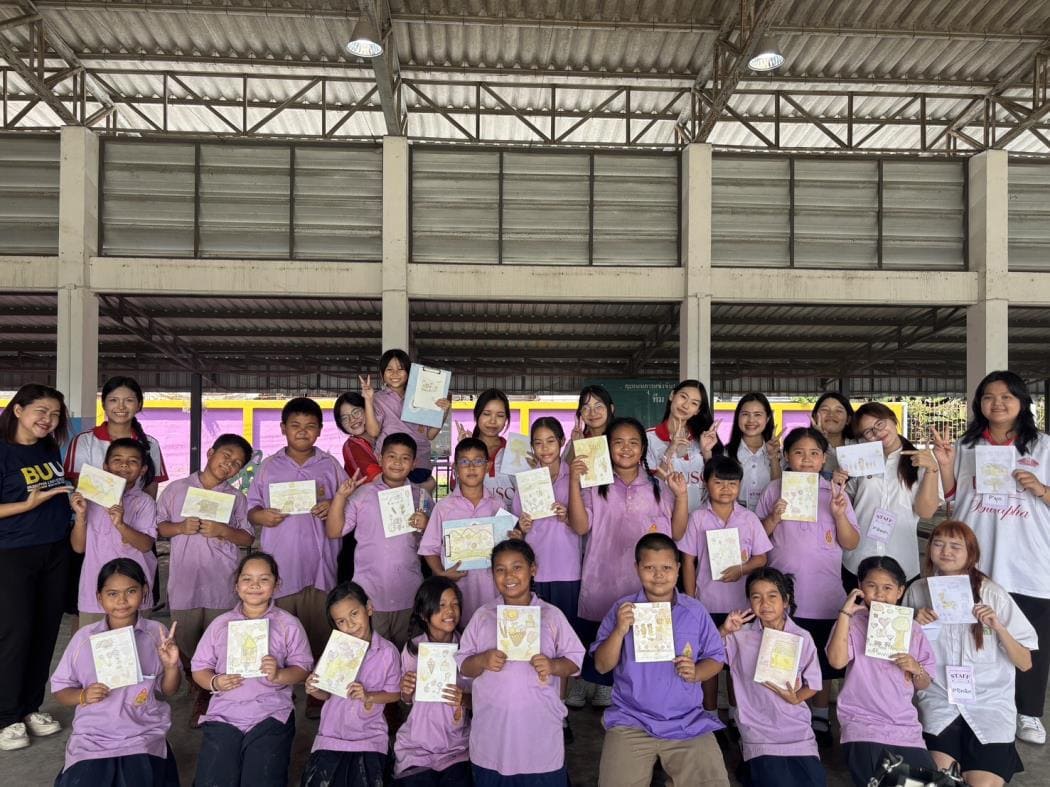
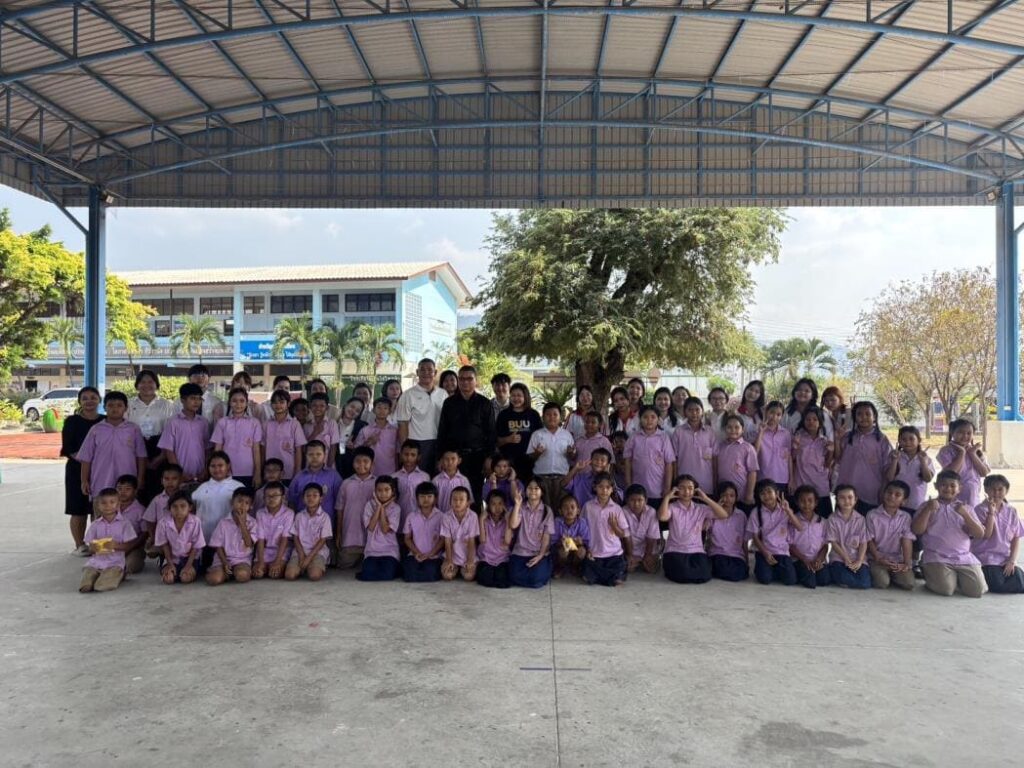
The project was conducted as a workshop for 48 students in Grades 2–3 at Banraihailum School. It began with a short session on sustainable resource use and waste reduction, followed by a demonstration on extracting colour from natural materials. For example, bougainvillaea produced pink, yellow elder produced yellow, and pandan leaves produced green. Students then created their own artwork using the natural pigments. Recreational activities were included to maintain engagement and support an interactive learning atmosphere.
Expected Outcomes (Impacts):
- Participating students were able to produce and use natural pigments from locally available materials, reducing reliance on chemical-based art supplies during the activity.
- Participating students showed increased awareness of environmental responsibility and more careful use of materials during the activity.
- Participating students gained practical knowledge of sustainable resource use through hands-on experience.
Date of Implementation: March 12, 2026