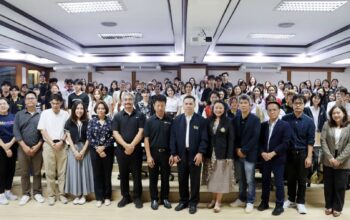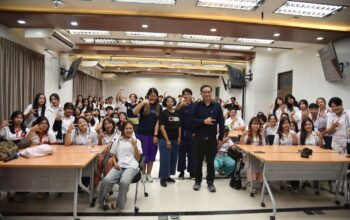
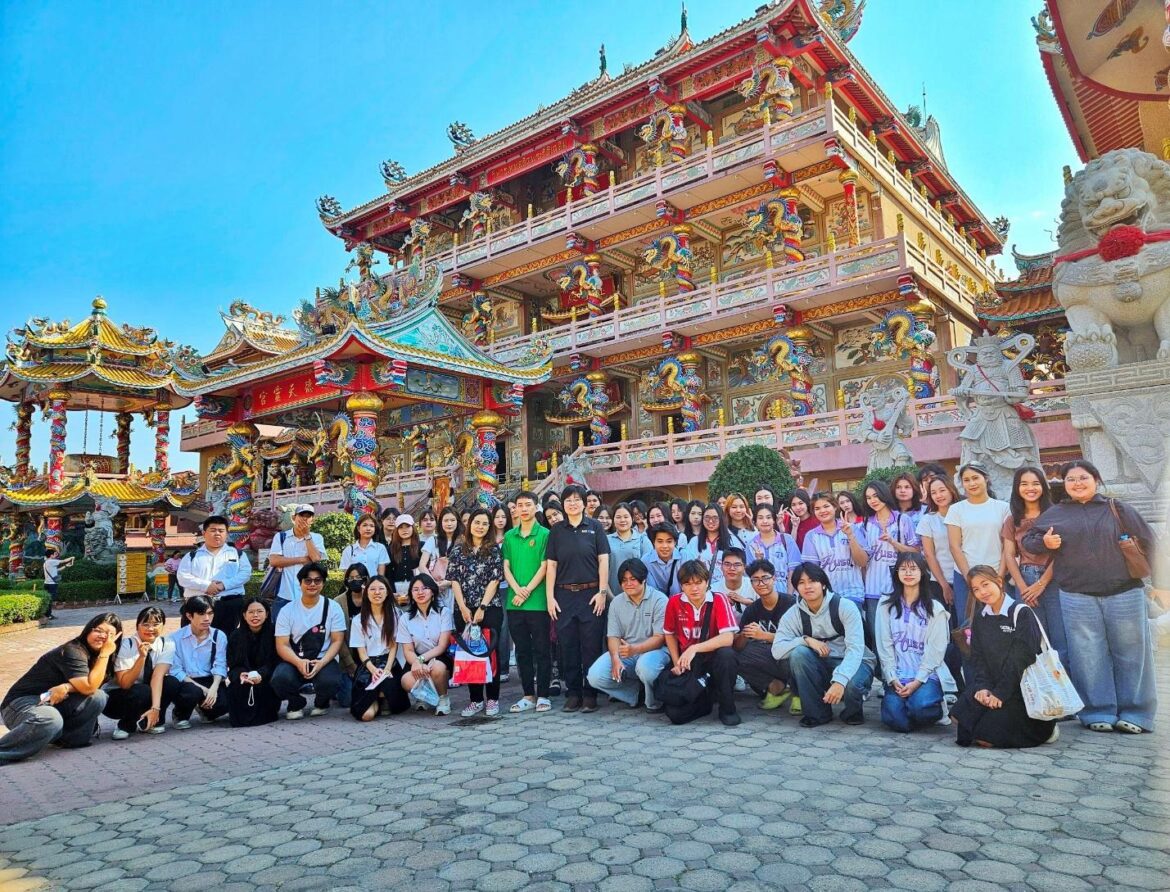
Experiential learning beyond the classroom plays a crucial role in enhancing students’ analytical thinking, interpretative skills, and contextual understanding particularly in disciplines such as Religion and Philosophy where cultural dimensions are central. Na Jasa Tai Chue Shrine serves as a significant religious and cultural site closely connected to the local Thai-Chinese community. It functions not only as a place of worship but also as a socio-cultural hub reflecting Chinese artistic heritage, ritual practices, and belief systems that integrate Mahayana Buddhism with traditional Chinese beliefs. This project positions the shrine as a “living classroom,” enabling students to connect theoretical knowledge with real-world phenomena. It also aligns with the Faculty of Humanities and Social Sciences’ strategic focus on Smart Education by fostering 21st-century competencies through experiential learning. Furthermore, the project contributes to Sustainable Development Goal (SDG) 11, particularly Target 11.4, which emphasizes safeguarding cultural heritage.
The aims:
1.To enhance students’ analytical, interpretative, and critical thinking skills through experiential learning.
2.To promote understanding of cultural and religious diversity through direct engagement with a real-world religious site.
3.To develop students’ academic communication and observation skills in cultural contexts.
4.To raise awareness of the importance of cultural heritage preservation in alignment with SDG 11.4
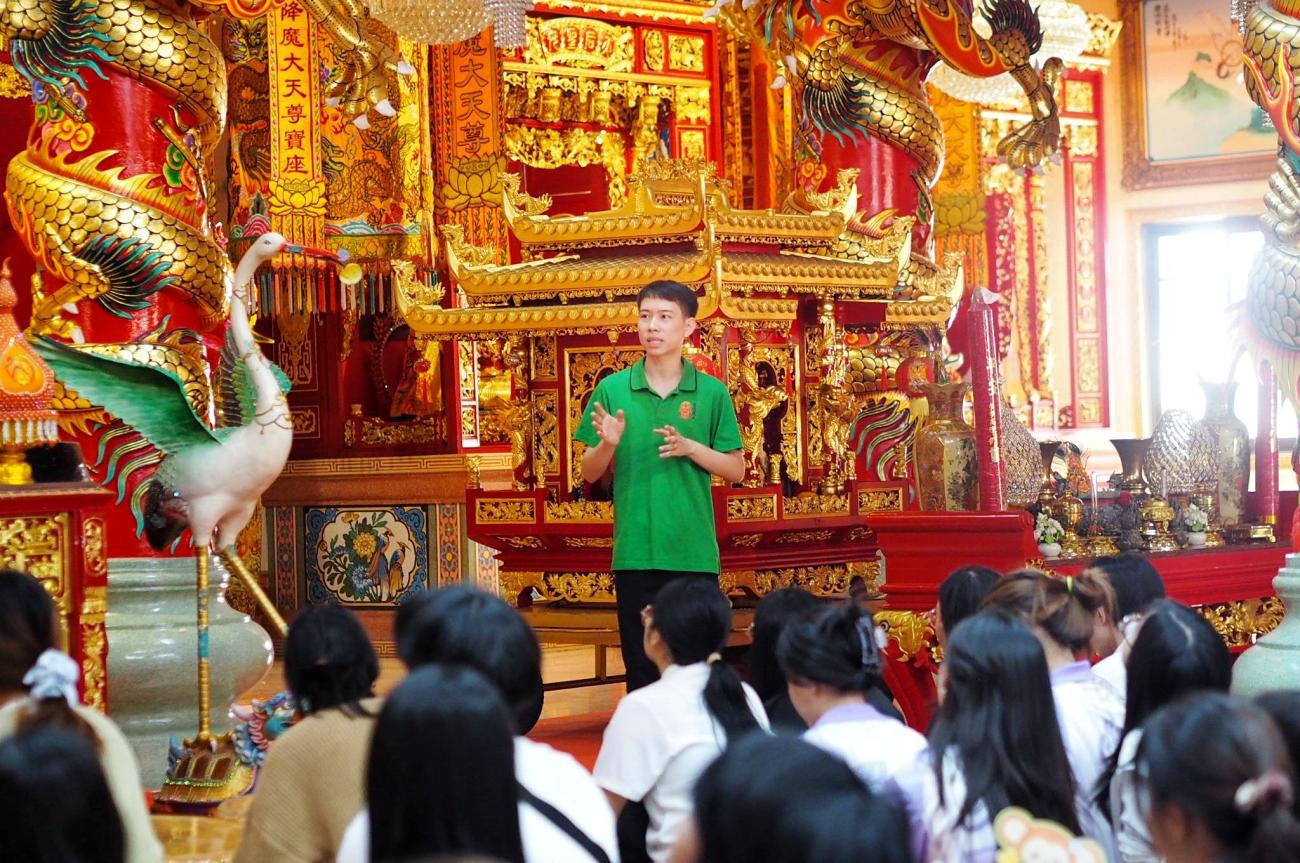
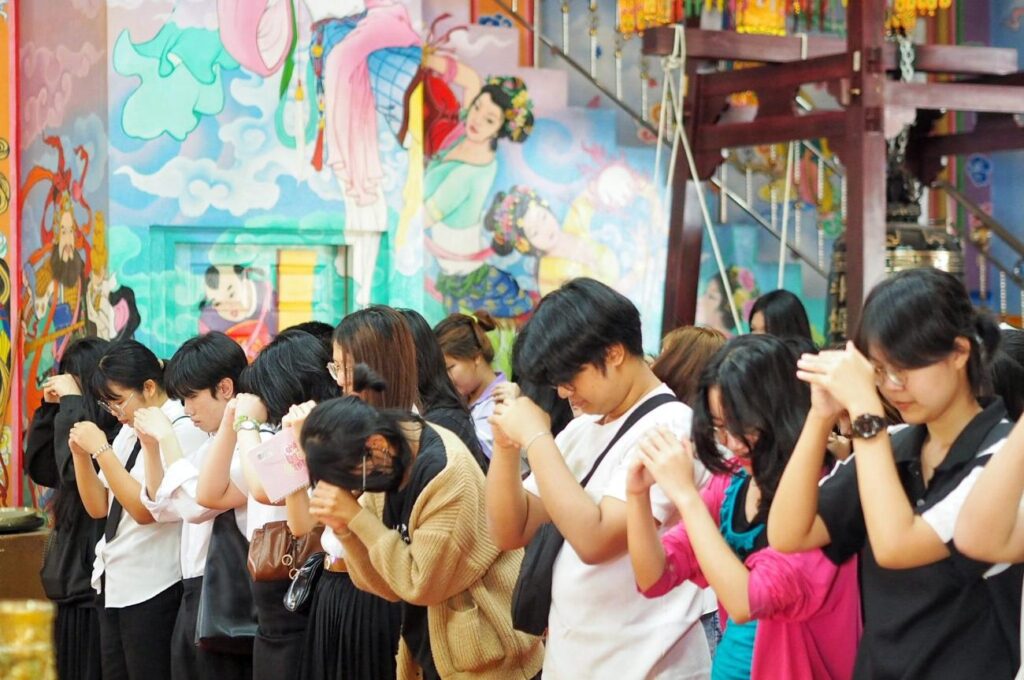
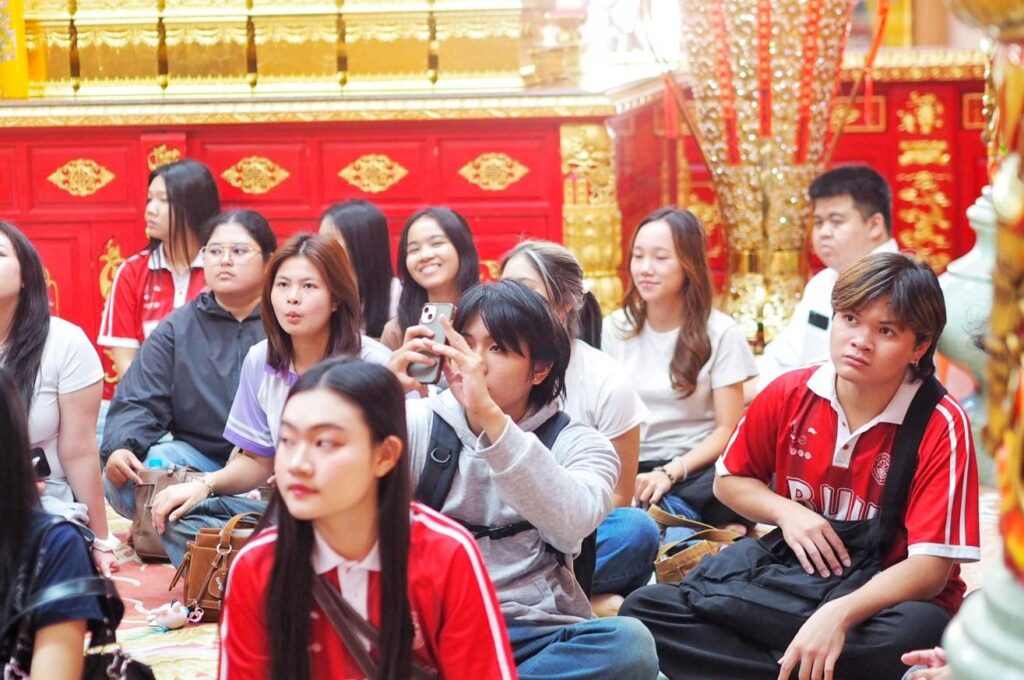
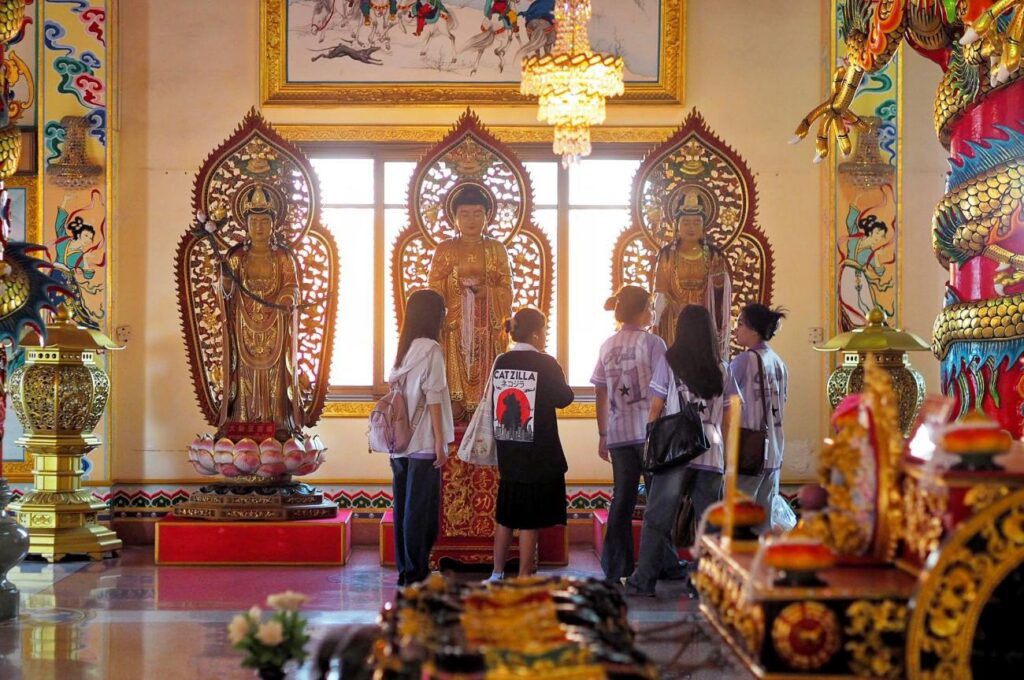
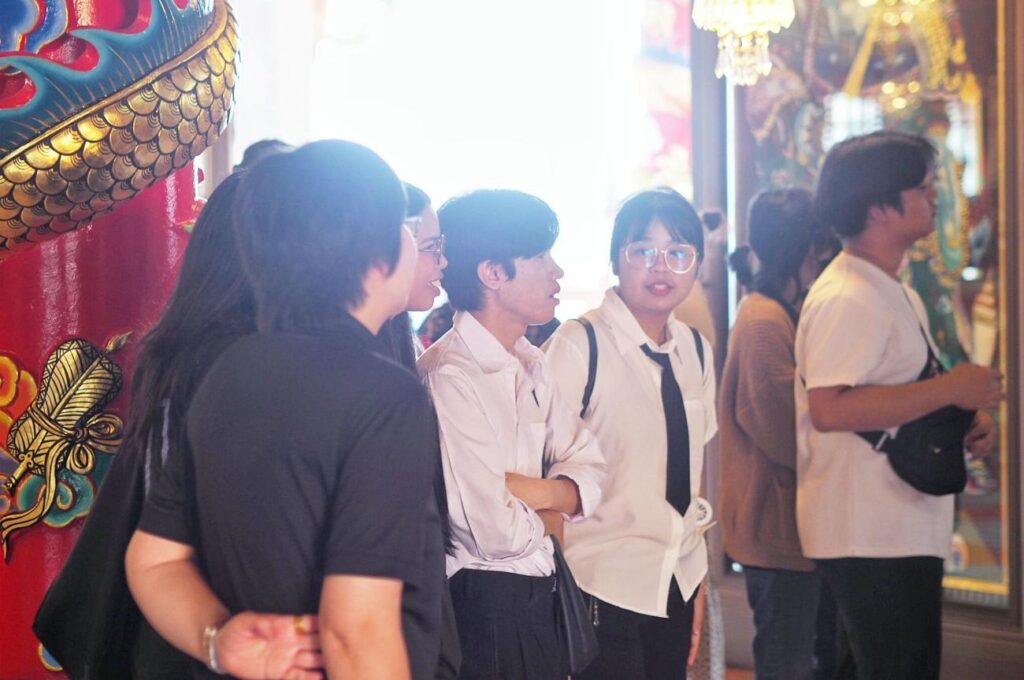
The project involves organizing a field study visit to Na Jasa Tai Chue Shrine, where students engage in guided observation of architectural features, sculptures, and symbolic representations that reflect Chinese belief systems. During the visit, students also examine religious rituals and practices in order to gain a deeper understanding of lived religious experiences within the local context. In addition, the learning process includes a comparative analysis between theoretical concepts studied in the classroom and the practices observed on-site. To further consolidate their understanding, students participate in group discussions and academic reflections, allowing them to synthesize knowledge and articulate meaningful learning outcomes.
Short-term impacts:
1.Improved student competencies in critical thinking, interpretation, and cross-cultural communication.
2.Enhanced understanding of religious practices and cultural diversity in real-life contexts.
Long-term impacts:
1.Increased awareness and appreciation of cultural heritage preservation among students.
2.Strengthened university-community engagement through the utilization of local cultural resources.
3.Contribution to sustainable development by fostering responsible global citizens who value and protect cultural heritage (SDG 11.4).
Project Leaders: Asst. Prof. Dr. Pitchayarat Hemnalai and Dr. Phakphum Phattharakitworakun