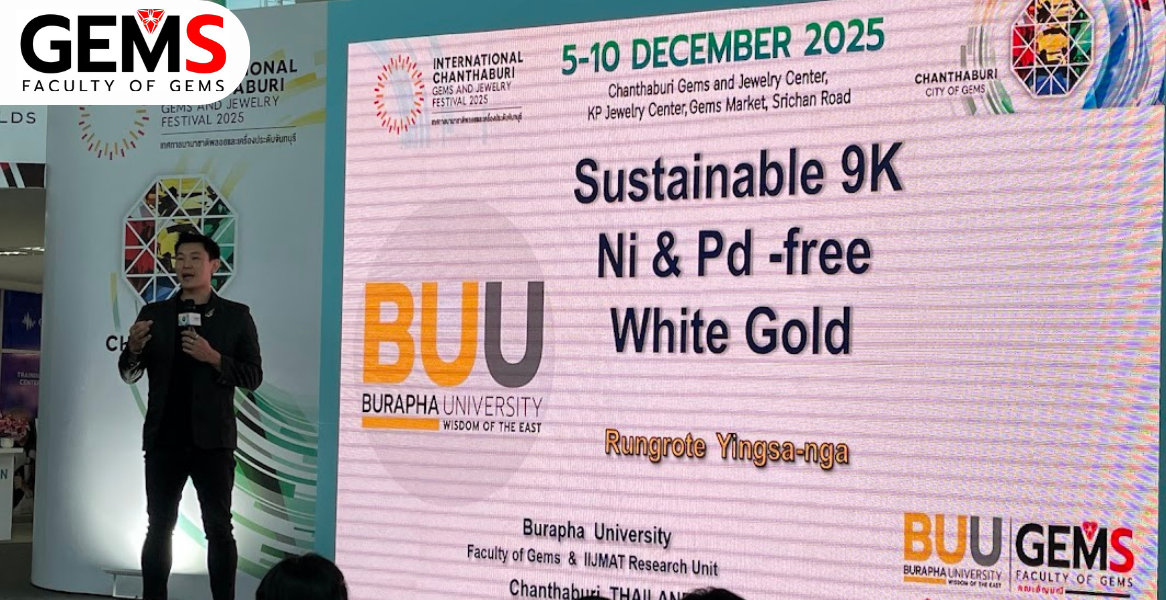
The jewelry industry is rapidly transitioning toward ethical and skin-friendly materials. Traditional white gold alloys typically rely on nickel, a common allergen, or palladium, which is both expensive and environmentally taxing to source. To address these challenges, Assistant Professor Rungrote Yingsa-nga at the Faculty of Gems, Burapha University (Chanthaburi Campus), developed an innovative 9K Ni & Pd-free white gold. By replacing restricted metals with a specialized blend of silver, zinc, and manganese, this research provides a hypoallergenic, durable, and cost-effective solution that prioritizes both consumer health and environmental responsibility.
The primary goal of this seminar is to present the development of Sustainable 9K Nickel & Palladium-free White Gold as a safer and more ethical alternative in jewelry manufacturing. The specific objectives are: 1) To Innovate Metallurgical Formulas: To develop a 9K white gold alloy using silver, zinc, and manganese as whitening agents, eliminating the need for allergenic or high-cost metals. 2) To Evaluate Material Performance: To rigorously test the alloy’s mechanical properties, including tarnish resistance, durability, and the achievement of a high-quality “bright white” aesthetic. 3) To Advance Industry Sustainability: To reduce the environmental footprint of precious metal sourcing and promote the use of eco-friendly materials in manufacturing. 4) To Improve Market Accessibility: To offer a high-performance yet affordable material alternative for manufacturers, supporting a more ethical global supply chain.
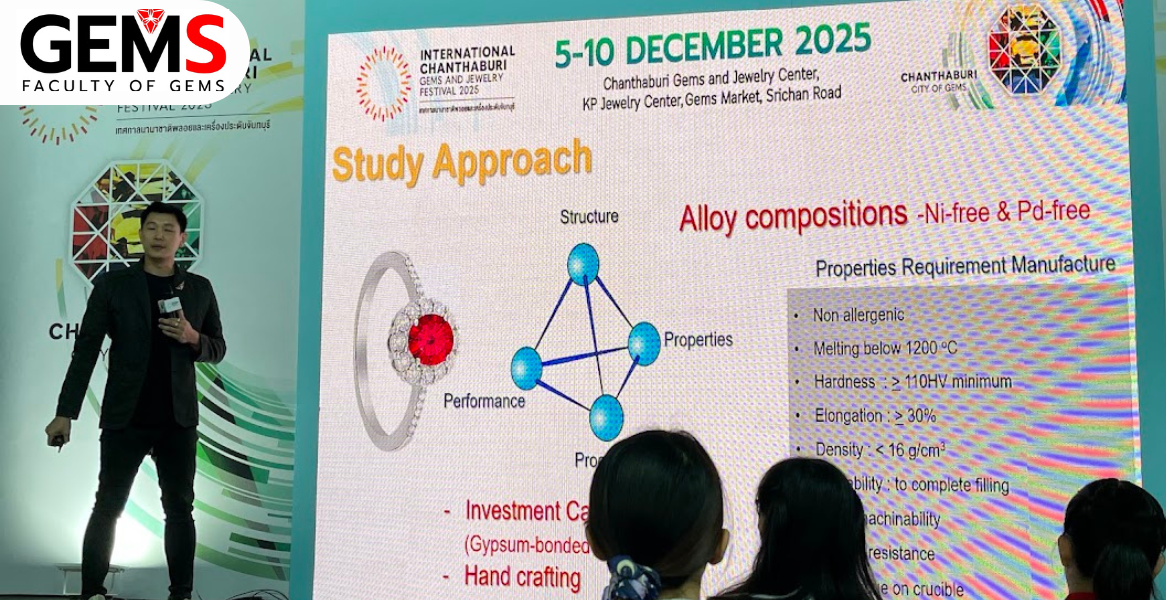
The project focused on bridging the gap between academic innovation and industrial application through a seminar at the International Chanthaburi Gems and Jewelry Festival 2025. Key activities included: 1) Technical Presentation: A deep dive into the metallurgical properties and the science behind the new Ni & Pd-free alloy. 2) Performance Benchmarking: Demonstrations comparing the new alloy’s color and durability against conventional 9K white gold formulas. 3) Market Sustainability Dialogue: Open discussions with local manufacturers and international buyers regarding cost reduction and eco-conscious production. 4) Knowledge Exchange (Q&A): An interactive session allowing industry professionals to explore the practical integration of this material into commercial jewelry lines.
This activity advances SDG 4 (Quality Education) and SDG 17 (Partnerships for the Goals) by translating university research into practical industry applications, offering artisans essential opportunities for lifelong learning. This collaboration not only modernizes the jewelry sector but also effectively bridges the gap between academic innovation and vocational practice. Furthermore, the initiative supports SDG 8 (Decent Work and Economic Growth), SDG 9 (Industry, Innovation, and Infrastructure), and SDG 12 (Responsible Consumption and Production) through the introduction of cost-effective, hypoallergenic materials. By eliminating toxic nickel and minimizing the environmental footprint of palladium sourcing, the project establishes a more ethical supply chain—empowering local manufacturers to compete in the global eco-conscious market while prioritizing consumer health and environmental stewardship.
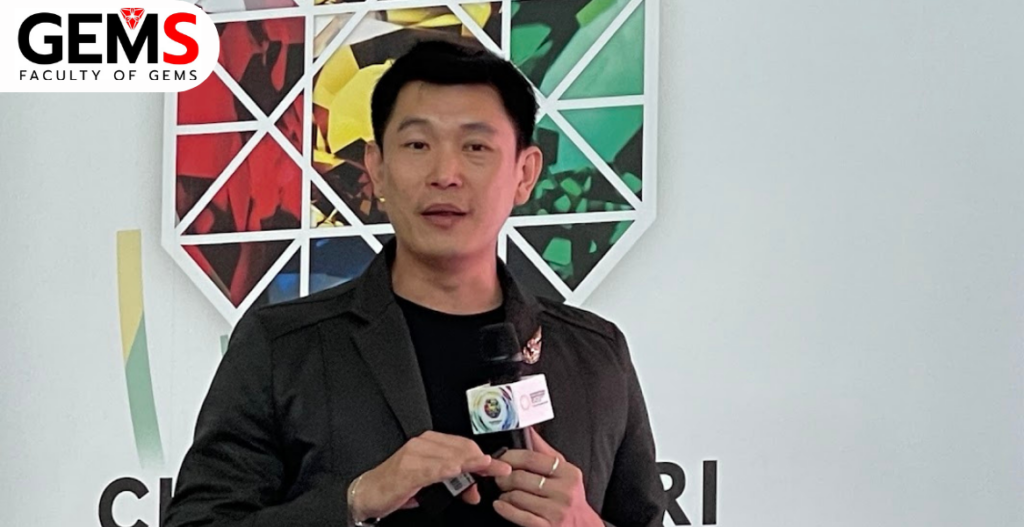
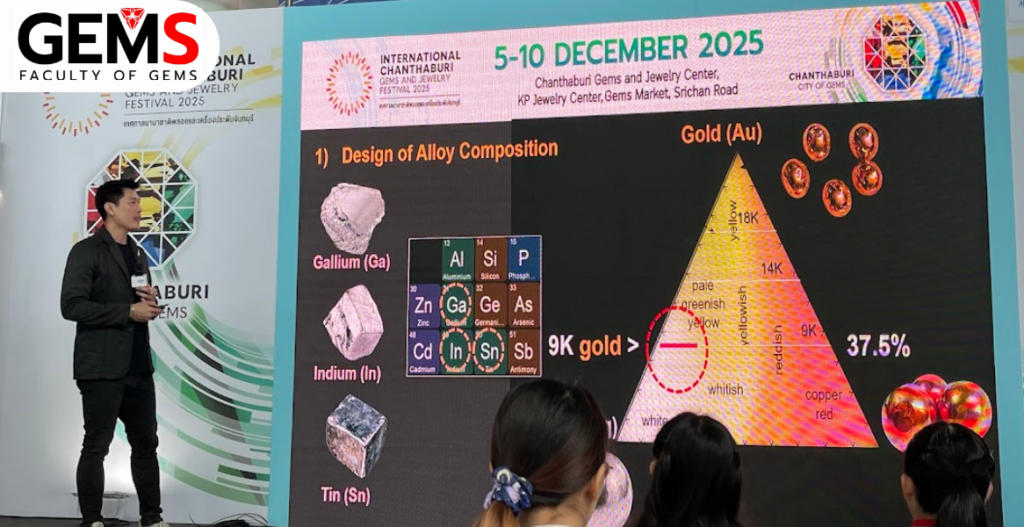
Project Leader: Assistant Professor Rungrote Yingsa-nga