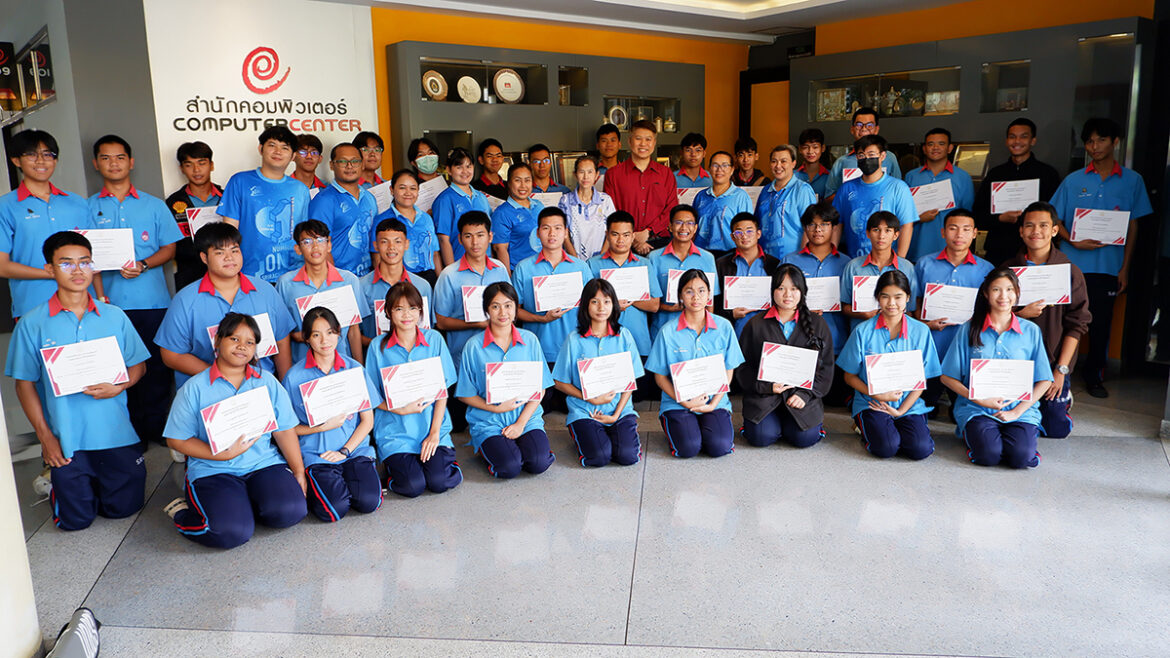
The Learning Development Program for Sriracha School Students: “Creative Inventions through Internet of Things (IoT) Technology” was jointly organized by Sriracha School, Chonburi Province, and the Computer Center, Burapha University, in recognition of the importance of enhancing digital and technological skills among Thai youth. The program aims to prepare students for future learning and careers in science, engineering, and technology by promoting creative, hands-on, and innovation-driven learning. Participating students at the upper secondary level (Grades 10–12) engaged in IoT-based project development that encouraged creative thinking and the practical integration of electronic devices with digital technologies.
The program focused on experiential learning, enabling students to collaboratively design and develop IoT projects involving circuit assembly, sensor integration, and programming for device control via smartphones. Through this process, students strengthened their foundational knowledge in science and engineering while developing an awareness of the creative and responsible use of technology for the benefit of themselves and society. The learning experience also broadened students’ perspectives and supported their readiness for higher education. These objectives align with SDG 4: Quality Education, which emphasizes inclusive, equitable, and high-quality education and the development of essential skills for lifelong learning.
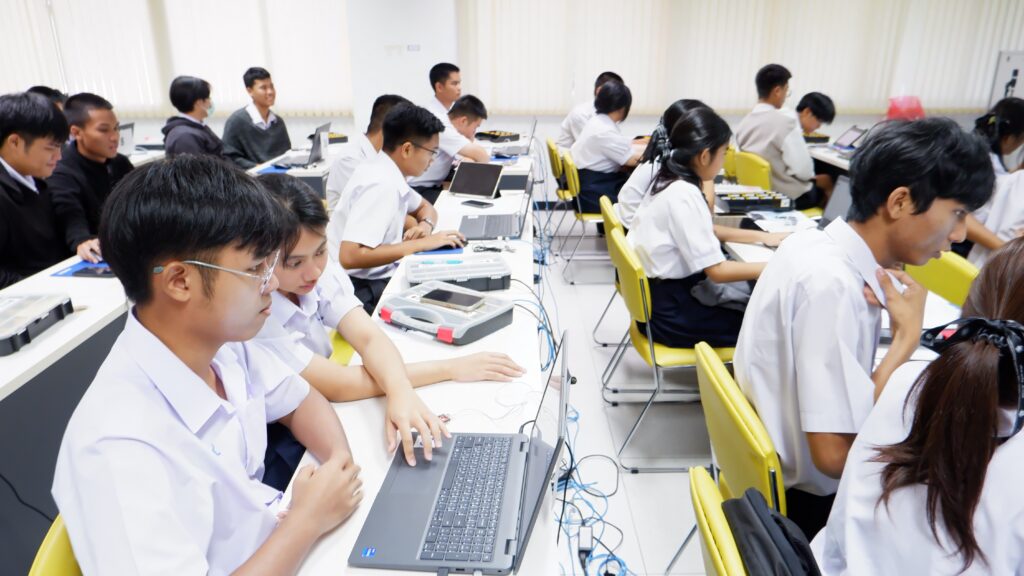
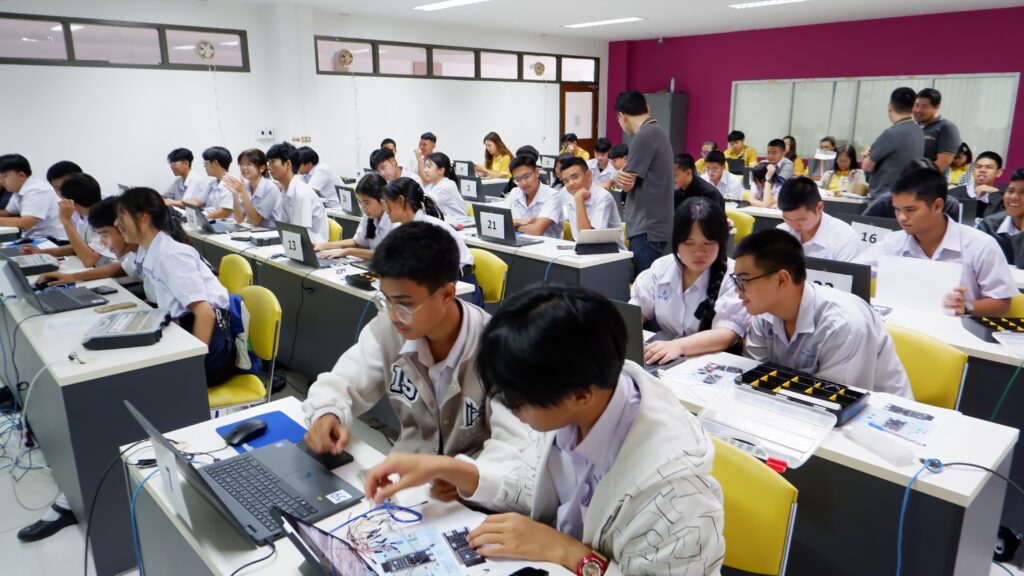
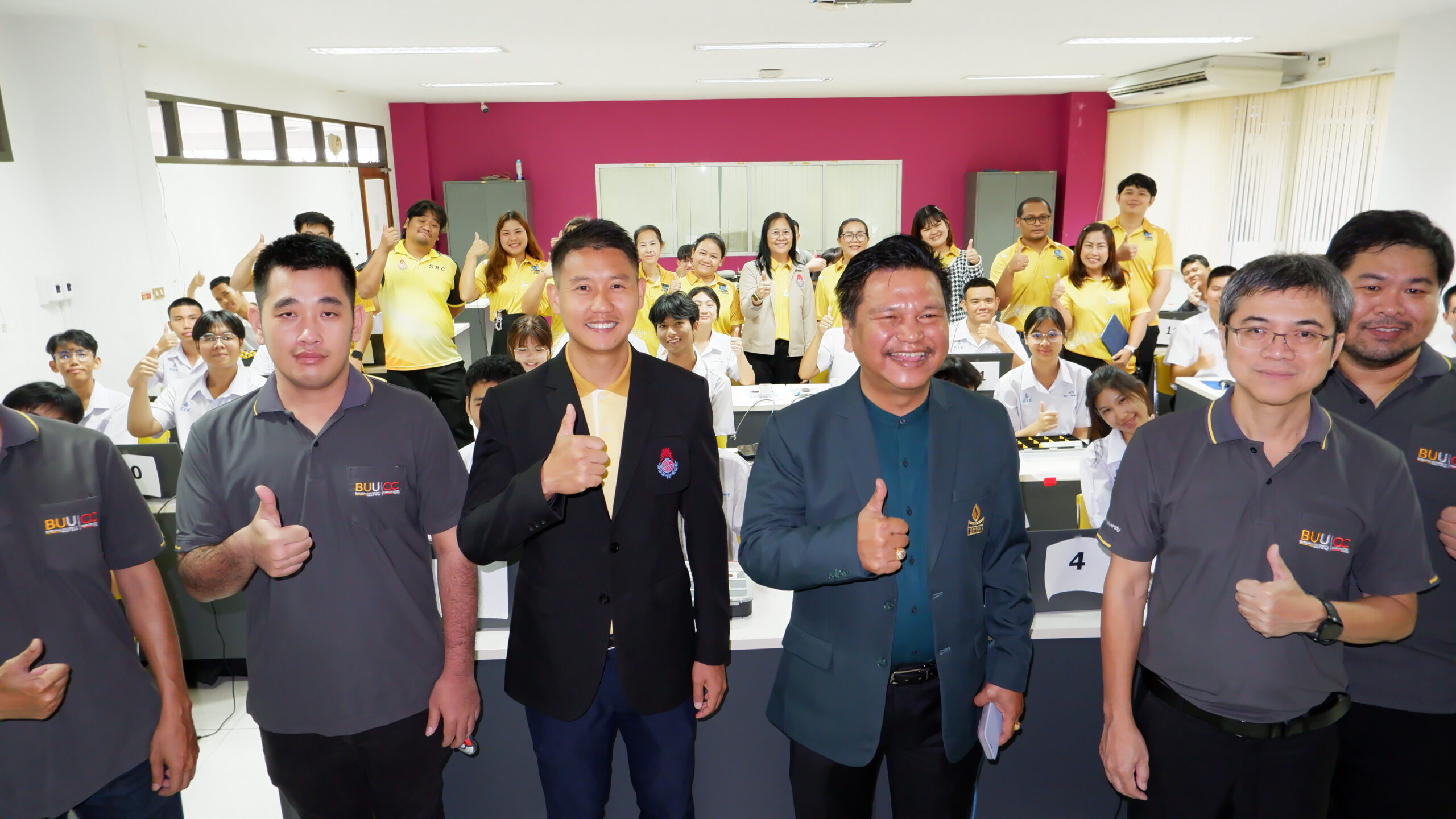
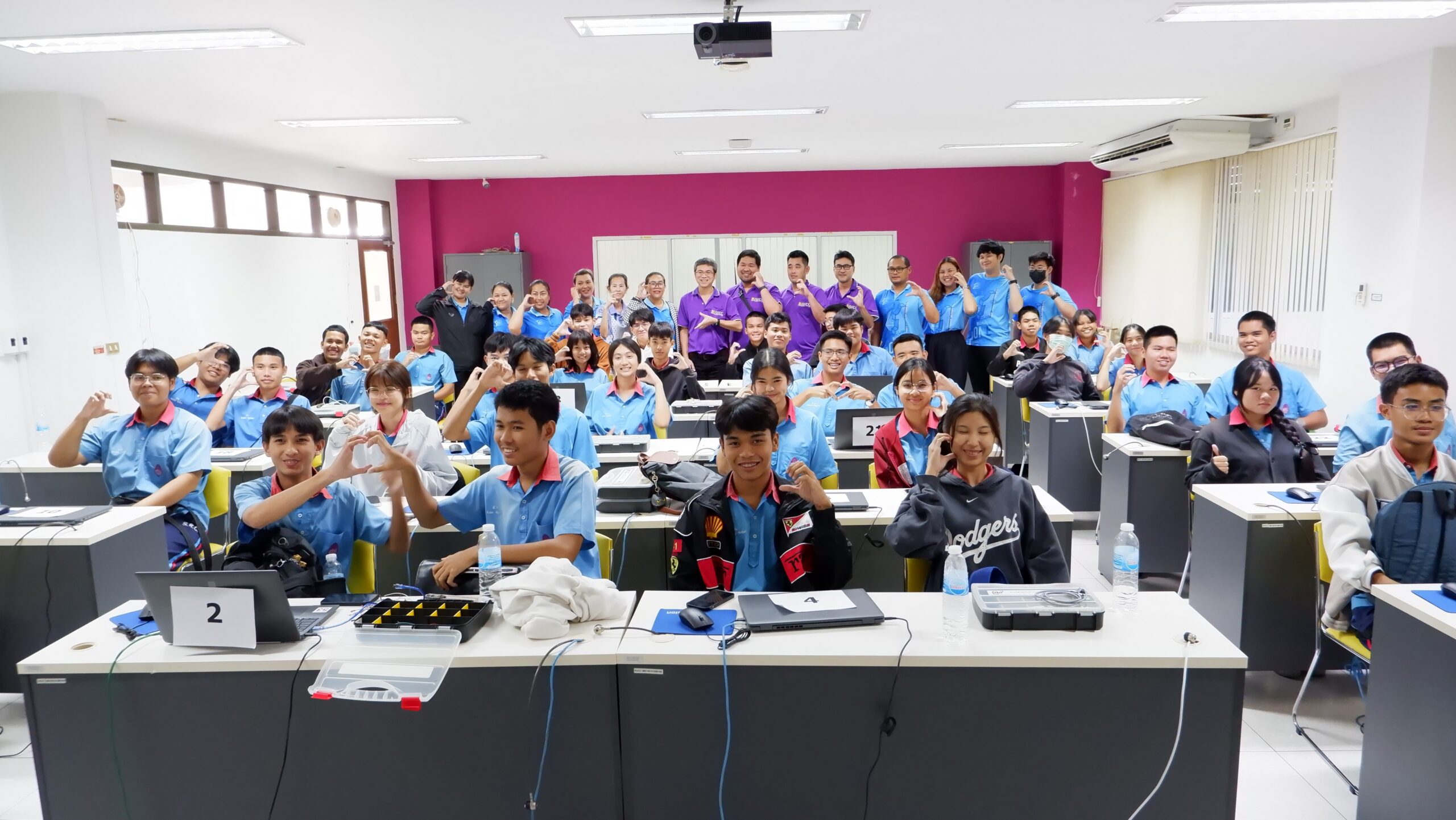
The program was conducted during 2–3 October 2025 at Sriracha School, with a total of 40 upper secondary students participating. Throughout the training, students took part in hands-on activities related to IoT circuit design and programming, working collaboratively in teams to solve problems and develop functional prototypes. This approach enhanced students’ analytical thinking, systematic problem-solving skills, and ability to apply theoretical knowledge in real-world contexts, while also promoting teamwork, communication, and knowledge sharing—key competencies for learners in the 21st century.
As a result of the program, participating students gained both theoretical and practical knowledge of Internet of Things (IoT) technology and were able to apply this knowledge to classroom learning and project-based activities. The program also fostered creativity and innovation, enabling students to design and develop technology-based inventions with practical applications. In addition, students strengthened essential soft skills, including teamwork, communication, and collaborative learning. Overall, the program contributes to the development of future-ready human capital in science and technology and supports SDG 9: Industry, Innovation and Infrastructure, as well as the long-term goal of building a sustainable learning society.
Project Leader: Thitirat Sudpum