The Server Management Project through Virtualization Technology was initiated in response to the rapid growth of the digital era, in which organizations increasingly rely on information systems for continuous operations. Servers are considered critical infrastructure for providing services related to databases, applications, and various digital platforms. However, operating a large number of physical servers results in high energy consumption, increased data center space requirements, higher maintenance costs, and environmental impacts caused by greenhouse gas emissions. Virtualization technology has therefore become an important solution for efficient server management, enabling multiple Virtual Machines (VMs) to operate within a single physical server. This approach maximizes resource utilization, reduces energy consumption, and supports Green IT practices in alignment with the United Nations Sustainable Development Goals (SDGs).
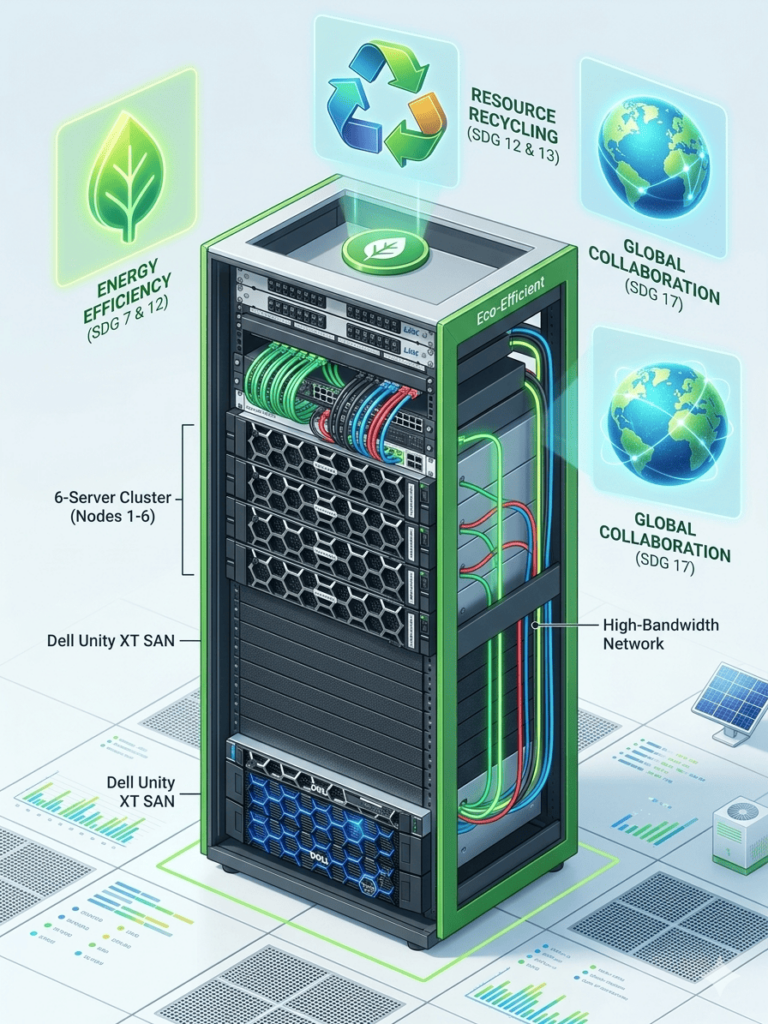
The project aimed to improve server resource utilization efficiency, reduce energy and maintenance costs, enhance the stability and continuity of information systems, minimize environmental impacts, and support organizational operations in accordance with the SDGs. The implementation of Server Management through Virtualization Technology was divided into four major phases. The first phase, Assessment, involved surveying the number of servers and analyzing CPU, RAM, storage, and energy consumption in order to properly plan system consolidation. The second phase, Design, focused on selecting appropriate virtualization platforms, designing VM architecture, establishing backup systems, and developing disaster recovery plans. The third phase, Implementation & Migration, included installing the hypervisor, performing Physical-to-Virtual (P2V) migration, and testing system stability. The final phase, Monitoring & Optimization, emphasized continuous monitoring of resource utilization, system performance optimization, and reporting energy-saving outcomes.
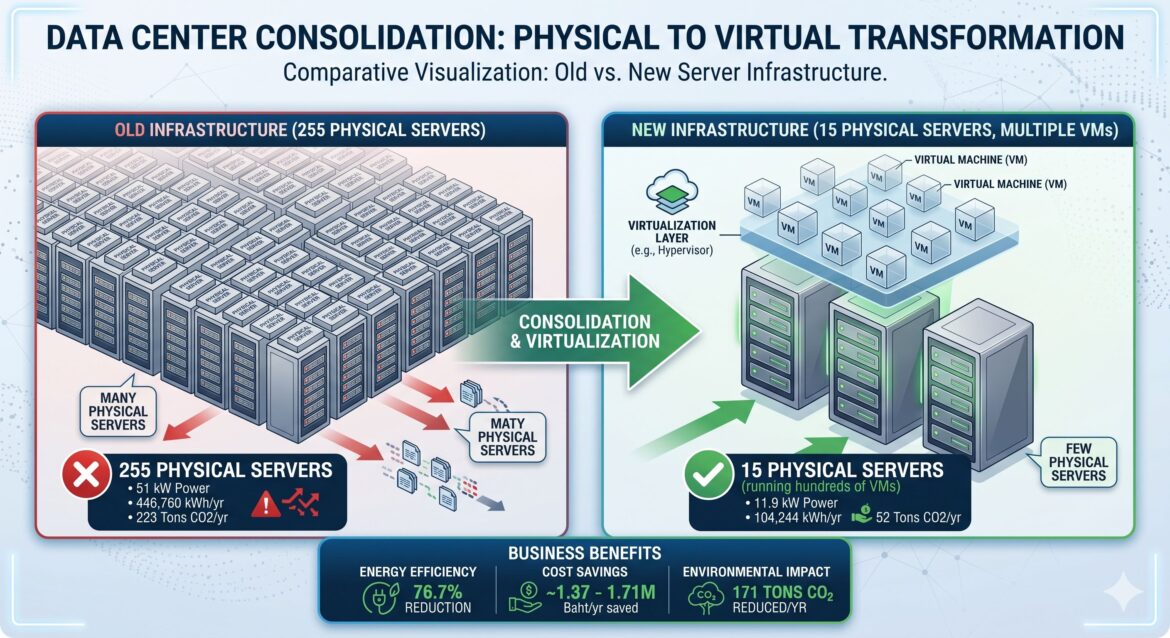
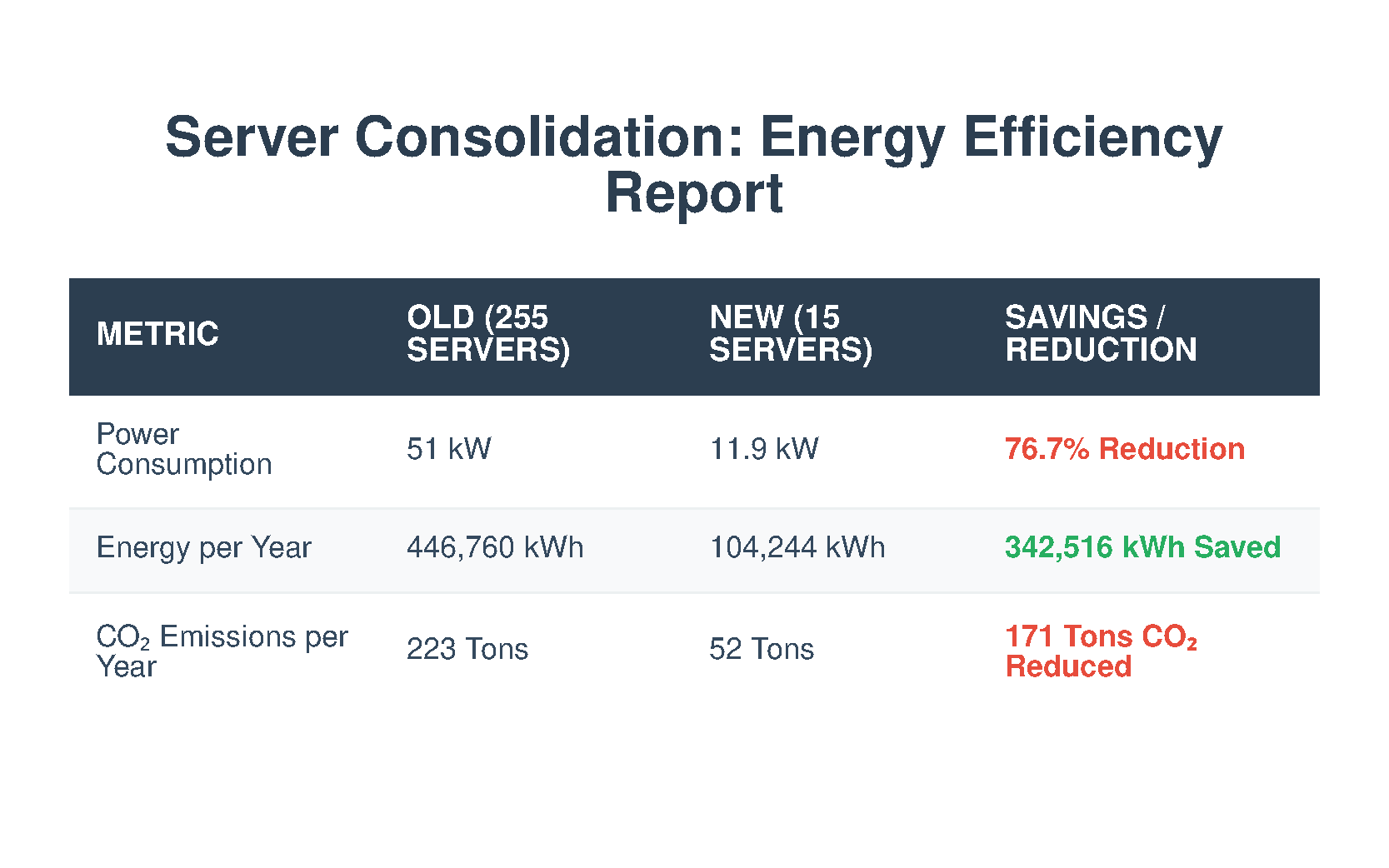
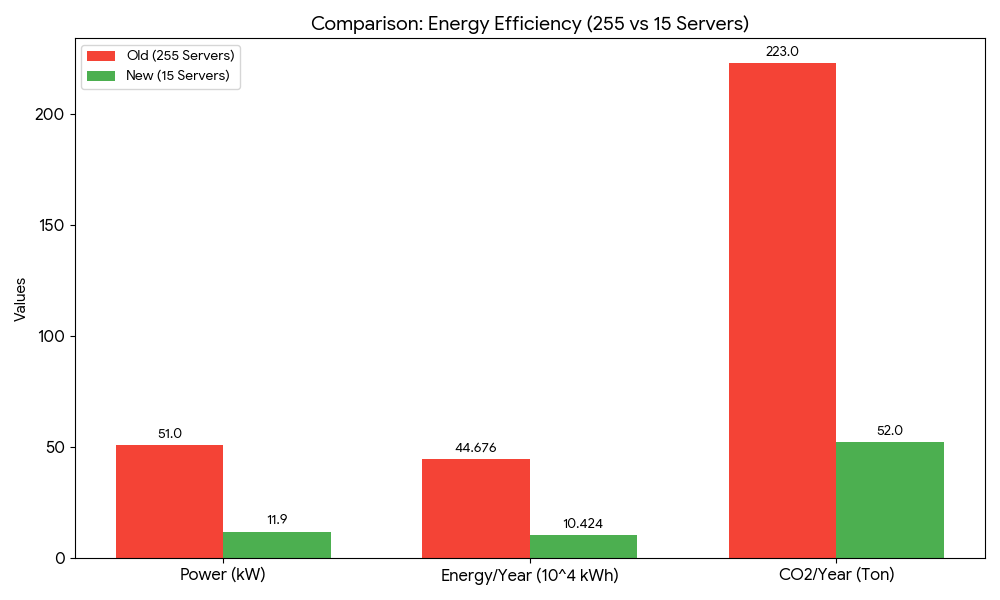
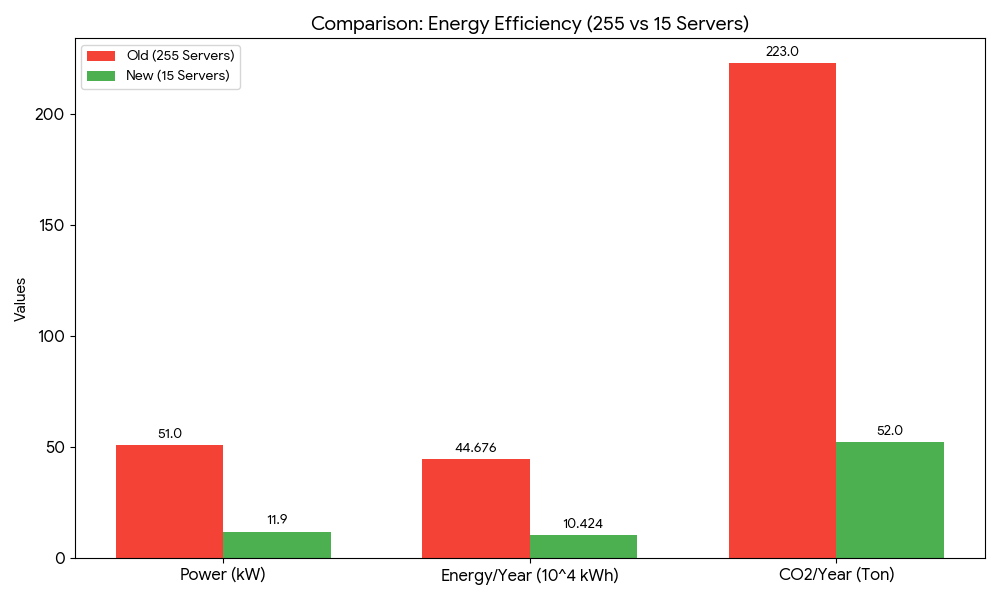
The project generated significant impacts in several areas. In terms of Resource Consolidation, the organization successfully consolidated 255 physical servers into only 15 physical servers and 2 storage systems, representing a 94% reduction in hardware equipment. This significantly reduced management complexity and minimized the space required within the data center. Regarding Scalability & Agility, the new architecture supports the creation of more than 255 virtual machines (VMs), enabling faster and more efficient deployment and expansion of Internet, Web, and Application Server services compared to the previous system. Furthermore, the project achieved remarkable improvements in Energy Efficiency and environmental sustainability. Electricity consumption was reduced from 51 kW to only 11.9 kW, significantly lowering energy costs. The system achieved annual energy savings of 76.7%, reducing total energy consumption from 446,760 kWh to 104,244 kWh, equivalent to annual savings of 342,516 kWh. In addition, carbon dioxide (CO2) emissions were reduced from 223 tons to only 52 tons, resulting in a reduction of 171 tons of CO2 emissions per year, thereby directly supporting the organization’s greenhouse gas reduction goals.
The project was implemented from October 1, 2025, to April 30, 2026, reflecting the effective application of digital technology to improve organizational resource management while simultaneously promoting environmental sustainability and strengthening long-term information technology infrastructure efficiency.
Project Leaders: MS. Kanjana Sukplang, Computer Technical Officer, Senior Professional Level
MR. Jettanan Juejan, Computer Technical Officer, Professional Level