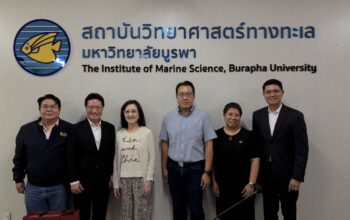
The Brownbanded Bamboo Shark (Chiloscyllium punctatum) is a small elasmobranch species widely distributed across coral reef habitats in the Indo-Pacific region. It plays a significant ecological role within marine ecosystems. Nevertheless, populations of C. punctatum in several localities, including the coastal waters of Thailand, are increasingly threatened by anthropogenic pressures, notably incidental capture in fisheries, habitat degradation, and the impacts of climate change. In recognition of the ecological importance and conservation needs of this species, the Institute of Marine Science, Burapha University, as a principal institution in marine research and conservation, has initiated efforts to promote its conservation in Chonburi Province. These efforts are being undertaken in collaboration with the Chonburi Provincial Administrative Organization, the Plant Genetic Conservation Project under the Royal Initiative of Her Royal Highness Princess Maha Chakri Sirindhorn (Royal Thai Navy), the Naval Special Warfare Command (NSWC), the Thai Islands and Seas Natural History Museum, the Rayong Marine Fisheries Research and Development Center (Department of Fisheries), and the Samaesan Sub-district Administrative Organization.
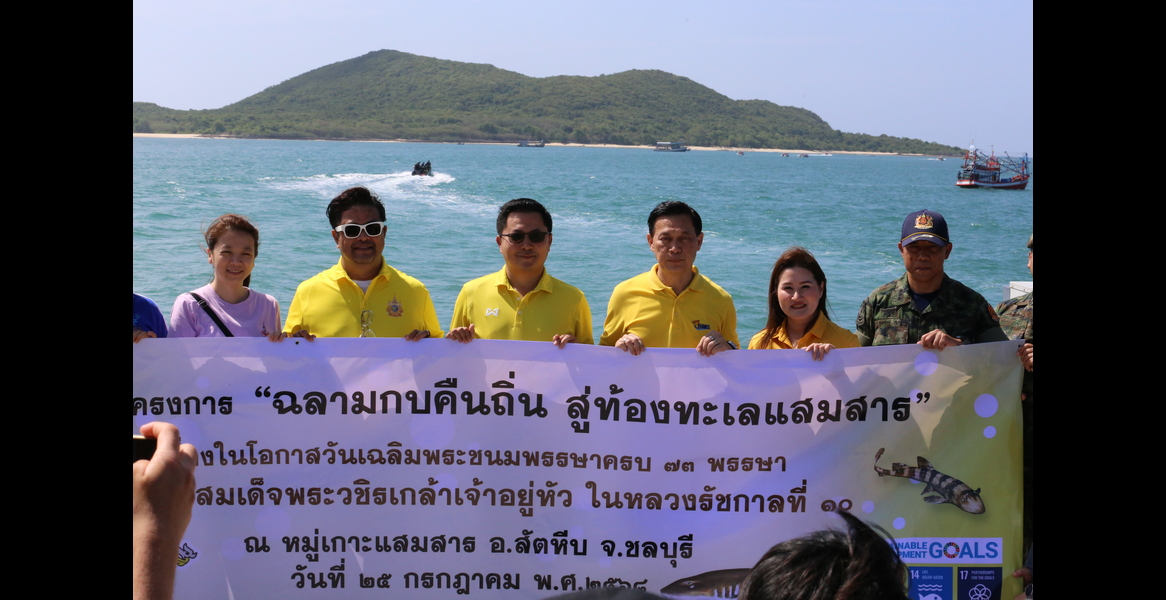
A project was implemented to release juvenile Brownbanded Bamboo Sharks (Chiloscyllium punctatum) near the Samaesan Islands, Sattahip District, Chonburi Province. The main goals of this initiative are to boost the natural shark population and to promote public awareness of vital marine resource conservation Also an objective of this project as follow 1.To enhance the natural population of Brownbanded Bamboo Sharks in their native habitat around the Samaesan Islands, Sattahip District, Chonburi Province. 2.To raise awareness and understanding among the public and relevant stakeholders regarding the vital importance of conserving the Brownbanded Bamboo Shark and overall marine resources. 3.To promote collaboration among government agencies, the private sector, and the public in the conservation and restoration of marine resources.
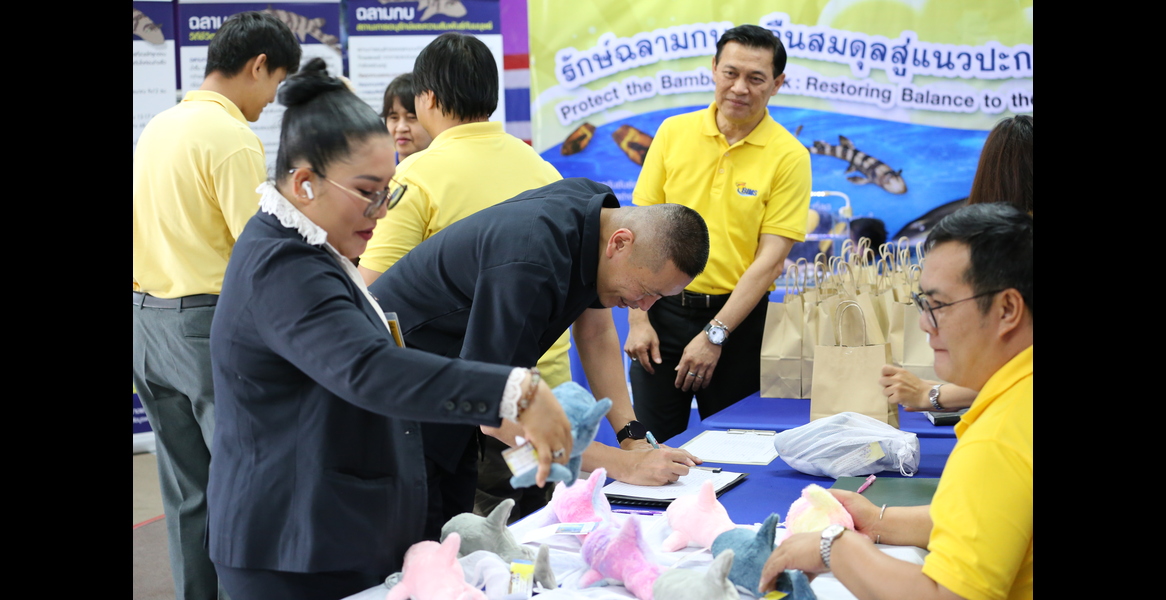
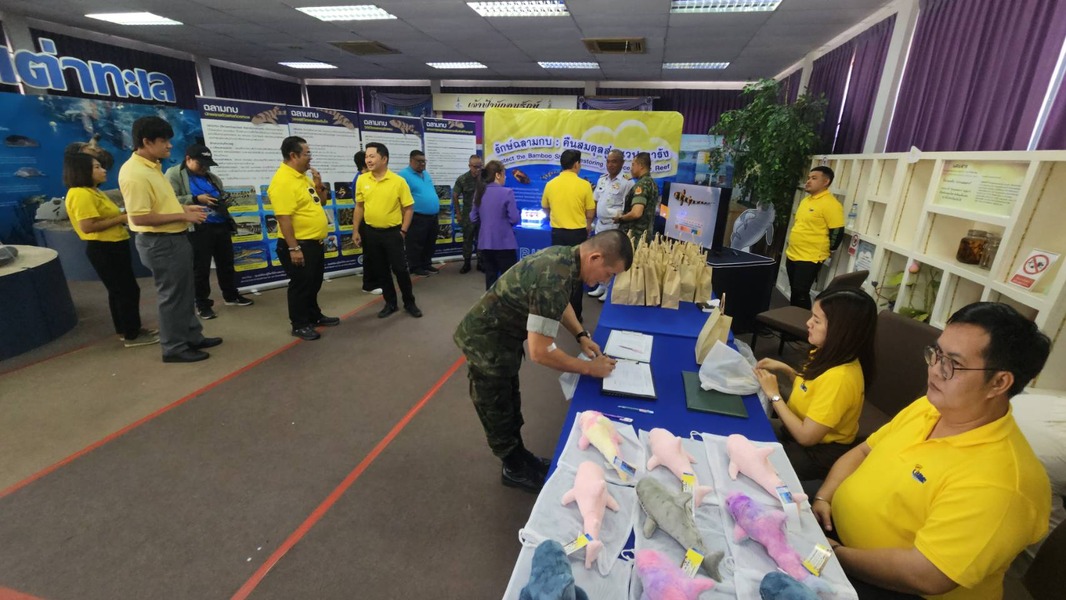
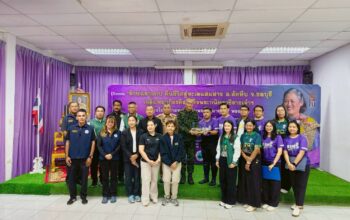
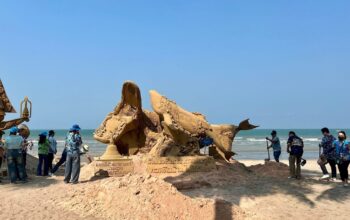
The project is a collaborative effort involving the Institute of Marine Science, Burapha University; Chonburi Provincial Administrative Organization, Chonburi Province; Naval Special Warfare Command; the Plant Genetic Conservation Project under the Royal Initiative; the Thai Islands and Seas Natural History Museum; Rayong Marine Fisheries Research and Development Center; and Samaesan Sub-district Administrative Organization. The process began with the selection of healthy juvenile Brownbanded Bamboo Sharks, bred and reared at the World Beneath the Sea Bangsaen, the Institute of Marine Science. Before the release, a preliminary survey of the site was conducted, including physical and biological assessments to evaluate the habitat’s suitability for the juvenile sharks. Key factors considered included safety from potential threats, food availability, and environmental appropriateness. Once preparations were complete, educational and preparatory activities were held prior to the release to raise awareness and ensure stakeholder readiness. These sessions included: 1. Introduction and Objectives of the Brownbanded Bamboo Shark (Chiloscyllium punctatum) Release Project 2. Biology and Life Cycle of the Brownbanded Bamboo Shark (Chiloscyllium punctatum) 3. Ecological Importance of the Brownbanded Bamboo Shark (Chiloscyllium punctatum) 4. Current Conservation Status of the Brownbanded Bamboo Shark (Chiloscyllium punctatum) Release Procedure: Juvenile Brownbanded Bamboo Sharks are carefully transported in containers filled with clean seawater and adequately aerated to maintain oxygen levels. Prior to release, the water temperature in the containers is gradually adjusted to match the ambient seawater temperature at the release site. This is achieved by floating the containers in the sea for approximately 15–20 minutes before the sharks are released. Release Method and Monitoring : Juvenile Brownbanded Bamboo Sharks are released slowly and carefully into areas that have been surveyed and assessed as suitable for their survival. This is followed by Field Surveys, which are conducted periodically to observe the presence of the bamboo sharks in the release site and surrounding areas. Additionally, coordination with local fishers is established to request their cooperation in reporting any sightings of the bamboo sharks.
The impacts:
1. The population of Brownbanded Bamboo Sharks in the Samaesan Islands vicinity has increased.
2.The public and relevant stakeholders have demonstrated increased awareness and understanding regarding the conservation of Brownbanded Bamboo Sharks and marine resources.
3.Strong collaboration has been established among various agencies in the conservation and restoration of marine resources.
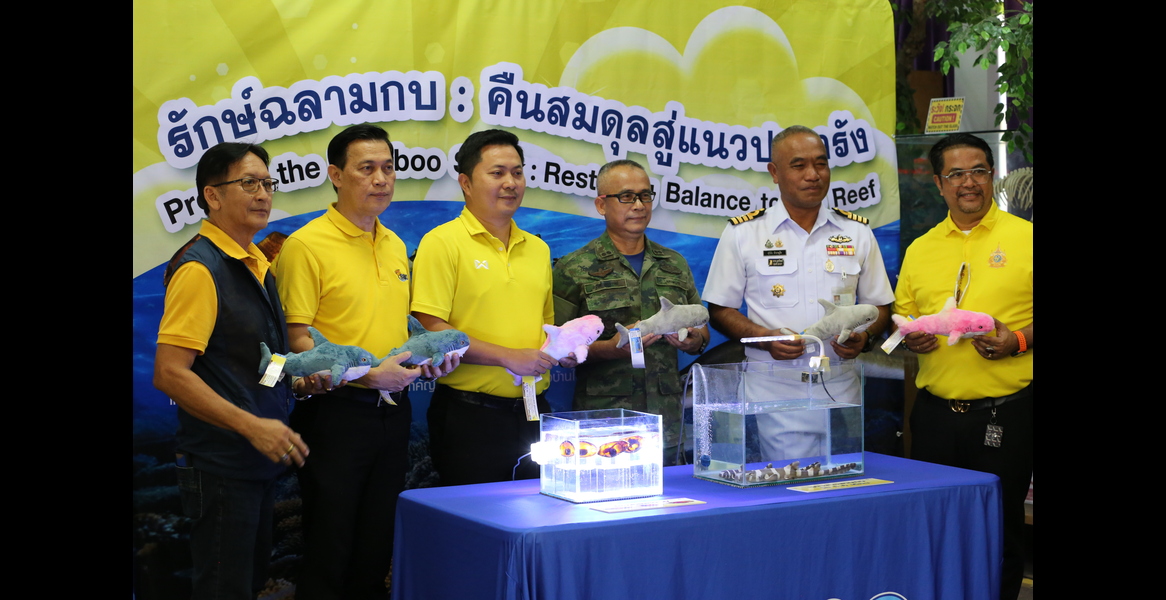
Project Timeline / Event Date: On 25 July 2025, at the Thai Islands and Seas Natural History Museum, Samaesan Sub-district, Sattahip District, Chonburi Province
Project Leaders: Dr. Adisorn Monvises (Acting Head and Marine Education Specialist, World Beneath the Sea Bangsaen) and Mr. Nattawut Luangoon (Head of Marine Science Aquarium, Institute of Marine Science)