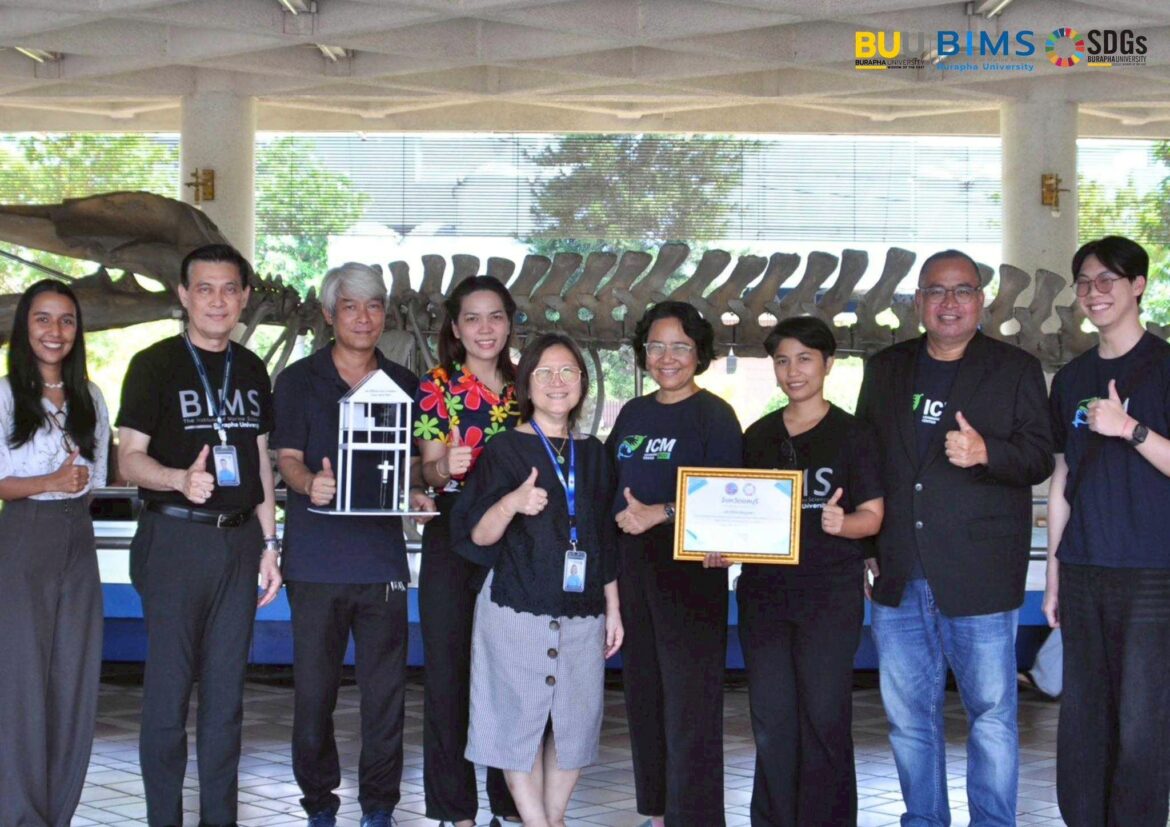
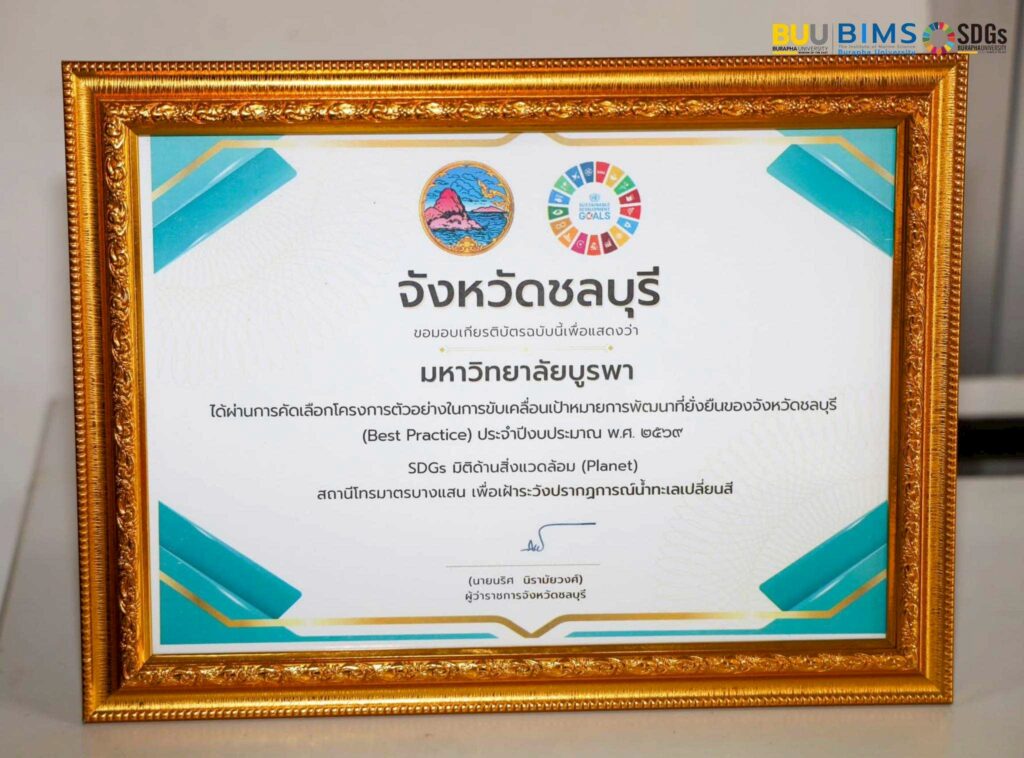
Burapha University has been selected as a Best Practice project for driving the Sustainable Development Goals (SDGs) in Chonburi Province for the fiscal year 2026, under the environmental (Planet) dimension. The recognition was awarded for the project entitled “Bangsaen Telemetry Station for Monitoring Seawater Discoloration Phenomena.” The certificate presentation ceremony was held on March 25, 2026, at the Chonburi Provincial Hall.
This selection was conducted under Chonburi’s area-based SDG implementation framework, which integrates the SDGs into provincial development across five dimensions: society, economy, environment, peace and institutions, and partnerships. The evaluation criteria included the project’s substance, tangible outcomes, distinctiveness, and alignment with the SDGs and the provincial context. The project directly supports SDG 14: Life Below Water and is also linked to SDG 17: Partnerships for the Goals.
The Bangsaen Telemetry Station project was funded by Burapha University’s Fundamental Fund (FF) during 2022–2024. It represents a collaboration between the Institute of Marine Science and the Faculty of Science, Burapha University, to develop a real-time seawater quality monitoring system offshore along Bangsaen–Wonnapha Beach.
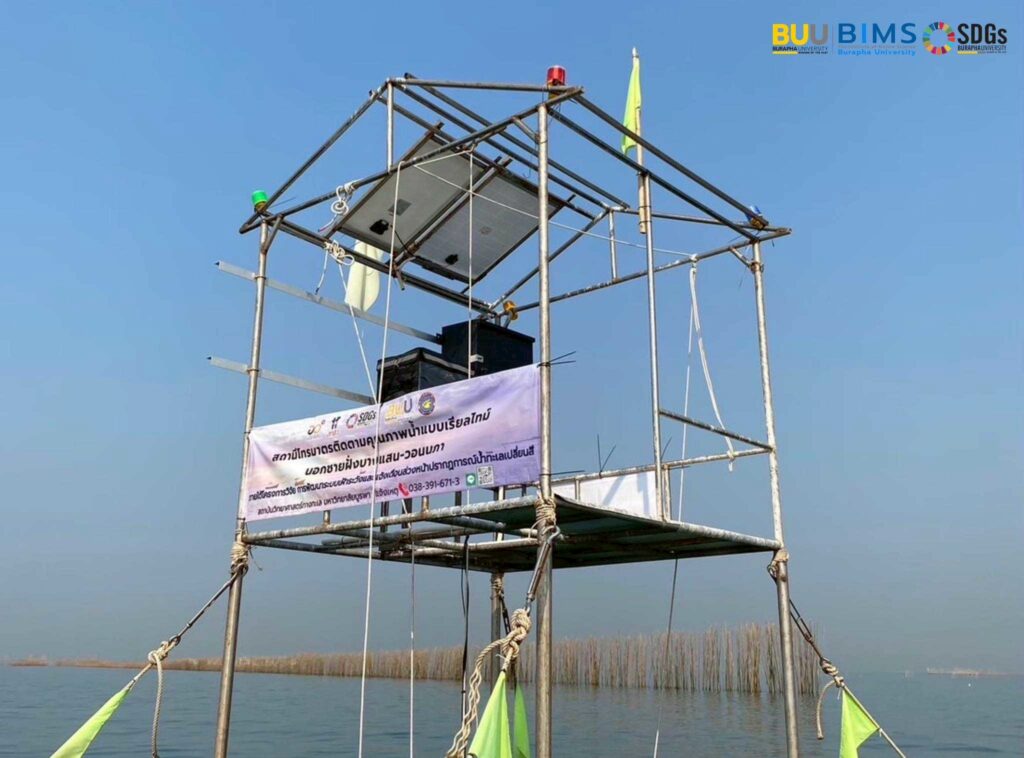
The system consists of one monitoring station installed approximately 1.6 kilometers offshore. It measures three key parameters: salinity, chlorophyll, and dissolved oxygen. The collected data are transmitted via a communication system for continuous monitoring. These data enable provincial authorities and relevant agencies to track seawater quality trends, analyze changes, monitor seawater discoloration events, and support evidence-based policy decisions and coastal management.
Over the two-year implementation period, the project has demonstrated clear progress. In the first year, the focus was on installation and system setup to ensure continuous data collection. In the second year, emphasis shifted to data utilization and system maintenance to ensure stability and reliability. The project’s strength lies in transforming real-time field data into practical applications, including monitoring, analysis, and early warning systems.
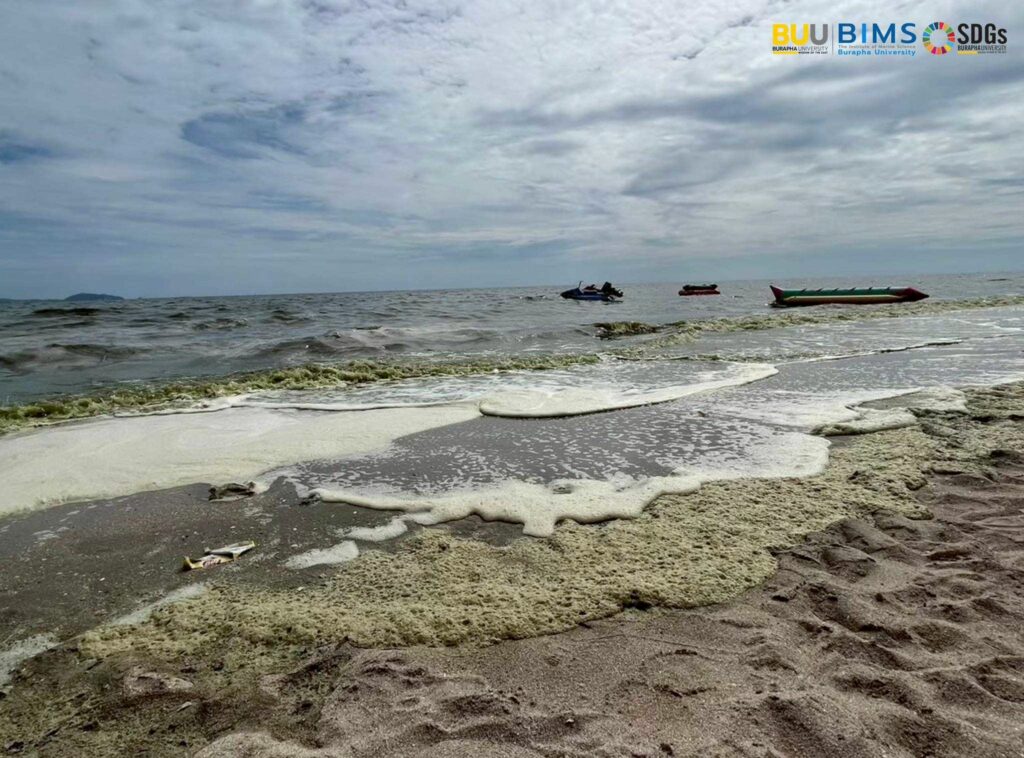
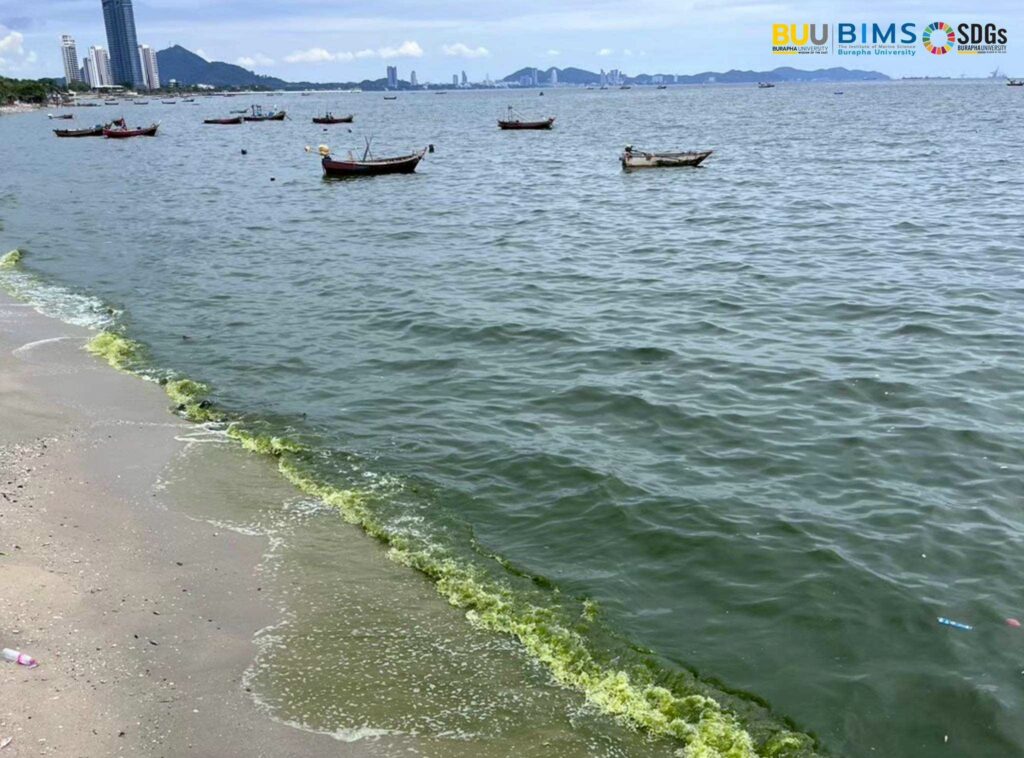
This is particularly important in coastal areas facing risks such as water pollution, wastewater discharge, and seawater discoloration, all of which impact marine resources, coastal communities, and marine-related economic activities in Chonburi Province.
The project also reflects experiential learning in practice. Its implementation extends beyond data collection to field-based research, knowledge development, and continuous system maintenance. Additionally, the project integrates data from two nearby telemetry stations—Sriracha and Bangsaen—enhancing the effectiveness of monitoring and early warning systems, particularly in identifying sources and minimizing potential damage.
Being recognized as a Best Practice highlights Burapha University’s ongoing commitment to applying academic knowledge, research, and interdepartmental collaboration to support environmental management at the local level. It also demonstrates that SDG implementation can achieve tangible outcomes through integrated efforts based on local needs and challenges.
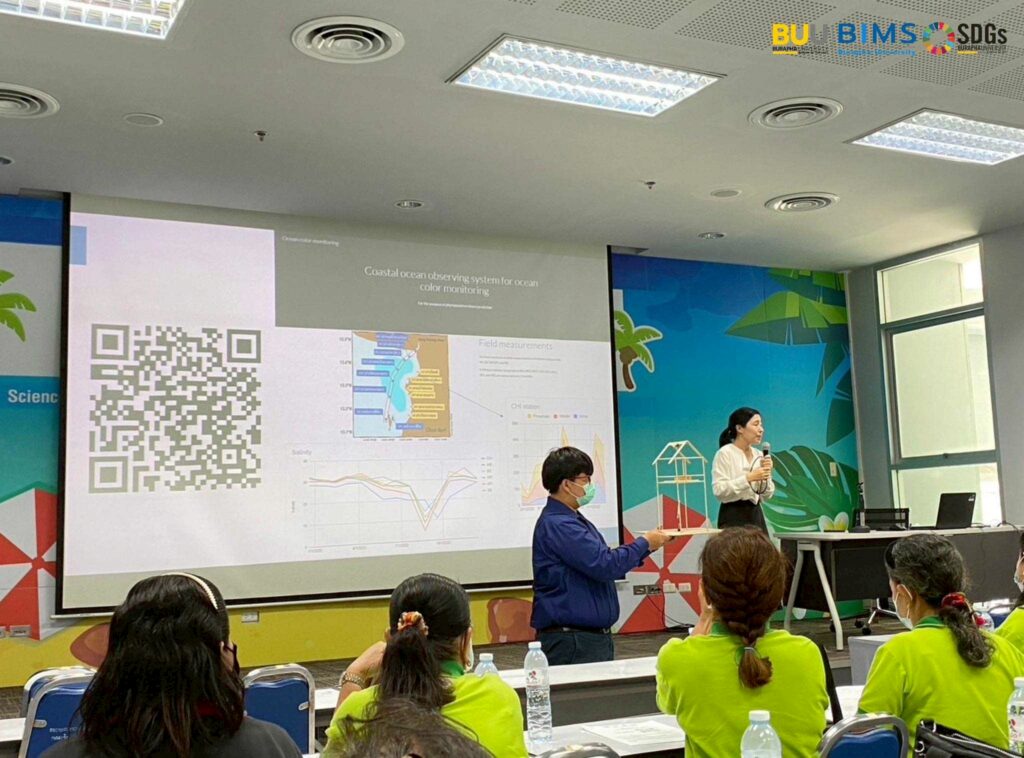
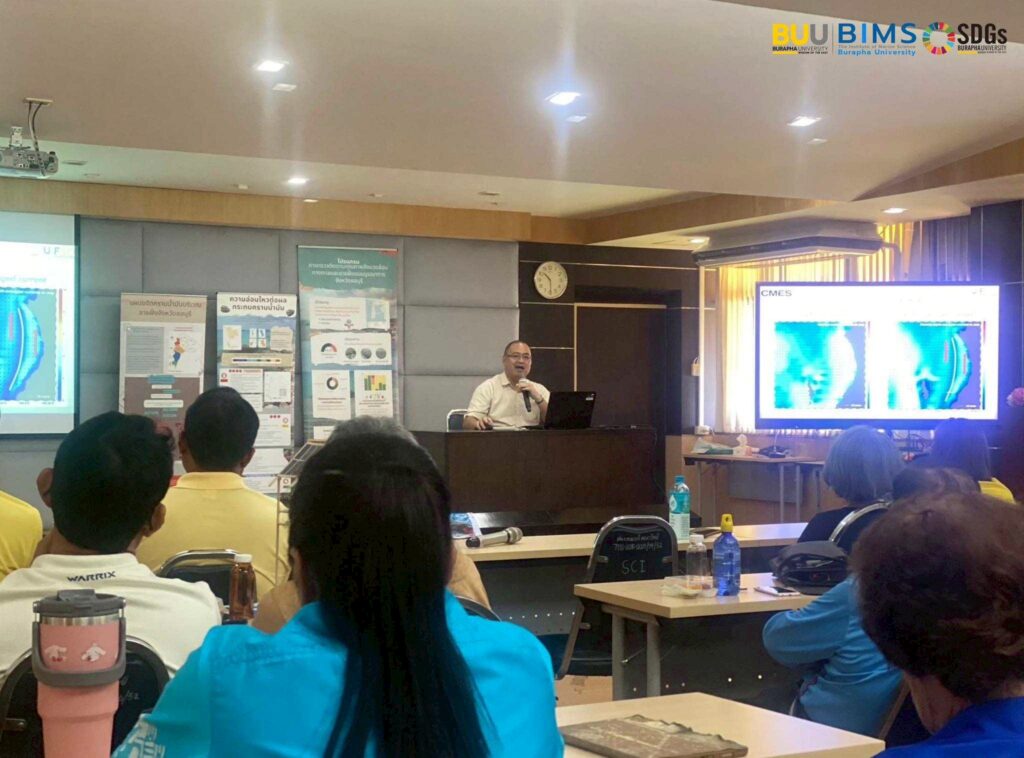
This aligns with Burapha University’s SDG action plan, which emphasizes the integration of research, academic services, and institutional expertise to benefit society and the environment. The project reflects the university’s commitment to serving as a higher education institution that actively contributes to sustainable community and regional development.
The project team includes Dr. Arachaporn Anutariya, Ms. Tikumporn Kunjiek, Ms. Supattra Taleb, Ms. Chayanee Khiamwatchara, Mr. Wanchai Wongsudawan, Ms. Alisa Thiamsakul, Mr. Arvut Manhapol, Mr. Nattapong Sajja, and Mr. Suphachai Yuenyong from the Institute of Marine Science, along with Asst. Prof. Dr. Anukul Buranapratheprat and Asst. Prof. Dr. Wansuk Senanan from the Department of Aquatic Science, Faculty of Science, Burapha University.