The coastal areas of the Eastern region, particularly at the border between Chonburi and Rayong provinces, are vital for tourism, fisheries, and aquaculture. With its favourable geography for economic development, this region is home to major industrial estates—especially the Laem Chabang Industrial Estate in Chonburi—forming a central component of the Eastern Economic Corridor (EEC). However, these developments have significantly changed the socio-environmental landscape, requiring local communities to adapt and seek new approaches toward long-term sustainability.
The blue swimming crab (Portunus pelagicus Linnaeus, 1758) is one of Thailand’s most economically important marine species. Due to high demand for both domestic consumption and export, wild populations have sharply declined, reaching critical scarcity in some areas.
Establishing “crab banks” has emerged as a key community-based conservation strategy to address this. This grassroots initiative aims to restore natural crab populations by involving local fishers in resource management. Under this model of sustainable development, economic, social, and environmental dimensions are integrated—empowering communities to take ownership of marine resource stewardship.
Project Coordinator: Assistant Professor Dr. Jariyavadee Suriyaphan
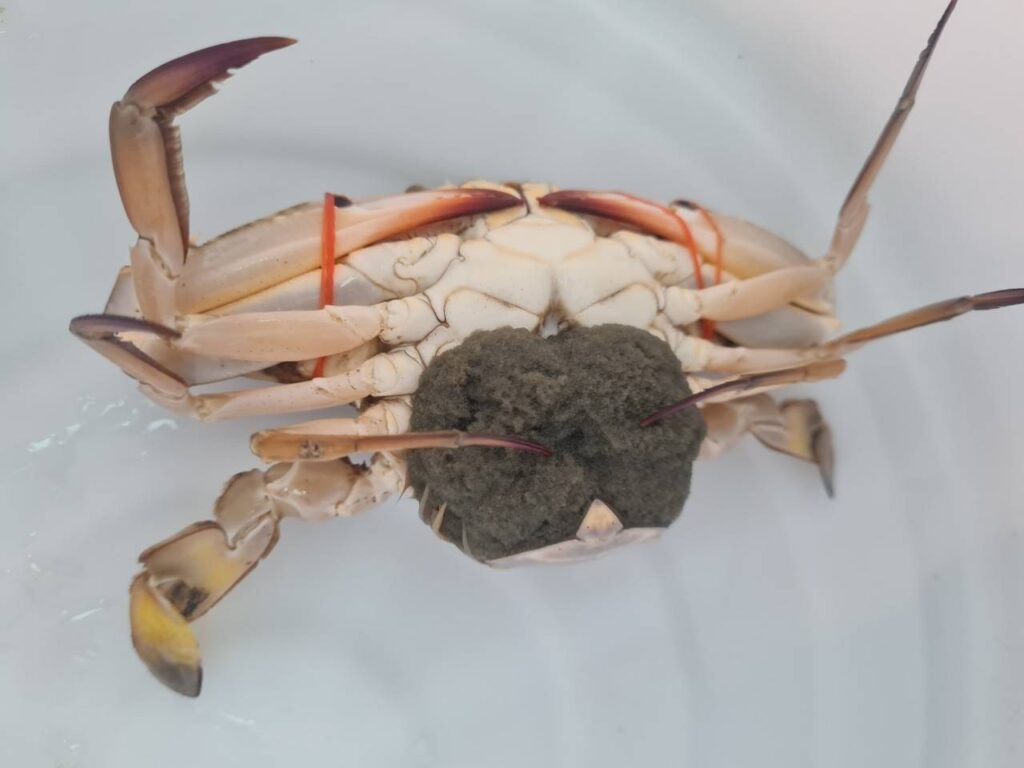
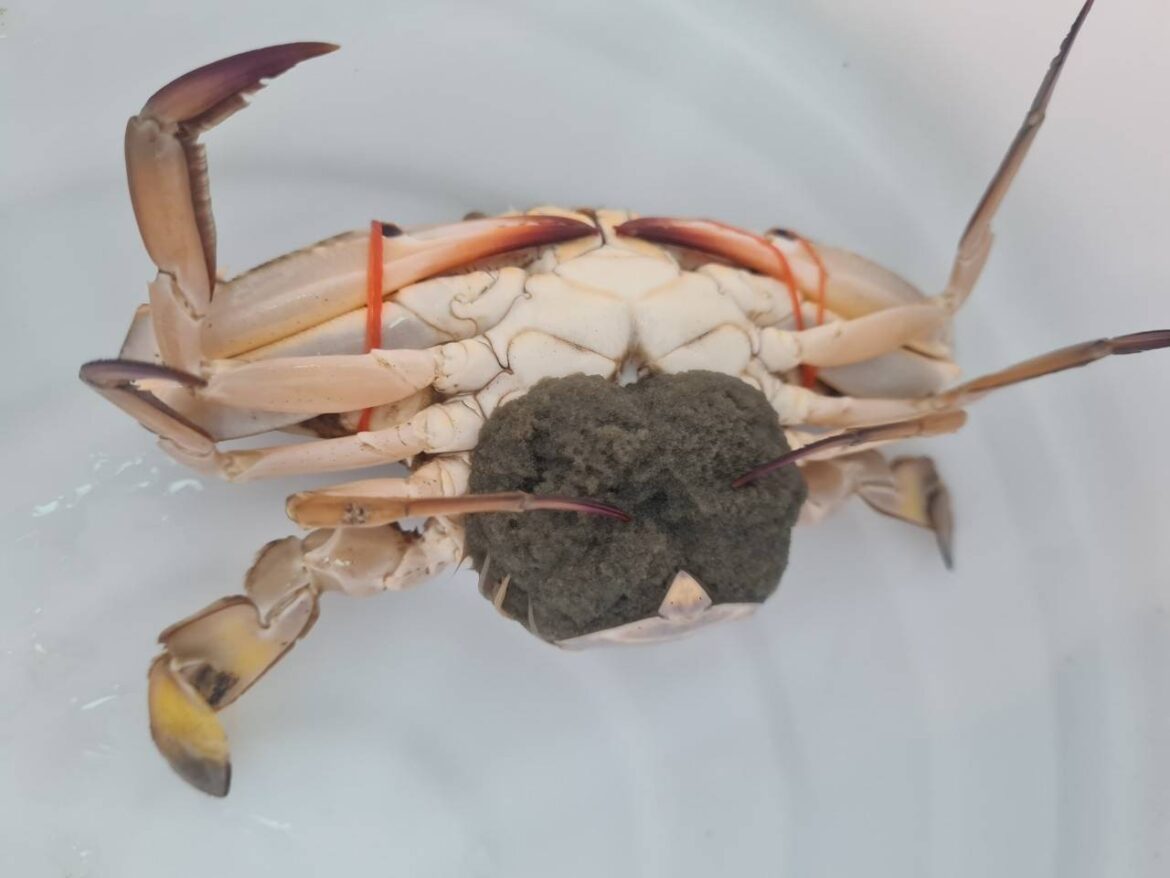
Figure 1 – Egg-bearing female blue swimming crab (external eggs visible under the abdomen).
These gravid crabs are collected and placed in floating cages as part of the community crab bank initiative to ensure successful hatching before releasing the larvae into the sea.
Female crabs carrying eggs under their abdomen (called “gravid crabs” or “egg-bearing females”) are placed in floating cages until they naturally release their eggs. Communities also learn and manage key ecological factors influencing hatching success, including egg fecundity, maternal health, incubation period, larval development, and water quality parameters such as salinity and temperature—ensuring optimal survival rates before release into the wild.
Moreover, crab banks promote social cohesion, enabling communities to form cooperative groups and potentially evolve into community-based tourism enterprises. These initiatives can further support the development of local products and services, generating added value while preserving the region’s unique identity. Ultimately, this fosters a model of self-help and self-reliance, reinforcing community resilience and long-term sustainability.
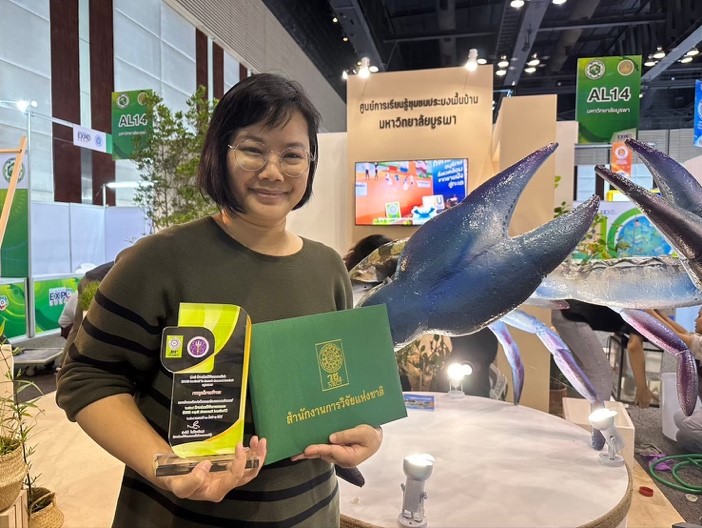
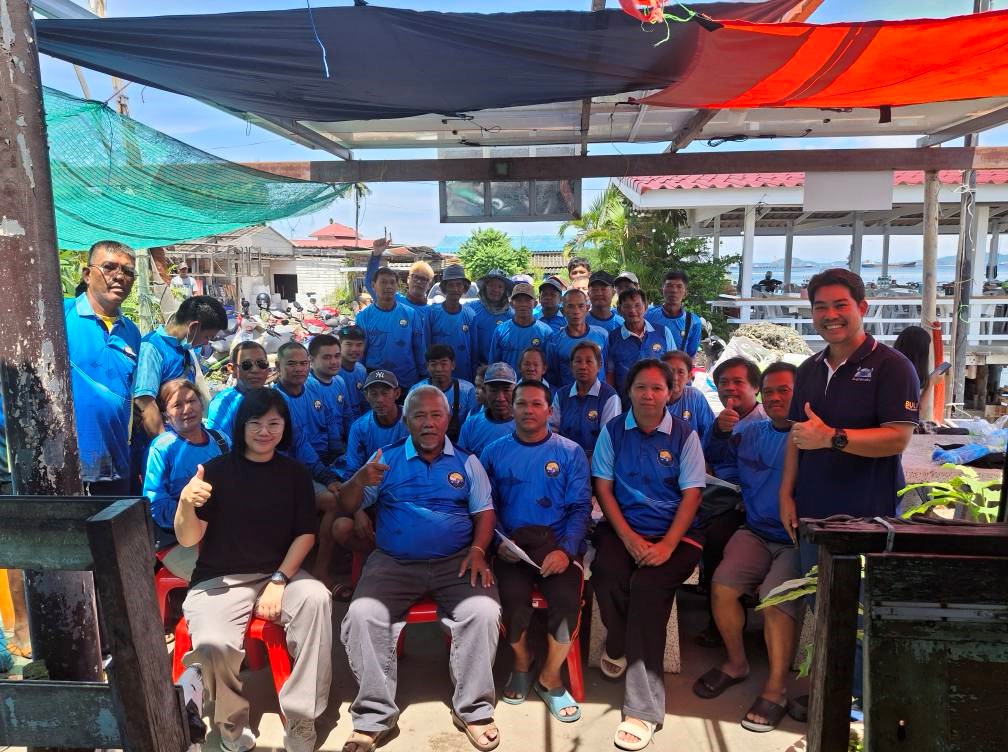
Figure 2 – Strength in numbers – the growth of Ban Nai Crab Bank community.
What began with only five founding members has now expanded to 35 active participants, reflecting the increasing local engagement and long-term commitment to sustainable fisheries management.