At first glance, stem cell research may seem worlds apart from wildlife conservation. However, over the past decade, this advanced biotechnology field has quietly emerged as a powerful tool in the fight to preserve Thailand’s endangered species. From within the laboratories of the Faculty of Science at Burapha University, a multidisciplinary team has been working to bridge this gap—transforming research into real-world conservation impact.
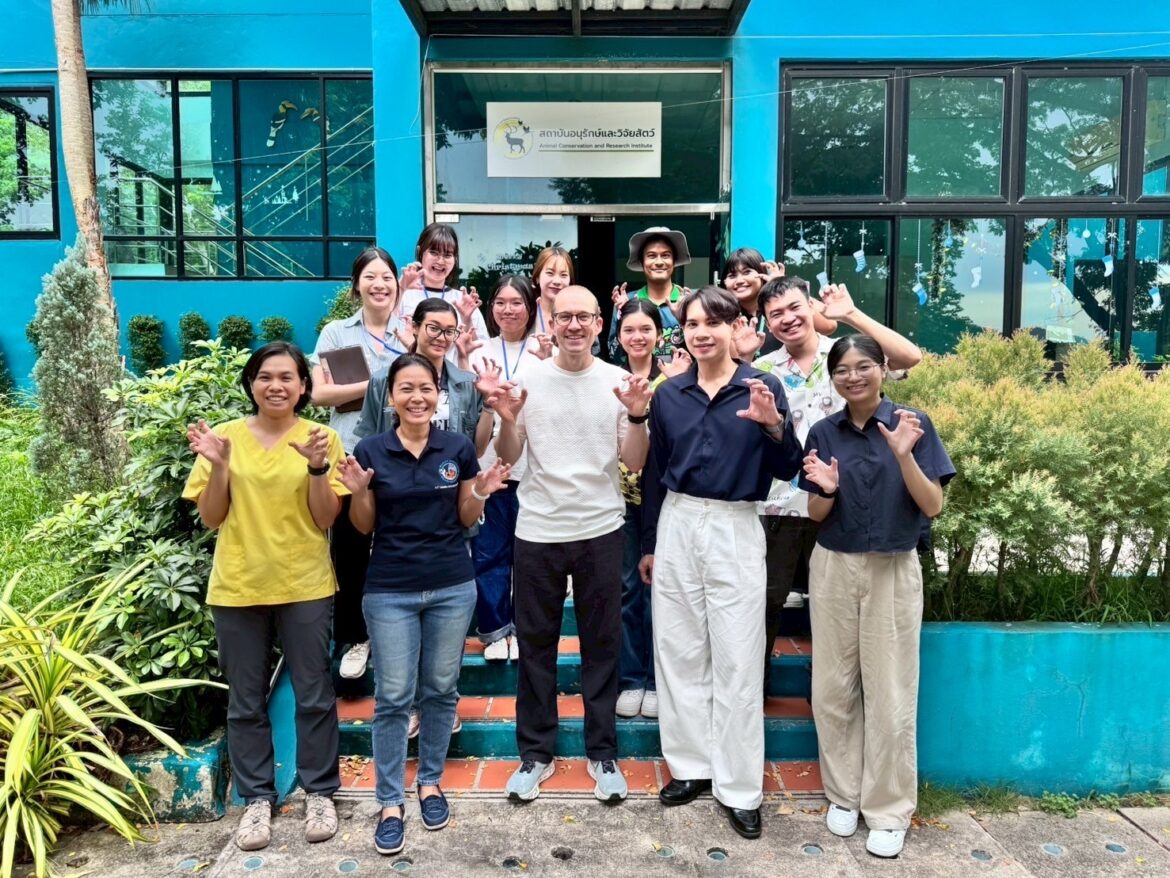
In collaboration with key partners such as the Zoological Park Organisation of Thailand and under the leadership of Dr. Ampika Thongphakdee, a pioneering veterinarian, the Excellent Unit of Wildlife Stem Cells (eWIS) was founded. This collaborative network aims to develop stem cell technology specifically for use in wildlife species, with an initial focus on the Felidae family, including fishing cats (Prionailurus viverrinus) and clouded leopards (Neofelis nebulosa)—both classified as vulnerable species. The domestic cat is a laboratory model to help refine protocols before they are adapted for wild relatives.
Empowering Research Through Education and Partnerships
Progress in this field has been driven by the energy and passion of undergraduate (B.Sc. in Biology) and graduate (M.Sc. in Biological Sciences) students who work closely with faculty researchers. The Faculty of Science provides funding support through early-career research grants and SDG15-aligned research grants (kindly supplied by Burapha University), ensuring continuity and growth.
Project Coordinator: Associate Professor Dr. Woranop Sukparangsi

On the global stage, international partnerships have significantly enhanced the capacity of Thailand’s wildlife stem cell research. Collaborations with the University of Cambridge (UK), University of Copenhagen (Denmark), Kumamoto University (Japan), and the University of Hong Kong bring in diverse expertise in cell biology, reproductive technologies, and conservation genetics.
The Future of Wildlife Preservation Lies in Pluripotent Stem Cells
The central question remains: Which type of stem cells are suitable for conservation?
The answer lies in pluripotent stem cells—cells with the potential to become any cell type in the body, including neural, muscle, blood, and even germ cells needed for reproduction. However, obtaining pluripotent stem cells from wild animals is extremely difficult because they are typically derived from embryos at specific developmental stages.
A promising alternative is the induced pluripotent stem cell (iPSC) technology, which allows researchers to reprogram adult fibroblast cells into embryonic-like stem cells. These cells can be generated from skin biopsies of deceased wild animals, cultured in the lab, and cryopreserved in wildlife stem cell biobanks. This approach opens new possibilities for genetic rescue, future assisted reproduction, and long-term species survival.
Collaboration is the Heart of Conservation Innovation
Creating viable, functional iPSCs for conservation requires an interdisciplinary approach—merging cell biology, genetics, and bioengineering. The eWIS program exemplifies the importance of research alliances and how universities can catalyse biotechnological innovation with social and ecological purposes.
Together, we are proving that technology developed in the lab can make a lasting difference in the forest—ensuring that the wildlife of Thailand does not just survive, but thrives for generations to come.