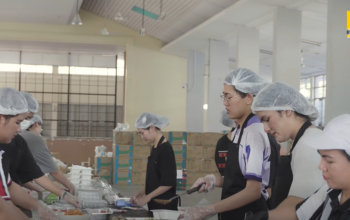
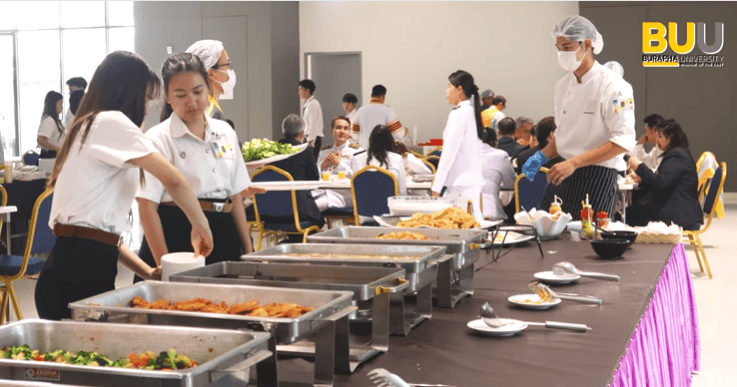
Large-scale campus events are not merely spaces for fostering collaboration or integrating efforts across university departments. They also serve as vital learning platforms where students engage in hands-on experiences—becoming real-life classrooms and bridges connecting the university with society. However, such events often have significant environmental impacts that should not be overlooked—ranging from high volumes of waste and single-use plastics, to excessive water consumption and carbon emissions from travel. Therefore, “sustainability” must not be treated as an afterthought or a label but as an integral part of event planning—systematically embedded from the initial preparation phase to post-event evaluation. A clear example of this commitment was demonstrated during Burapha University’s Royal Graduation Ceremony from 14 to 21 March 2024, which welcomed more than 1,000 participants daily. The university implemented a comprehensive environmental management approach, especially in the catering services for working staff. This initiative—led by the Catering Unit under the Planning Division, in collaboration with Suan Dusit Kitchen—emphasised waste reduction and plastic-free practices through biodegradable packaging, systematic waste separation, and water reuse strategies.
Project Coordinator: Assistant Professer Dr. Savaminee Teerawut
Objectives:
1.To promote the organisation of large-scale university events in alignment with sustainable development principles, with a comprehensive consideration of environmental impacts.
2. To develop a sustainable catering system for university events by minimising single-use plastics and promoting environmentally friendly packaging.
3. To establish a model for effective waste management, water usage, and resource efficiency during high-attendance events.
4. To cultivate environmental awareness among students, staff, and involved units through active participation in sustainable event management.
5. To foster collaboration among internal university units, external partners, and stakeholders in driving the university’s sustainability policies forward.
Program Activities:
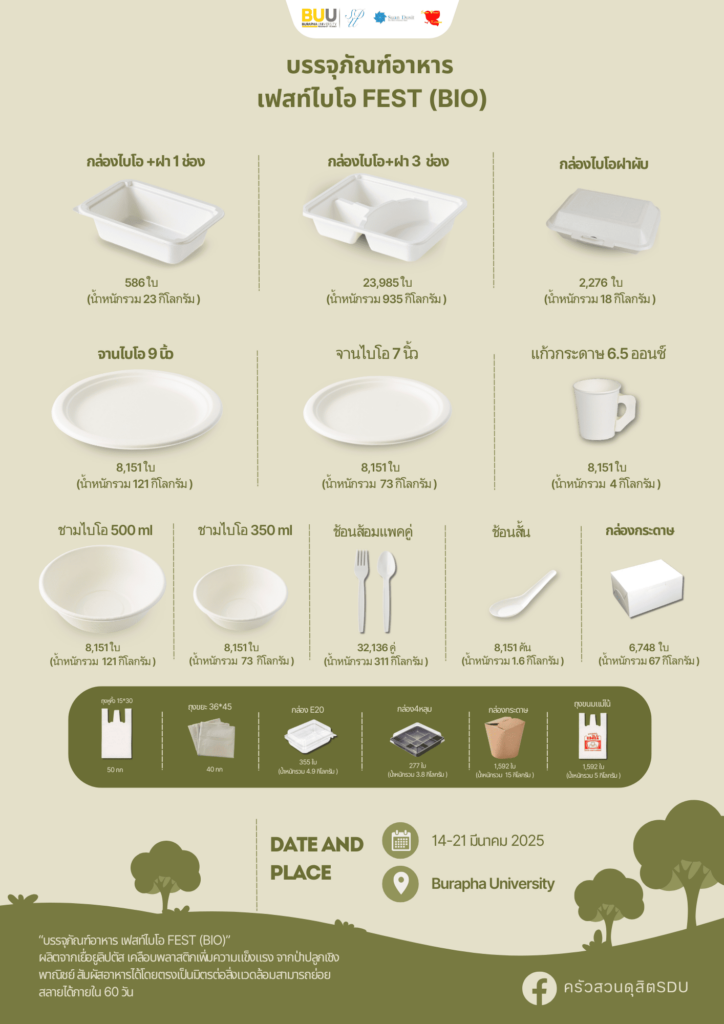
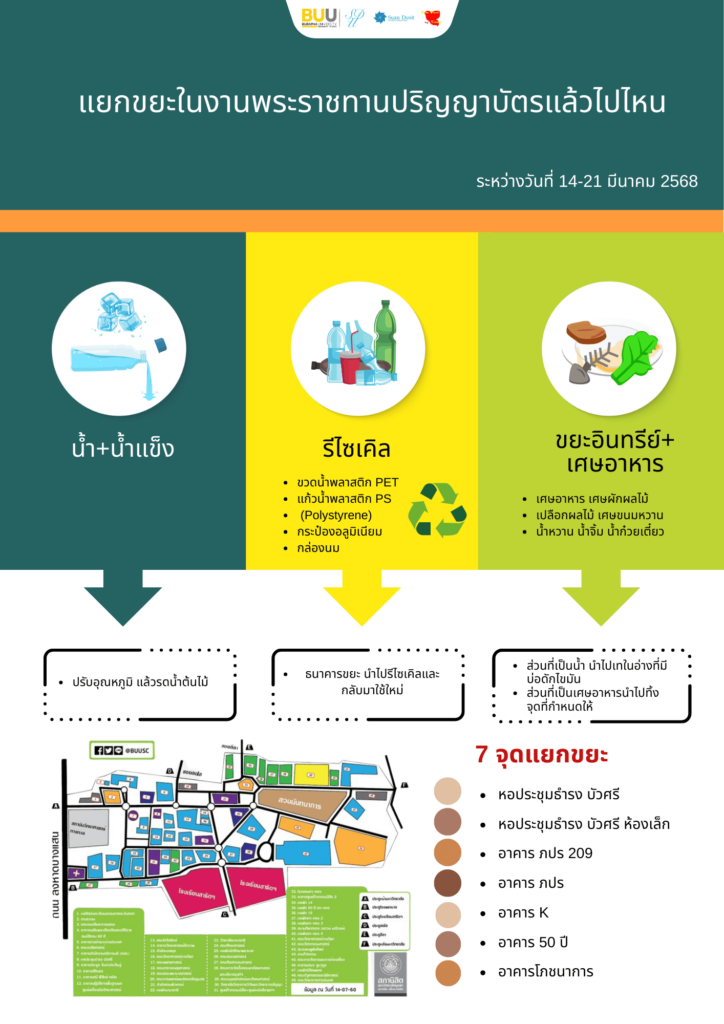
Towards Zero-Waste with 100% Biodegradable Packaging Throughout the graduation ceremony, Burapha University emphasised environmental responsibility by exclusively using biodegradable packaging made from plantation pulp. These materials naturally decompose within 60 days and eliminate foam and single-use plastics. The initiative significantly reduced non-degradable waste, utilising 23,985 biodegradable food boxes with 3-compartment lids (total weight 935 kg) and 32,136 pairs of biodegradable cutlery sets (total weight 311 kg), amounting to over 1 ton of eco-friendly materials. This shift was more than just a packaging change — it marked a transition in consumption behaviour toward a more responsible and sustainable system. Over 1 ton of biodegradable packaging helped avoid an equivalent amount of single-use plastics, reducing greenhouse gas emissions by more than 2.5 tons of CO₂ equivalent (CO₂e) — comparable to the annual carbon sequestration of approximately 120 mature trees. It also helped avoid cutting down several dozen trees for new pulp and reduced the burden on landfills, where plastics can decompose up to 500 years. Reducing Greenhouse Gas Emissions by Over 8.6 Tons CO₂e. By combining waste separation and using BIO materials during the event, the university reduced greenhouse gas emissions by 8,655.78 kilograms of CO₂e.
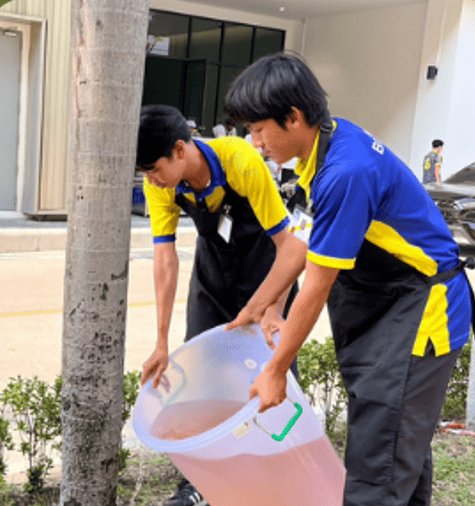
This reduction is equivalent to the annual carbon absorption capacity of more than 400 mature trees or avoiding incineration of plastics that would release as much carbon as driving a car over 35,000 kilometres. This outcome clearly demonstrates that large-scale events can play a meaningful role in climate action when guided by sustainability visions and supported by practical, proactive environmental measures. It is not only about short-term emission reduction, but also about embedding sustainability into the university’s long-term culture and operational decision-making. 💧 Reclaiming Clean Water for a Sustainable Future. More than 170 litres of clean water left over from buffet stations were collected, cooled, and reused to irrigate campus green spaces. This volume is equivalent to one person’s average water usage over three days, or more than 110 bottles (1.5L) of drinking water prevented from becoming wastewater.
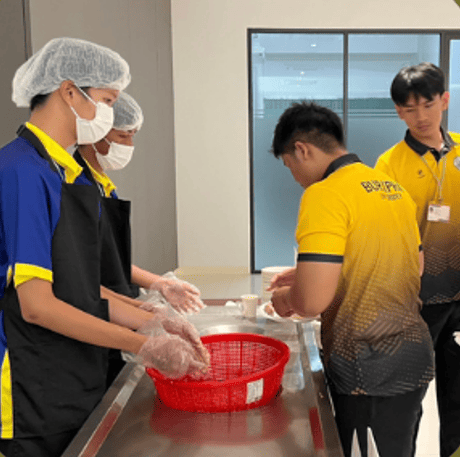
Though seemingly modest in scale, this “Water Reuse System” illustrates a paradigm shift — a new way of thinking that prioritises water stewardship and transforms large-scale event water use from wasteful to circular. SDGs Youth Ambassadors: Youth Power for Global Change Over 50 Burapha University students volunteered as SDGs Youth Ambassadors during the graduation ceremony, educating thousands of attendees each day on waste separation, sustainable water use, and eco-friendly practices. Beyond instilling environmentally conscious behaviours, the program empowered students to practice environmental communication in real-world settings, develop collaboration skills, and understand their roles in driving systemic change.
This reflects an approach to education that promotes Global Citizenship Education (GCED) and supports SDG target 4.7, which emphasises instilling sustainability values through experiential learning. Burapha University’s Planning Division remains committed to managing resources responsibly and driving sustainable development across all university missions. The goal is for every activity within the university to become a catalyst for meaningful change — generating value for the institution and the surrounding society.
Expected Outcomes (Impacts):
The catering project during Burapha University’s Commencement Ceremony, held from 14–21 March 2024, generated positive environmental and educational impacts. It successfully reduced over 1 ton of single-use plastic waste, cut greenhouse gas emissions by more than 8.6 tons of CO₂e, and reused clean water for irrigation in the university’s green spaces. It also served as a real-world learning platform for student SDGs Youth Ambassadors, who communicated daily sustainability practices to thousands of participants. This project stands as a model for how large-scale university events can be designed and implemented with environmental and social responsibility at their core.
Date of Implementation: March 14-21, 2025