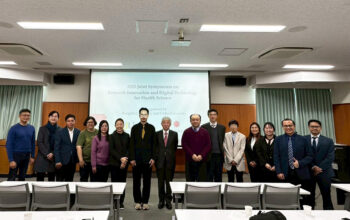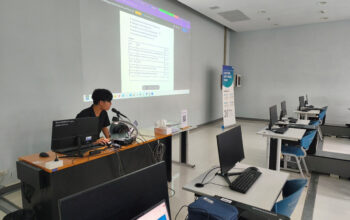
The Digital Data Exchange Cooperation Project, a collaborative initiative between the Korea Institute of Science and Technology Information (KISTI), involves key Thai institutions, including the Department of Disease Control, Ministry of Public Health, Princess Srisavangavadhana College of Medicine, and Burapha University (Thailand), and aims to strengthen epidemic response capabilities through advanced data sharing and predictive modelling. Supported by the Global Frontier Institute for Disease (GFID), this multi-year research has focused on collecting, analysing, and exchanging epidemic-related data to enhance global health preparedness. Throughout its phases, the project has made significant progress in establishing a digital infrastructure for rapid pandemic response. Key contributors include Thai public health agencies, such as the Department of Disease Control and the Ministry of Public Health, alongside academic institutions like Princess Srisavangavadhana College of Medicine. The project aggregates data on patient counts, mortality rates, and environmental factors—such as weather, temperature, and humidity—into a centralised platform. This database supports predictive models, comprehensive visualisation tools, and early detection systems, which are crucial for timely interventions and understanding outbreak dynamics. In its initial phase, the project achieved a pilot solution for data collection and sharing within Thailand. Phase 2 has refined this framework, expanding the digital platform for broader data accessibility and integrating machine learning models for epidemic prediction and management. These models leverage diverse datasets to offer actionable insights, empowering researchers from Korea and Thailand to respond more effectively to emerging health threats. The project incorporates innovative data processing techniques, including anonymisation for privacy, Burapha University’s cloud-based AIDA system storage, and article summarisation for research dissemination. Early computational analysis evaluated supercomputer performance in managing and processing these datasets using cosine similarity and K-Means clustering. The Digital Data Exchange Cooperation Project has set a new standard for international research collaboration. It has yielded valuable resources, including an epidemic text corpus, numerous research publications, and expanded data resources that support in-depth analyses. By establishing a scalable framework for global epidemic monitoring and creating a platform for knowledge exchange, this project positions Korea and Thailand at the forefront of epidemic preparedness and response.
Project Coordinator:
Dr. Thanin Methiyothin
Objectives:
1) To strengthen research collaboration between Burapha University, Thailand and the Republic of Korea, focusing on exchanging knowledge, technology, and big data in epidemiology to enhance effective international surveillance and response to infectious disease outbreaks.
2) To develop practical skills and research capabilities of students and staff through training, hands-on research in real-world settings, applying advanced technologies such as Artificial Intelligence (AI) and supercomputing, and academic presentations to international experts.
3) To establish foundational infrastructure for data integration and surveillance systems that support systematic monitoring and policy planning for emerging and variant infectious diseases through cross-border data collaboration.
4) To promote intercultural understanding and foster positive relations between Thai and Korean participants through cultural exchange activities parallel to academic cooperation.
Program Activities:
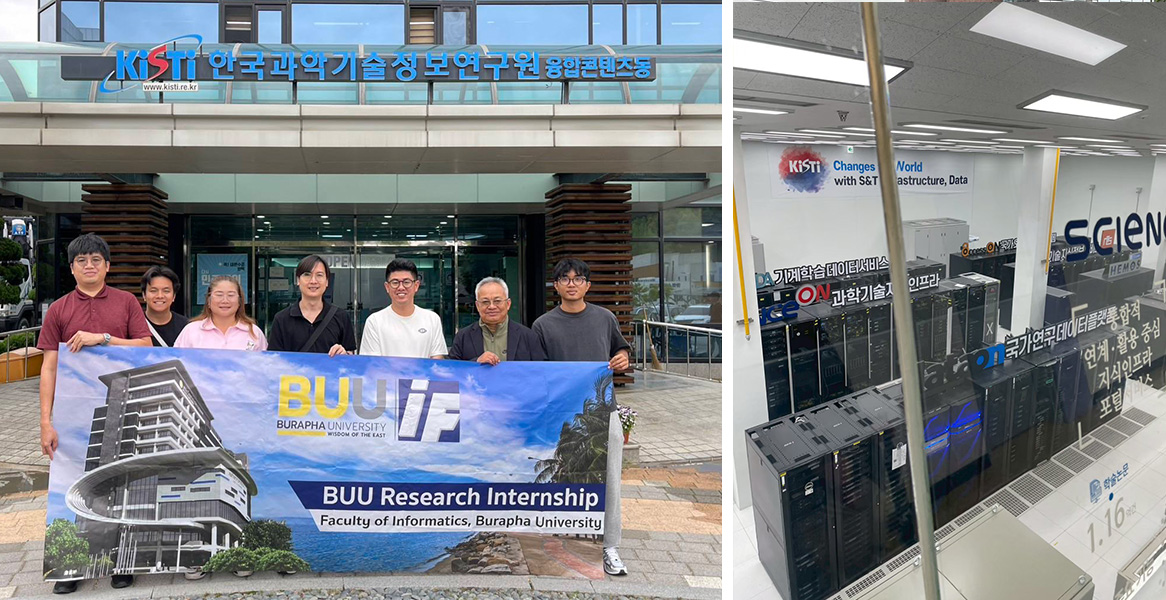
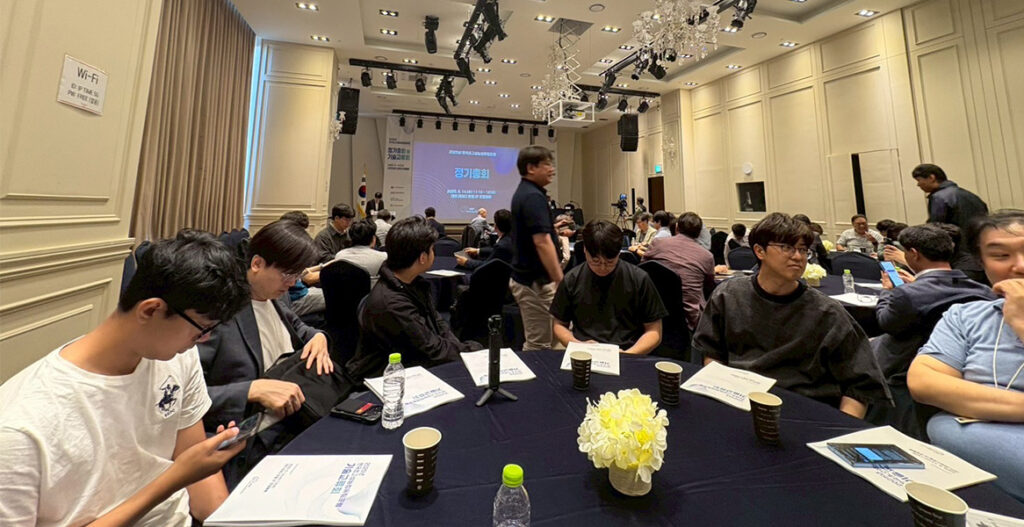
Burapha University is proud to share highlights from the recent KISTI x BUU Research Internship 2025 — a collaborative initiative advancing Thailand-Korea research partnerships in line with SDG 17: Partnerships for the Goals. Held from April 19 to May 21, 2025, this initiative provided a dynamic platform for academic and research exchange between Burapha University (Thailand) and the Korea Institute of Science and Technology Information (KISTI), in collaboration with the University of Science and Technology (UST), Republic of Korea.
The program was made possible through the dedicated efforts of Prof. Dr. Insung Ahn (Center for Data-centric Problem-Solving Research, Dept. of National Supercomputing, KISTI) and Asst. Prof. Dr. Athita On-uean (Associate Dean of the Faculty of Informatics, Burapha University). Together, they led a group of students and academic staff from Burapha University to participate in international research exchange in two key areas:
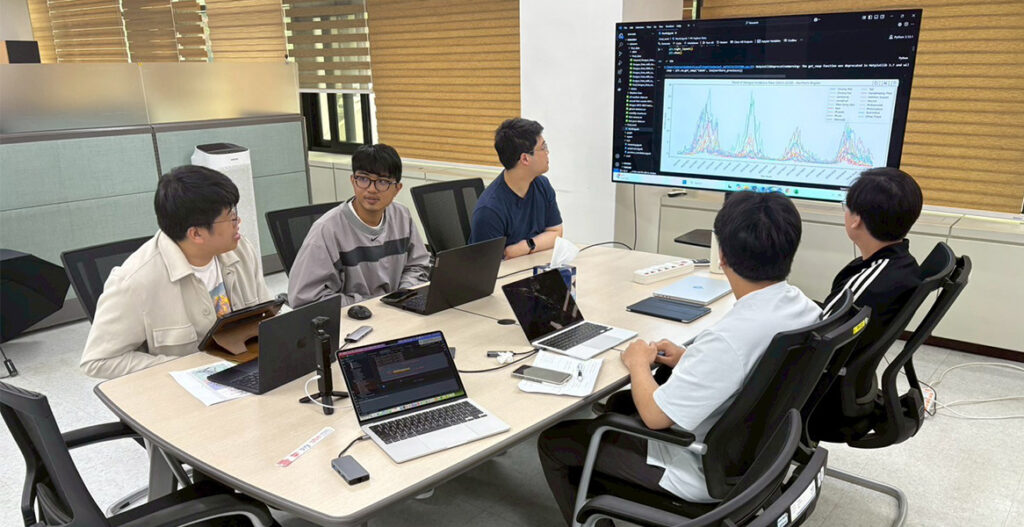
1️⃣ Big Data Analytics in International Epidemiology — a collaborative project, now in its third year, to develop a cross-border digital data exchange framework between Korea and Thailand, aimed at enhancing rapid international responses to emerging infectious diseases.
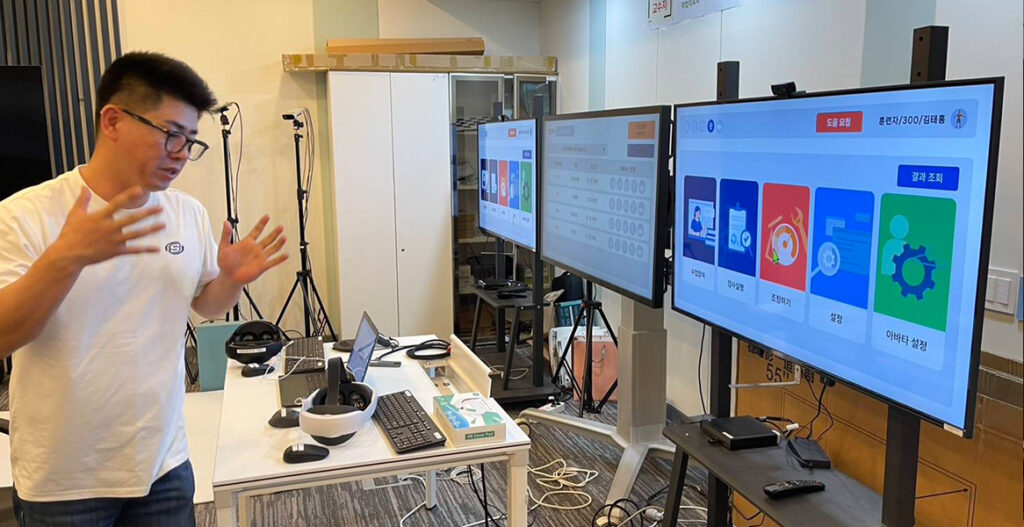
2️⃣ Applied Artificial Intelligence (AI) — a core research focus at KISTI, offering significant opportunities for future joint publications and international research collaborations. Beyond research activities, the internship provided invaluable hands-on experience for students from the Faculty of Informatics, enabling them to develop advanced competencies in: • Research methodology design • Bioinformatics data analysis and forecasting • AI model application • International academic communication and presentation.
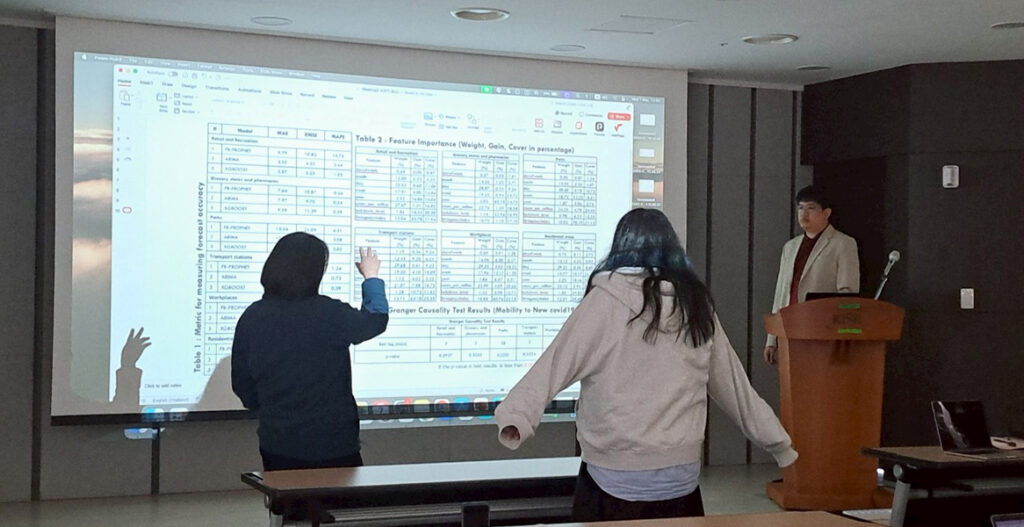
The one-month research collaboration culminated in student presentations showcasing their research progress. Following these presentations, Prof. Dr. Insung Ahn and colleagues led in-depth discussions on a proposed five-year collaborative project with Burapha University, entitled: “Development of AI Surveillance Technology Based on Data Integration for Monitoring Inflow of New and Variant Infectious Diseases Overseas.” Participants also had the unique opportunity to tour one of the world’s fastest high-performance supercomputers at KISTI — a critical infrastructure supporting cutting-edge AI and significant data research. To further foster cultural ties, the Thai delegation hosted a Thai cuisine exchange, preparing Panang Curry with Pork and Son-in-law’s Eggs (Fried Boiled Egg with Tamarind Sauce), which were warmly received by Korean colleagues, adding a memorable cultural dimension to the academic experience.
Expected Outcomes (Impacts):
This project serves as a clear example of international collaboration aligned with SDG 17: Partnerships for the Goals, by strengthening knowledge networks, data exchange, and technological cooperation for sustainable development in global epidemic management. The development of Big Data analytics in epidemiology enables accurate forecasting of disease outbreaks and supports the formulation of responsive public health policies. Integrating data systems between Korea and Thailand has established a national infrastructure that facilitates systematic monitoring and control of emerging and variant diseases. Participating students and staff have been trained in advanced data analysis and research practices in real-world environments, and have presented their work to international experts.
Date of Implementation: April 19 to May 21, 2025