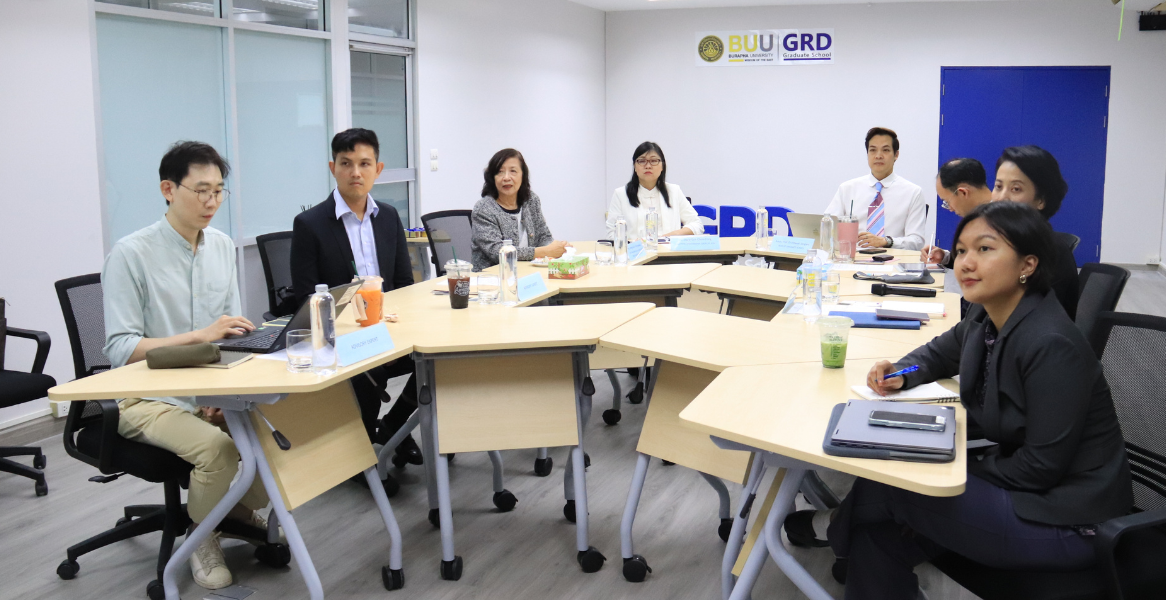
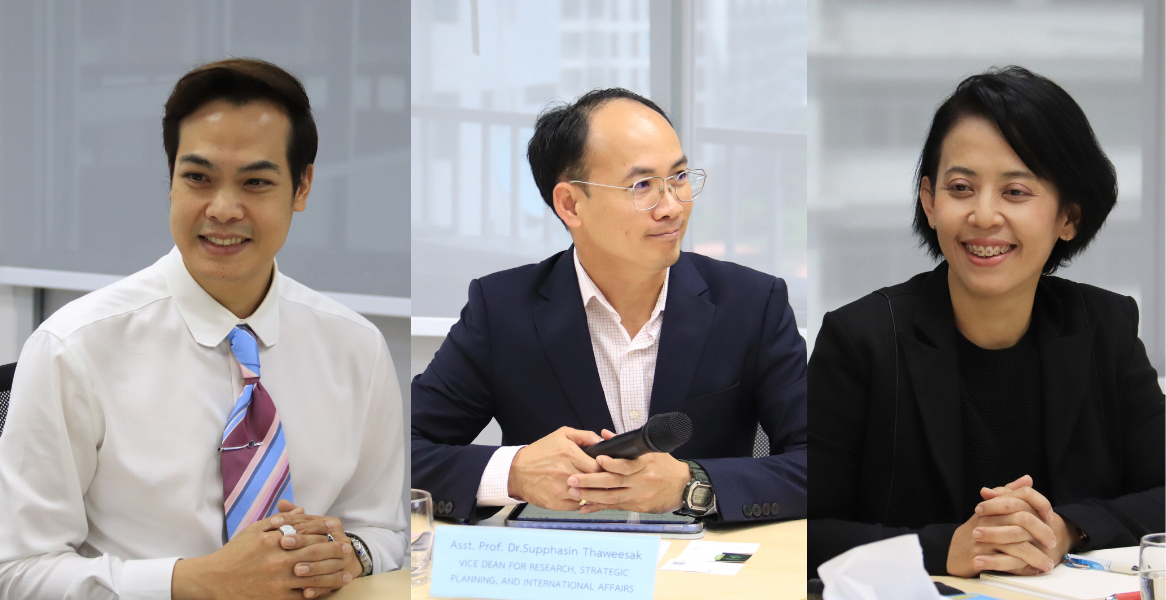
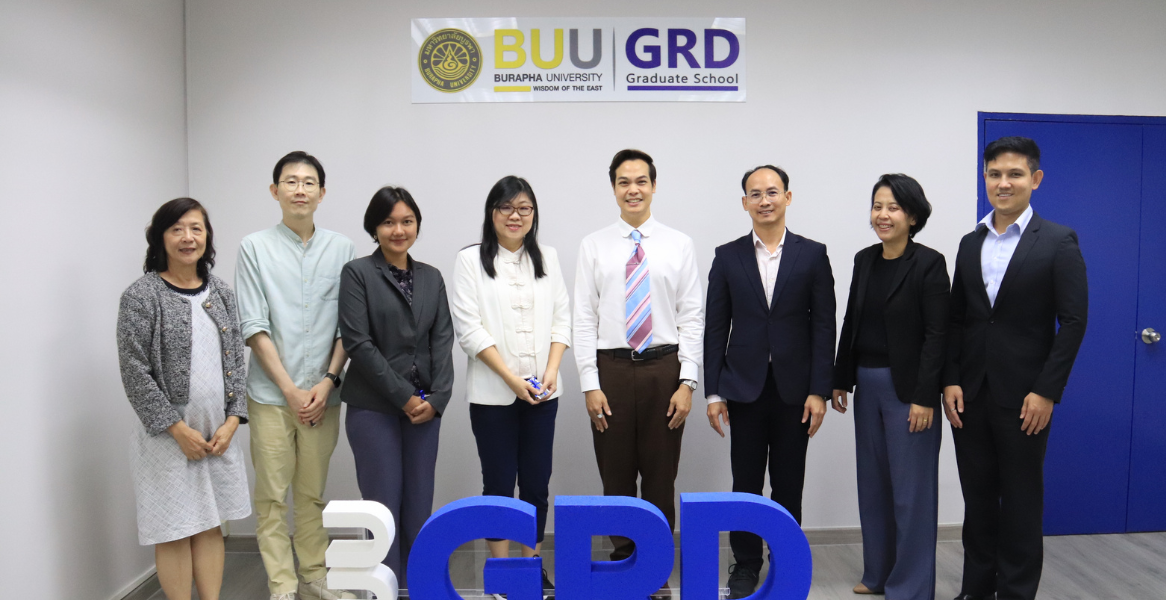
The Graduate School of Burapha University, in collaboration with the Thai Agricultural Innovation Trade Association (TAITA) and CropLife Asia, has initiated a significant project aimed at enhancing the responsible use and management of hazardous substances in agriculture. This initiative emerged from a joint meeting among the three institutions, recognizing the critical importance of pesticide and agrochemical management for food security, consumer safety, farmer welfare, and environmental protection.
In Thailand, chemical inputs remain a crucial component of agricultural production. However, without proper regulation and technical knowledge, their misuse may cause serious impacts on human health, ecosystems, and the country’s agricultural export markets. To address this, the Graduate School has taken a leading role in organizing training programs for “Hazardous Substance Controllers.” These programs are designed to develop qualified personnel in the agricultural sector who possess the necessary knowledge, skills, and legal understanding to supervise and regulate the safe use of hazardous substances.
The collaborative effort between Burapha University, TAITA, and CropLife Asia not only reviews the outcomes of the training courses but also explores curriculum development to ensure that agrochemical dealers and farmers are well-informed. The initiative seeks to minimize risks from improper chemical use, raise the quality and safety standards of agricultural products, and build consumer confidence both domestically and internationally.
Private-sector organizations play a key role in this initiative. TAITA, as a national body, is committed to promoting responsible agricultural innovation and advancing knowledge on safe and environmentally friendly agricultural products. TAITA emphasizes international standards in its training while ensuring the transfer of technologies that suit the Thai agricultural context. At the regional level, CropLife Asia works with governments, academic institutions, and private partners to promote responsible, safe, and sustainable agricultural practices. By supporting skill development for hazardous substance controllers, CropLife Asia contributes to the long-term competitiveness of farmers in Southeast Asia.
The training of hazardous substance controllers serves as a vital mechanism not only to reduce risks associated with chemical misuse but also to elevate the quality and safety of Thai agricultural production. This contributes to greater export opportunities, consumer trust, and sustainable agriculture aligned with the United Nations Sustainable Development Goals (SDGs), particularly in the areas of health, food security, and environmental protection.
Objectives of the Project
The project recognizes that hazardous substances such as pesticides and chemical fertilizers remain integral to Thailand’s agricultural production systems. Proper regulation and responsible use are therefore essential to safeguard the health of farmers, consumers, and the environment. Following the training course, the joint meeting was convened to evaluate progress and strengthen efforts. The project also aligns with the Hazardous Substances Act B.E. 2535 (1992), which requires certified controllers with specialized expertise. Accordingly, the training emphasizes legal compliance, Good Agricultural Practices (GAP), and internationally accepted standards to support Thailand’s integration into global agricultural trade.
The project pursues three main objectives:
Report and assess training outcomes – to enhance participants’ knowledge and skills in managing hazardous substances, covering aspects such as classification, properties, usage, storage, transport, disposal, and risk prevention. Trained personnel are expected to provide accurate guidance to farmers, reducing misuse and promoting occupational health and safety.
Promote private-sector responsibility – the collaboration with TAITA and CropLife Asia highlights the role of agribusiness in ensuring consumer safety, environmental protection, and the sustainability of food systems, beyond commercial interests. The training also incorporates environmental awareness, contamination risk prevention, and restoration practices for affected areas.
Develop a sustainable knowledge-sharing network – trained controllers are encouraged to become “knowledge multipliers” who can serve as community leaders or technical advisors in agriculture. This also fosters networking between government agencies, the private sector, academia, and farmers to share best practices, technologies, and innovations adaptable to local contexts.
Implementation
The program is recognized by the Department of Agriculture, with the Graduate School of Burapha University officially registered as a training provider. Training sessions are delivered in short courses (two days) through lectures, exercises, and assessments. Participants who meet the requirements and pass evaluations are awarded certificates, qualifying them to be officially registered as “Hazardous Substance Controllers” under the law. Training activities have been conducted in the Eastern region, specifically in Chonburi and Chanthaburi provinces, ensuring accessibility for agricultural stakeholders in key production areas.
The initiative has been implemented through close coordination among the Department of Agriculture, TAITA, CropLife Asia, and Burapha University’s Graduate School. The project is scheduled to run continuously from June 2025 to July 2025, under the supervision of Asst. Prof. Dr. Supphasin Thaweesak.
Impacts
The collaboration between Burapha University, TAITA, and CropLife Asia has established a solid foundation for responsible agrochemical management in Thailand. Key outcomes include:
Enhanced knowledge and safety practices – farmers and agrochemical controllers now possess accurate knowledge on hazardous substances and can provide practical guidance to others, thereby reducing misuse and promoting agricultural labor safety.
Strengthened private-sector accountability – the initiative demonstrates agribusiness commitment to consumer safety, environmental stewardship, and food system sustainability, extending beyond commercial goals.
Creation of expert networks – the program cultivates a pool of certified controllers who act as local knowledge leaders, while fostering broader collaboration among government, private, academic, and farming sectors.
Overall, the program plays a pivotal role in elevating Thailand’s agricultural standards, supporting safe and sustainable farming practices, and enhancing competitiveness in the global market.