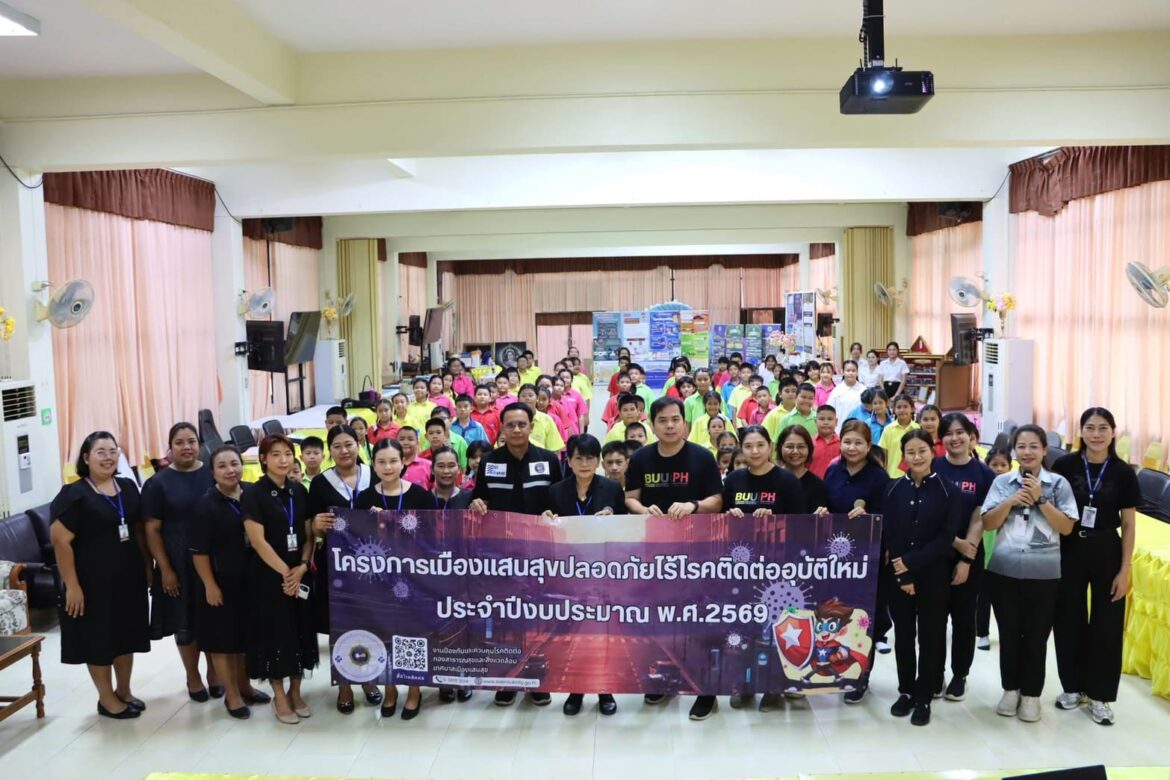
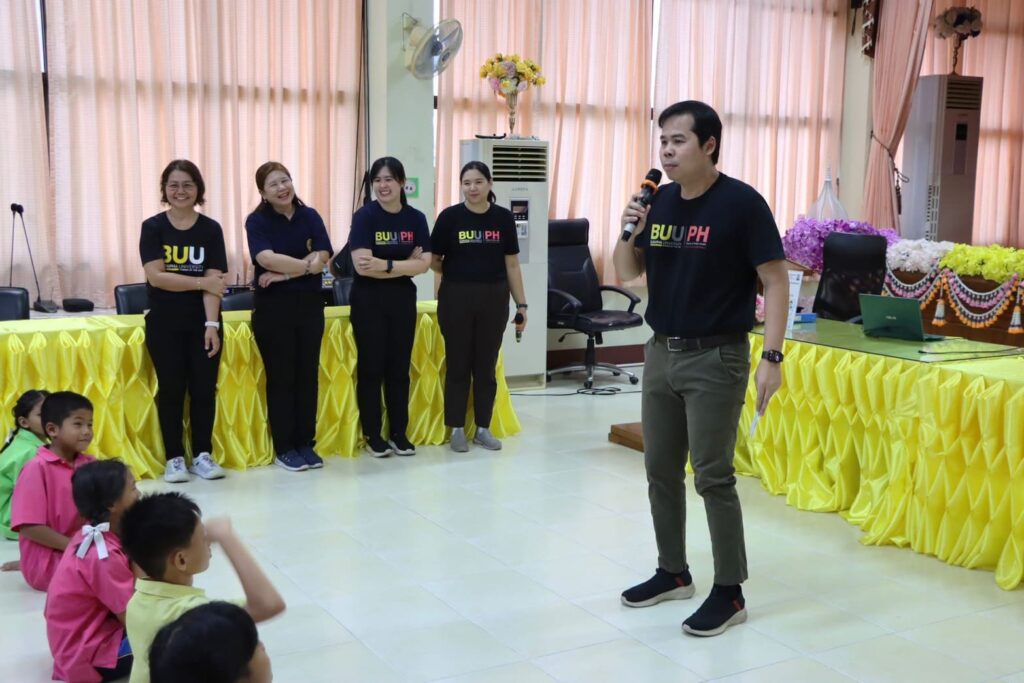
In response to the ongoing challenges posed by emerging and re-emerging infectious diseases that continue to affect public health, particularly among children and youth, who should be equipped with essential health knowledge and self-care skills from an early age, Saensuk Municipality launched the “Saensuk Emerging Infectious Disease-Free City Project, Fiscal Year 2026.” The project was held on Tuesday, June 23, 2026, from 8:30 a.m. to 3:00 p.m. at Anuban Wat Klang Don Mueang Chonburi School. The project aims to enhance students’ knowledge, understanding, and practical skills in preventing emerging infectious diseases, promoting good personal hygiene, practising proper self-care, and developing health literacy to evaluate health information encountered in daily life critically. As part of this initiative, the Faculty of Public Health and the Faculty of Logistics at Burapha University provided academic support and learning activities focused on emerging infectious disease prevention, risk communication, personal hygiene practices, and awareness of PM2.5 air pollution. These educational activities were delivered directly to students in local communities, enabling participants to gain practical knowledge and real-world experience.
Project Coordinator:
Lecturers from the Faculty of Public Health, Burapha University Asst. Prof. Chaiyanan Muanphetch Dr. Rungkarn Inthawong Dr. Worarat Magteppong Dr. Chonlada Mano Lecturer from the Faculty of Logistics, Burapha University Ms. Panthip Pleasai
Objectives:
- To provide students with knowledge about emerging infectious diseases, important communicable diseases, and appropriate self-protection measures.
- To strengthen students’ ability to communicate health information accurately and promptly, and to recognise misinformation related to emerging infectious diseases.
- To raise students’ awareness of the health impacts of PM2.5 and promote self-protection behaviours among students.
- To strengthen collaboration among the school, Saensuk Municipality, and Burapha University in promoting disease prevention and sustainable community well-being.
Program Activities:
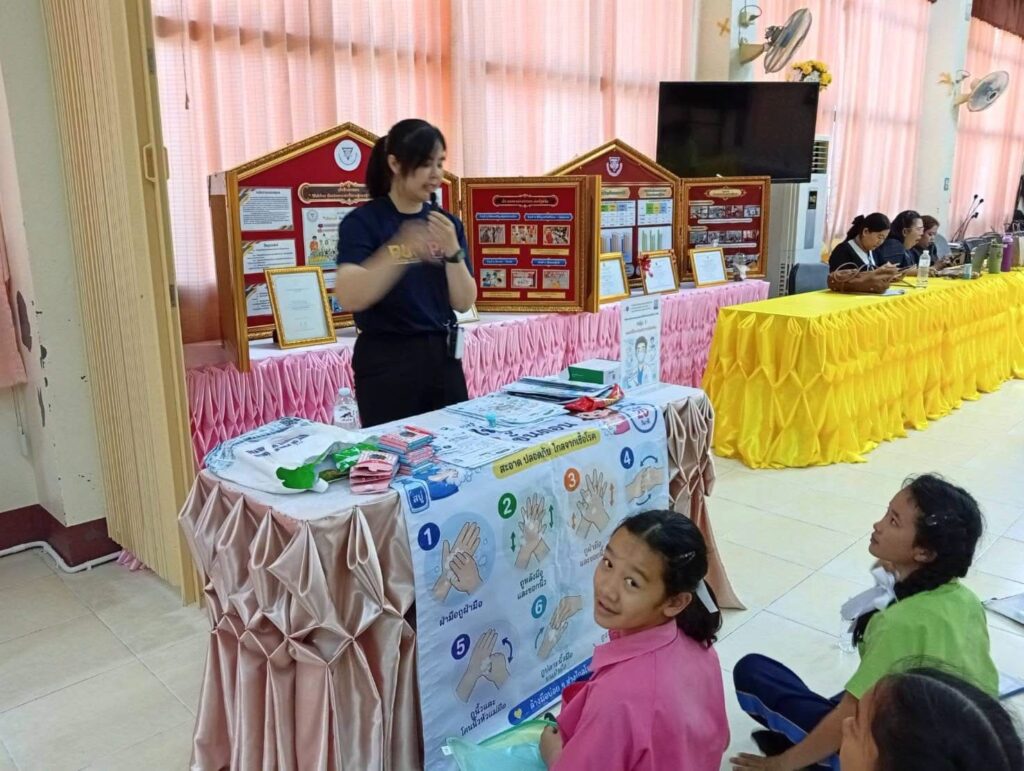
The project began with an educational lecture entitled “New Diseases Are Closer Than You Think.” The lecture aimed to help students understand that emerging infectious diseases are not distant issues, but health concerns that everyone can help prevent through simple daily behaviours. These include proper handwashing, wearing a mask when feeling unwell or when staying in high-risk areas, eating clean, safe food, avoiding close contact with sick people, and following health information from reliable sources. The lecture content was designed to be appropriate for primary school students. It used simple language, connected health knowledge to familiar situations, and encouraged students to recognise the importance of caring for themselves, their families, their friends, and their communities. After the lecture, students participated in three interactive workshop groups designed to promote active thinking, hands-on practice, and group discussion, as follows: Group 1: A Self-Protection Map against New Diseases.
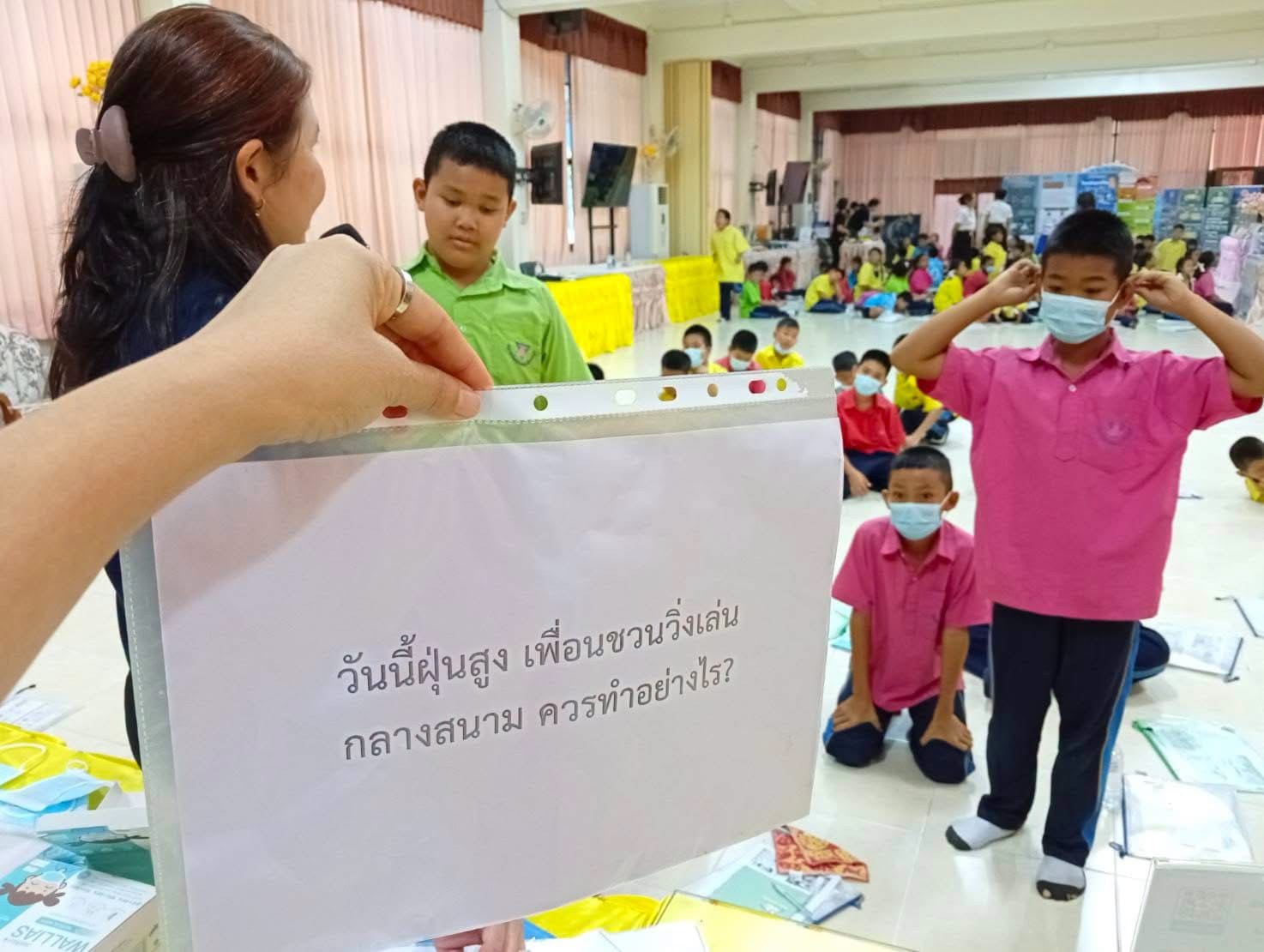
This activity encouraged students to create a “self-protection map” by identifying places in daily life where disease transmission risks may occur, such as classrooms, cafeterias, restrooms, playgrounds, and public areas. Students then worked together to design appropriate prevention methods for each situation. This activity helped students recognise nearby risks and choose safer behaviours. Group 2: Communicate Quickly, Understand Correctly, and Stay Informed about Emerging Diseases. This activity focused on developing students’ skills in accurate and constructive health communication. Students learned how to distinguish facts from rumours and share accurate information with friends, family, and others without causing panic. The activity helped students build immunity against misinformation and become good health communicators at school and at home. Group 3: New Generation Children: Understanding and Protecting Themselves from PM2.5. This activity promoted students’ understanding of the health impacts of PM2.5, including respiratory effects and irritation of the eyes, nose, and throat. It also highlighted the effects of air pollution on children, who may be more sensitive to poor air quality. Students learned how to monitor air quality, reduce outdoor activities on days with high PM2.5 levels, wear appropriate masks, and take care of themselves when staying in high-risk areas. Throughout the project, students actively participated by thinking, analysing, answering questions, developing plans, and exchanging ideas. These activities made learning about emerging infectious diseases and self-protection more relevant, enjoyable, easy to understand, and applicable in real life.
Expected Outcomes (Impacts):
This activity is expected to improve Grade 5 students’ knowledge and understanding of emerging infectious diseases and self-protection measures. Students are expected to practice proper hygiene, assess risks in their surroundings, and apply the knowledge gained in school, at home, and in the community. The project also helps strengthen a collaborative network among the school, Saensuk Municipality, the Faculty of Public Health, Burapha University, and the Faculty of Logistics, Burapha University. This collaboration supports the development of children and youth as important members of the community who possess health knowledge, practice good hygiene, and are ready to help make Saensuk a safe city free from emerging infectious diseases. This project contributes concretely to achieving the Sustainable Development Goals (SDGs), specifically SDG 3: Good Health and Well-being. The project promotes health and disease prevention from school age by providing students with knowledge about emerging infectious diseases, hygiene practices, self-protection, and ways to reduce the health impacts of PM2.5. These are important factors that contribute to physical health, mental well-being, and a good quality of life. SDG 4: Quality Education The project applies active learning and hands-on practice. Students not only receive academic knowledge but also develop life skills, analytical thinking, health communication skills, and rational decision-making abilities, which are essential foundations for quality education. SDG 11: Sustainable Cities and Communities. The project supports the development of safe and healthy cities and communities that are prepared to respond to emerging infectious diseases and PM2.5 pollution. By cultivating healthy behaviours among children, the project can further extend its impact to families, schools, and the wider community. SDG 13: Climate Action. The PM2.5 learning activity helps students understand how environmental conditions and air quality affect health. It also promotes adaptation to air pollution problems and self-care in changing environmental situations. SDG 17: Partnerships for the Goals. The project reflects collaboration among the Saensuk Municipality, Anuban Wat Klang Don Mueang Chonburi School, the Faculty of Public Health, Burapha University, and the Faculty of Logistics, Burapha University. This partnership integrates knowledge and resources to promote the sustainable health and well-being of children and communities.
Date of Implementation: June 23, 2026