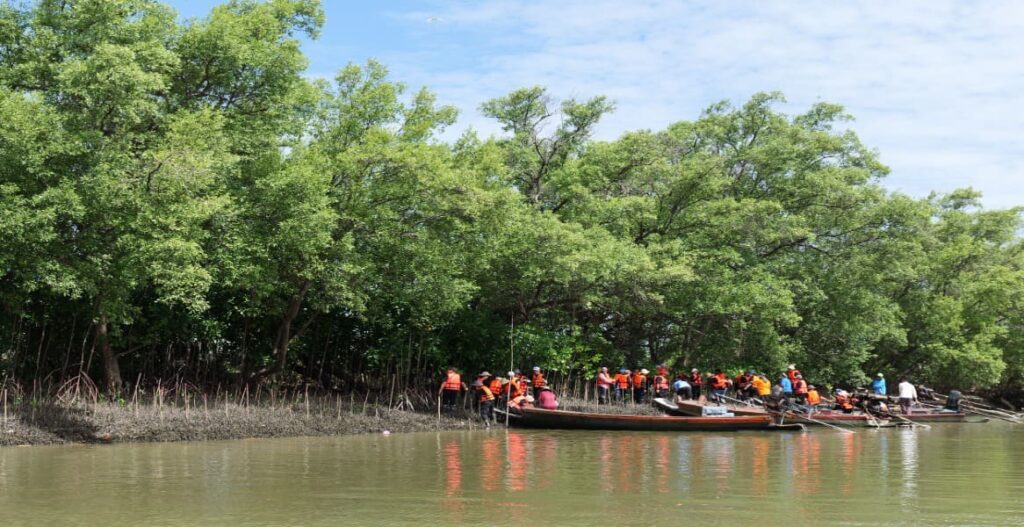
Mangrove forests grow along Thailand’s coast and river mouths. They are a vital natural resource for the marine ecosystem. The benefits of mangrove forests include providing food for various animals, protecting against natural disasters that affect their livelihoods, reducing carbon dioxide emissions, and serving as a source for natural studies. The mangrove forest areas in Chonburi Province serve as nurseries for juvenile aquatic animals, natural barriers against coastal erosion, and highly efficient carbon sinks (Blue Carbon). However, some mangrove forests have been degraded by urban expansion and environmental degradation. The Library organised this project to raise environmental awareness among its staff, in line with the government’s policy to increase mangrove forest areas, restore degraded mangrove forests to their former abundance, and mitigate global warming. This activity also aligns with the Sustainable Development Goals (SDGs).
Project Coordinator: Mrs. Nittaya Panpetch
Objectives:
- To raise awareness among library staff about the value of conserving natural resources and the environment. 2. To restore the mangrove ecosystem to a more abundant state. 3. Promoting corporate social and environmental responsibility (CSR).
Program Activities:
- Preparation Phase: Contact and coordinate with staff at the mangrove seedling nursery learning center to visit the site and determine the date and time for the activity.
- Public Relations Phase: Open registration for participants.
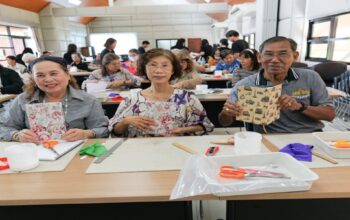
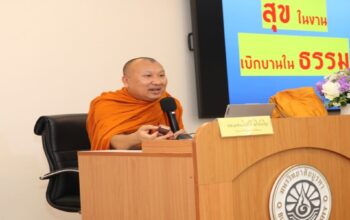
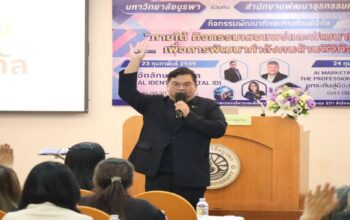
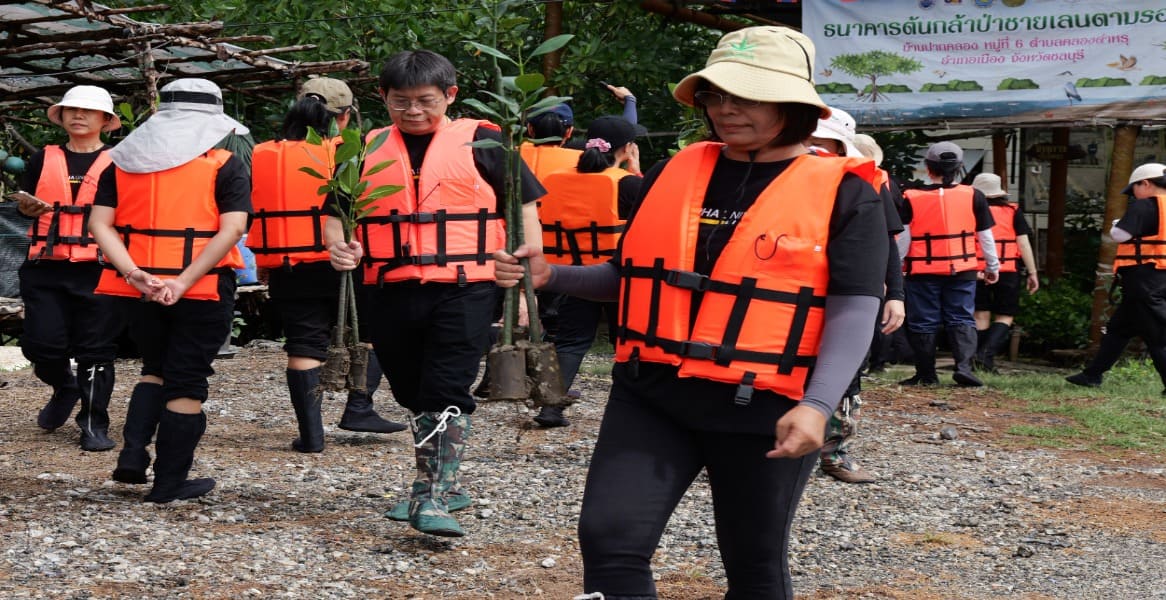
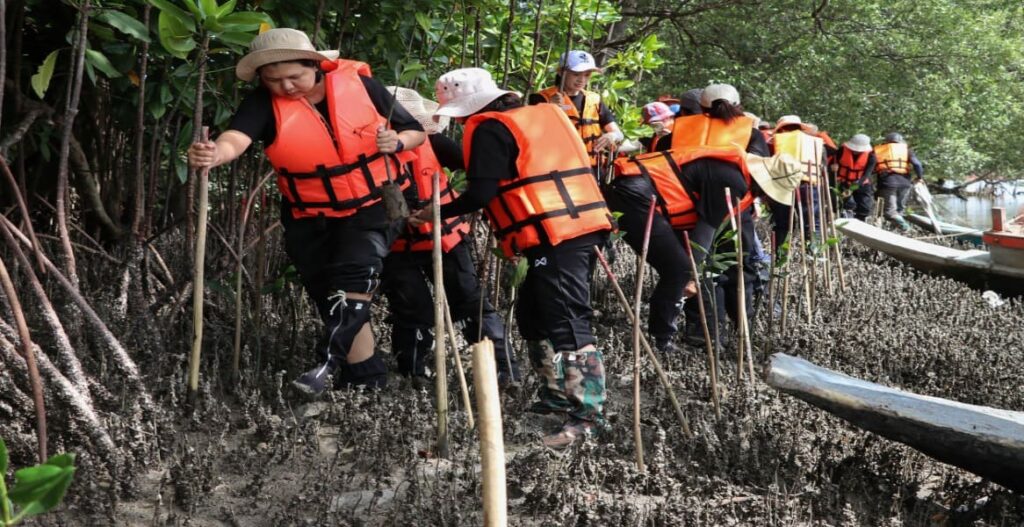
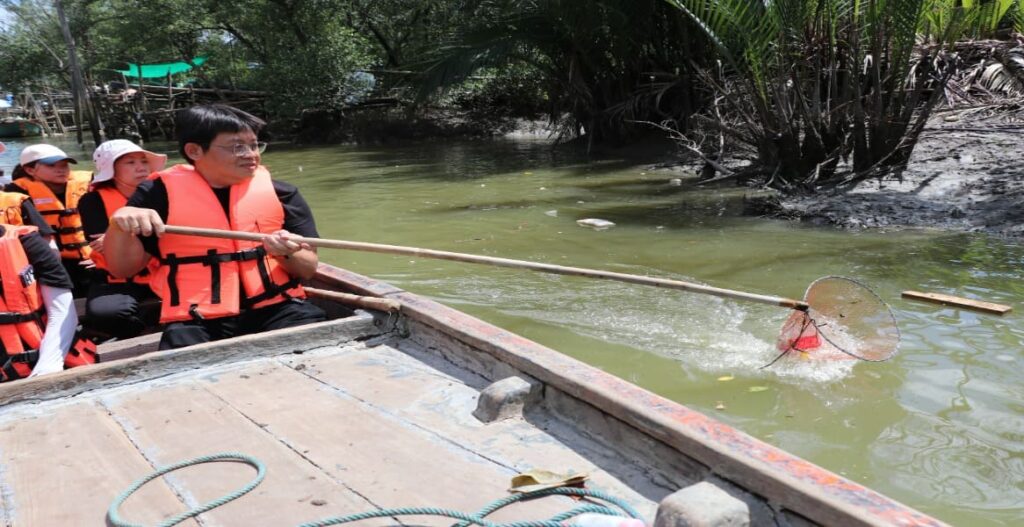
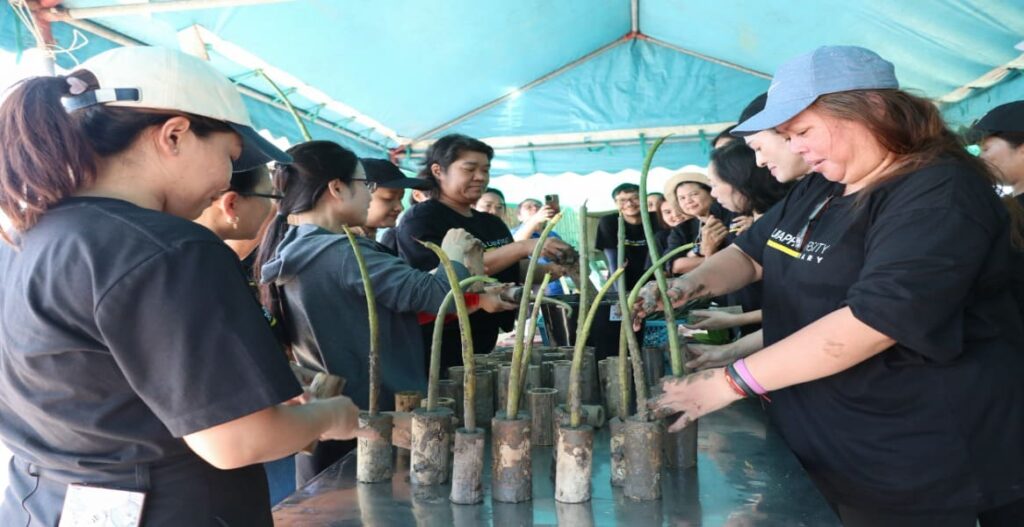
- Activity Phase: Travel to the area for a lecture on mangrove forests, seedling cultivation activities, mangrove planting, waste collection, and fabric tie-dyeing activity (eco-friendly cloth bags).
- Summary of Activities and Project Report.
Expected Outcomes (Impacts):
- The library planted 120 mangrove saplings (Rhizophora mucronata) at the Mangrove Sapling Nursery Learning Center in Khlong Tamru Subdistrict, Mueang Chonburi District, Chonburi Province. They also cleaned up the coastal ecosystem, focusing on removing plastic waste such as plastic bags and bottles. 2. The mangrove forest area has been restored and conserved. The 120 planted saplings, when fully grown, will be able to absorb approximately 1.08 to 1.80 tons of carbon dioxide equivalent (tCO2e) per year, or about 1,080 to 1,800 kilograms per year. This helps reduce greenhouse gases and mitigate global warming (based on the average gas absorption rate of typical trees at 9-15 kilograms per tree per year).
Date of Implementation: June 23, 2026