From 17–19 June 2026, Burapha University, through its Global Relations Center and collaborating units, organized “AUN-BUU Summer Camp 2026: Thai Culinary Heritage and Sustainable Food Learning” as part of the AUN-BUU Summer Camp 2026 program under the theme “YATHA: Youth, Assembly, Traditional, Health & Altruism.” The program brought together international students from ASEAN University Network (AUN) member universities and Burapha University students to explore Thailand’s rich culinary heritage, local wisdom, and sustainable food practices through immersive, hands-on learning experiences.
As a member and one of the founding institutions of the ASEAN University Network (AUN), Burapha University remains committed to fostering academic collaboration, intercultural understanding, and regional engagement among ASEAN youth. Through initiatives such as AUN-BUU Summer Camp 2026, the University supports student mobility, enhances international learning opportunities, and contributes to the development of future-ready competencies through experiential learning and micro-credential opportunities. The program also strengthens Burapha University’s international profile while promoting meaningful partnerships among higher education institutions across the region.
Designed to celebrate Thailand’s culinary heritage while encouraging sustainable food awareness, the program introduced participants to the cultural significance, nutritional value, and sustainability dimensions of Thai cuisine. Through the activity “Discover the Flavors of Thailand,” students explored the unique characteristics of Thai food, local ingredients, traditional herbs, and the cultural influences that have shaped Thailand’s globally recognized culinary identity. The session highlighted how food serves not only as nourishment but also as a reflection of history, culture, and community life.
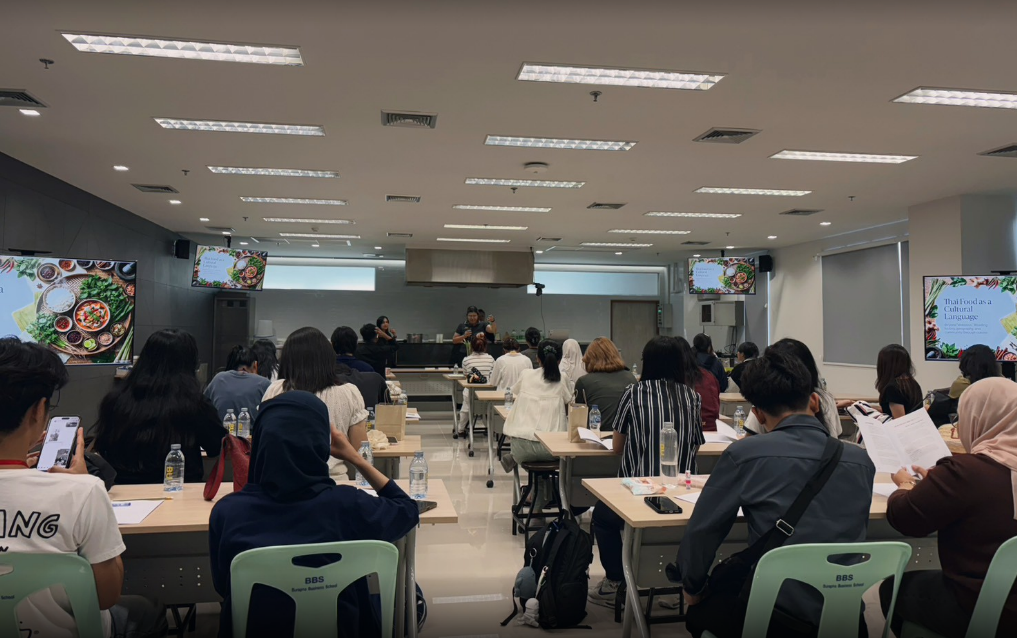
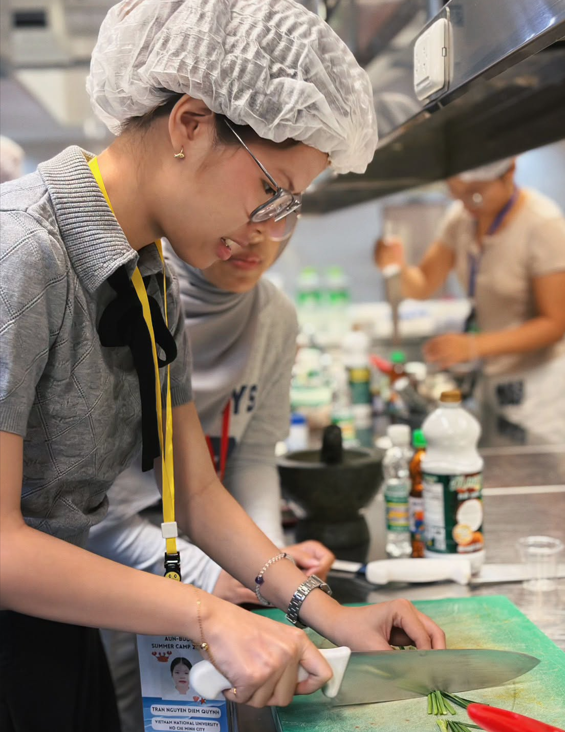
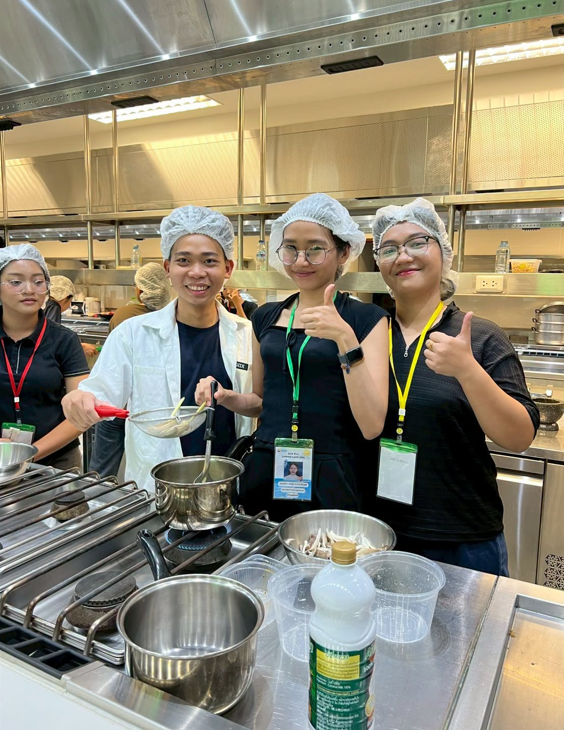
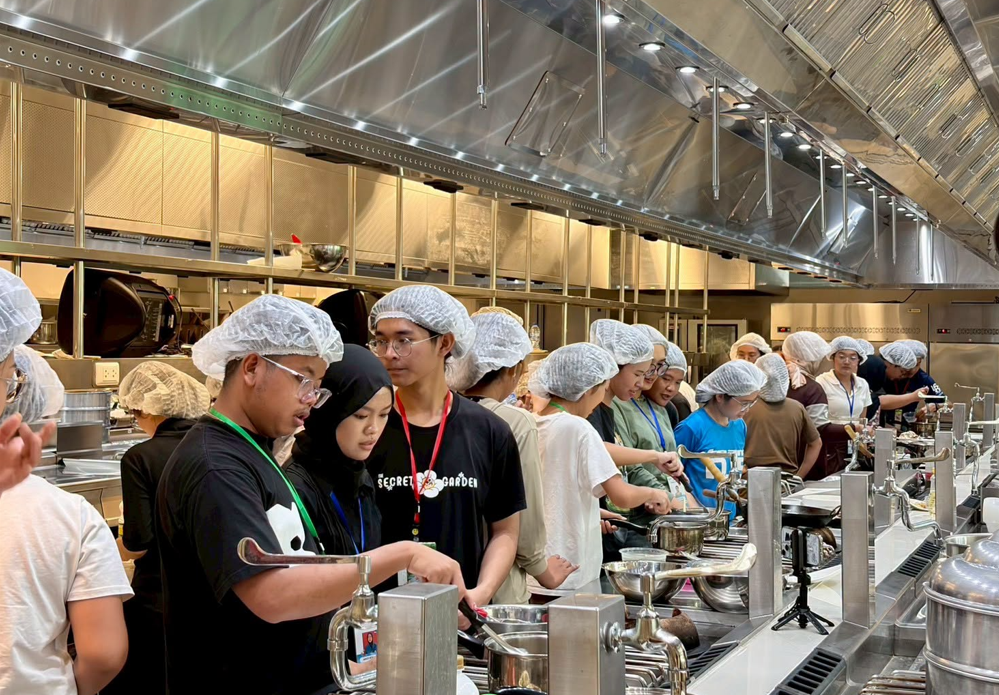
A key component of the program was the “Thai Cooking Studio,” where participants gained hands-on experience preparing some of Thailand’s most iconic dishes. Students learned to cook Pad Thai, a world-renowned noodle dish that reflects the balance of flavors and efficient use of local ingredients; Tom Yum Goong, a famous spicy shrimp soup showcasing the health benefits and aromatic qualities of Thai herbs; and Chor Muang, an elegant traditional Thai appetizer that demonstrates the artistry and craftsmanship embedded in Thai culinary traditions. Through these activities, participants gained practical cooking skills while deepening their appreciation of Thailand’s food culture and culinary wisdom.
The program also featured “Sweet Thai Creations,” a workshop dedicated to traditional Thai desserts. Participants learned how to prepare Bua Loy, a beloved Thai sweet delicacy made from colorful rice flour dumplings served in coconut milk. The activity provided insights into the role of desserts in Thai culture, celebrations, and family traditions while emphasizing the use of locally sourced ingredients and traditional preparation techniques.
Another highlight was “Refreshing Thai Drinks,” which introduced participants to the nutritional and medicinal benefits of traditional Thai herbal beverages. Students learned about the preparation methods, cultural significance, and health-promoting properties of popular herbal drinks, including Bael Fruit Juice (Nam Matoom), Roselle Juice (Nam Krajeab), and Butterfly Pea Flower Drink (Nam Anchan). These sessions demonstrated how Thai communities have long utilized natural resources and indigenous knowledge to support wellness, healthy living, and sustainable consumption practices.
To encourage creativity, teamwork, and intercultural exchange, participants also took part in the “Thai Culinary Challenge” and “Taste & Tell” activities. Working collaboratively, students explored different flavors, shared cultural perspectives on food, and discussed the role of cuisine in society and sustainable development. These activities strengthened communication, critical thinking, problem-solving, and teamwork skills while fostering mutual respect and appreciation for cultural diversity.
Throughout the program, participants discovered that food is far more than a basic necessity—it is a powerful medium for connecting people, preserving cultural heritage, supporting local communities, and promoting sustainable lifestyles. By learning about traditional ingredients, culinary techniques, and responsible consumption practices, students gained valuable insights into how food systems can contribute to environmental sustainability, cultural preservation, and community well-being.
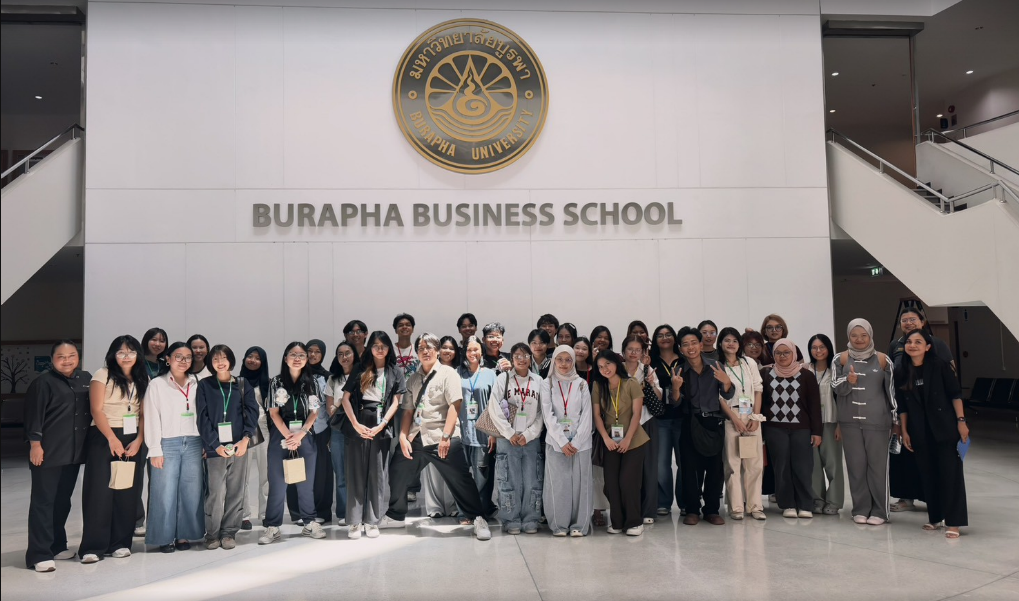
The program reflects Burapha University’s commitment to promoting intercultural learning while preserving and sharing Thailand’s rich culinary heritage with international audiences. By integrating food education, cultural heritage, sustainability, and experiential learning, the University provides meaningful opportunities for students to develop global perspectives while appreciating the importance of local wisdom and sustainable development.
AUN-BUU Summer Camp 2026: Thai Culinary Heritage and Sustainable Food Learning contributes to several United Nations Sustainable Development Goals (SDGs). The program supports SDG 2: Zero Hunger by promoting awareness of sustainable food systems, nutrition, and local food resources. It advances SDG 4: Quality Education through experiential and intercultural learning opportunities that enhance both practical and cultural competencies. The preservation and promotion of Thailand’s culinary traditions contribute to SDG 11: Sustainable Cities and Communities through safeguarding intangible cultural heritage. The program also supports SDG 12: Responsible Consumption and Production by encouraging responsible food choices, sustainable use of local ingredients, and appreciation of traditional food knowledge. Furthermore, it strengthens SDG 17: Partnerships for the Goals by fostering collaboration, cultural exchange, and mutual understanding among students from AUN member universities.
Through this initiative, Burapha University continues to demonstrate its leadership in international education by creating transformative learning experiences that connect culture, food, sustainability, and global citizenship. The program empowers students to become culturally aware, socially responsible, and sustainability-minded global citizens while celebrating the richness of Thai culinary heritage and its relevance to a sustainable future.