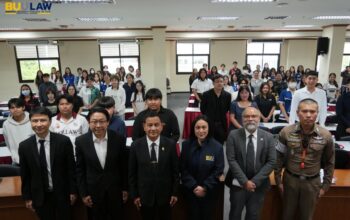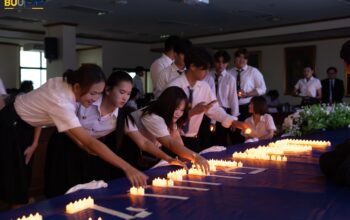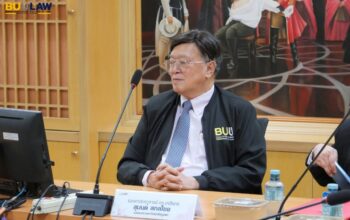
The Faculty of Political Science and Law, Burapha University, recognises the importance of strengthening life skills and emergency preparedness among students and staff. Cardiopulmonary Resuscitation (CPR) is an essential basic life support skill that can help reduce the risk of death in emergencies. This project was therefore organised to provide participants with knowledge, understanding, and practical training in performing CPR correctly. The project was conducted in collaboration with the Mangkon Ratsami Chot Foundation, which supported the delivery of knowledge and hands-on training in basic life support. This collaboration promotes health, safety, and mutual assistance within the university community, aligning with SDG 3: Good Health and Well-being, which emphasises promoting health and well-being for all.
Project Coordinator: Asst.Prof.Dr.Noppawan Phuengpha
Objectives:
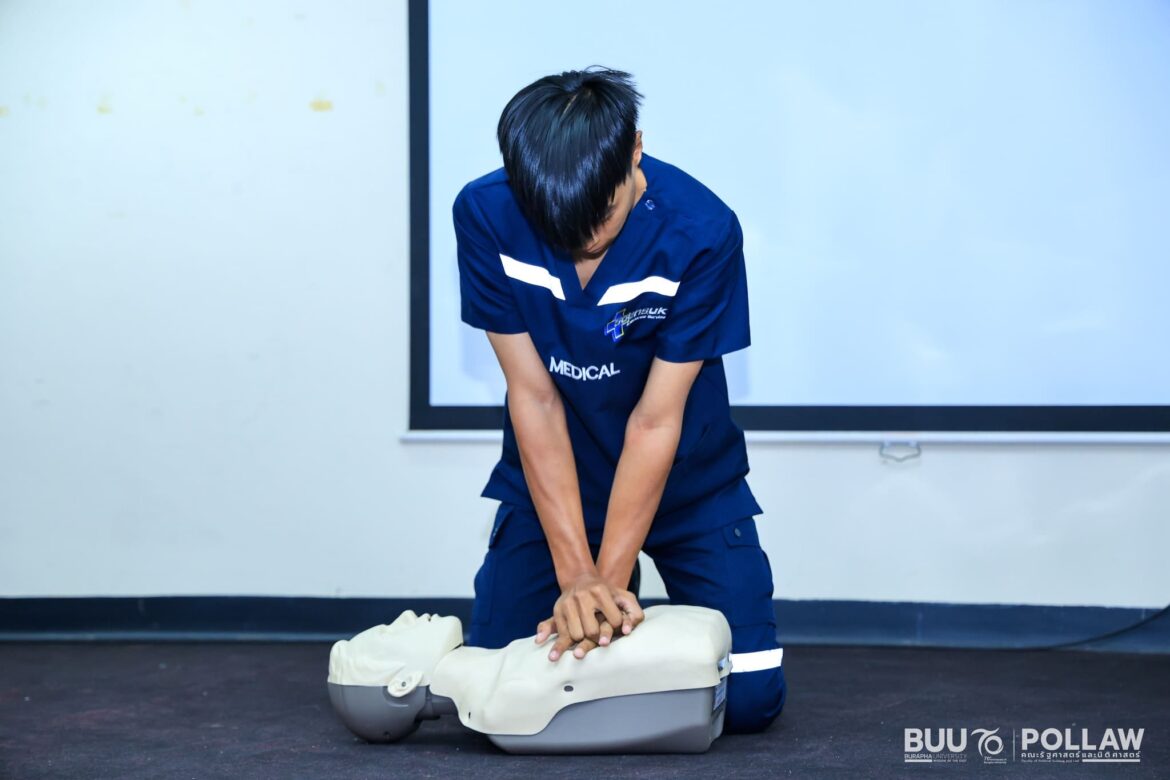
- To enhance participants’ knowledge, understanding, and practical skills in basic life support and Cardiopulmonary Resuscitation (CPR).
- To enable participants to respond appropriately and assist others correctly during emergencies.
- To promote health, safety, and emergency preparedness within the university community in alignment with SDG 3.
Program Activities:
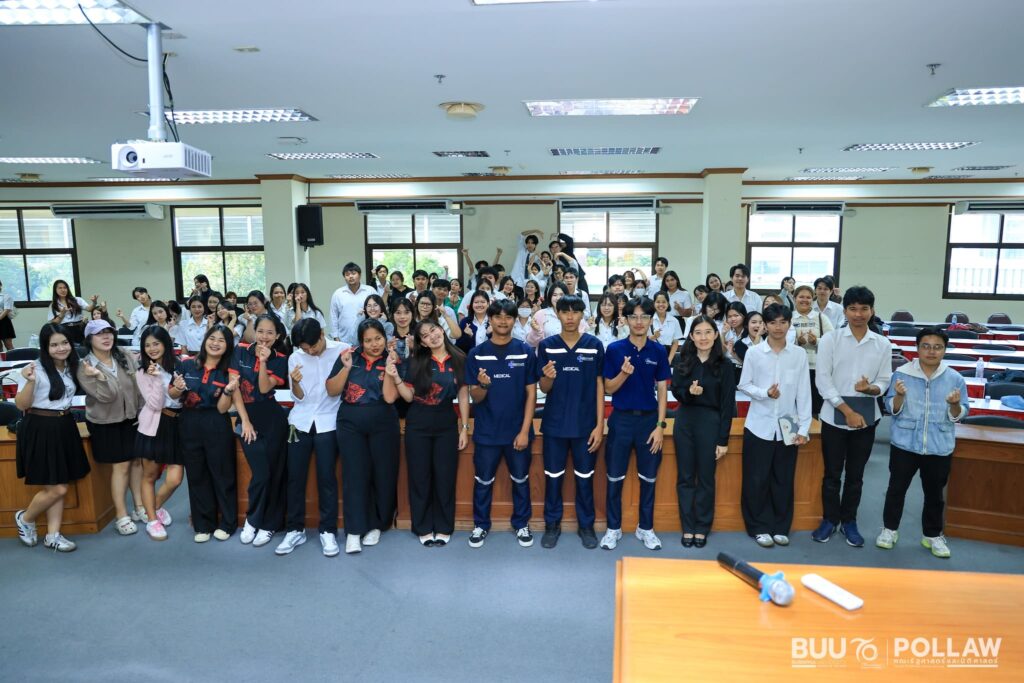
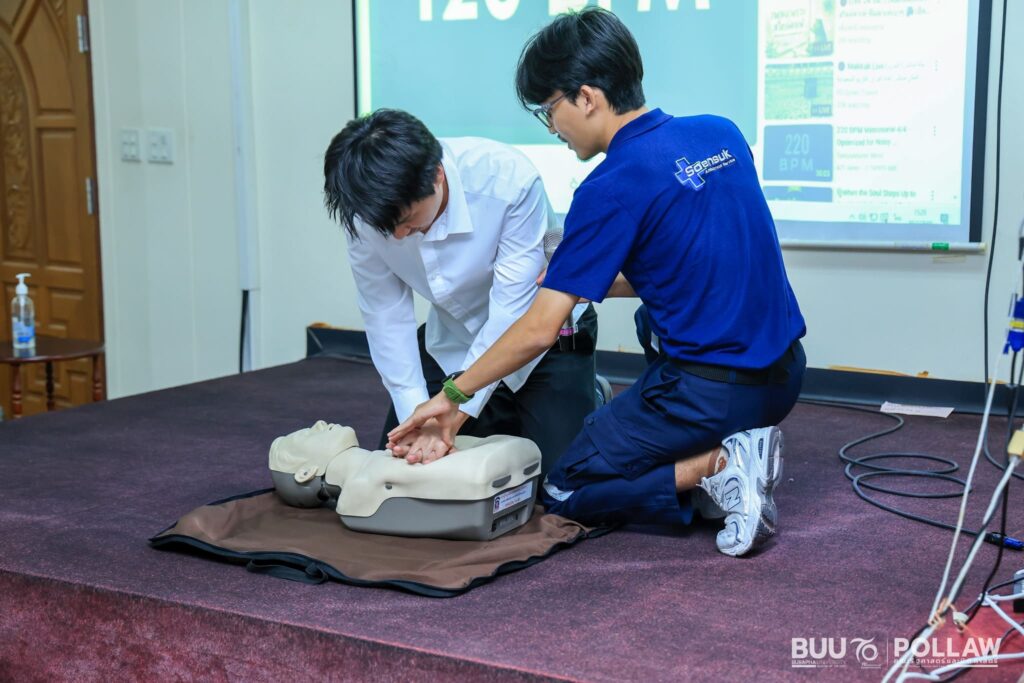
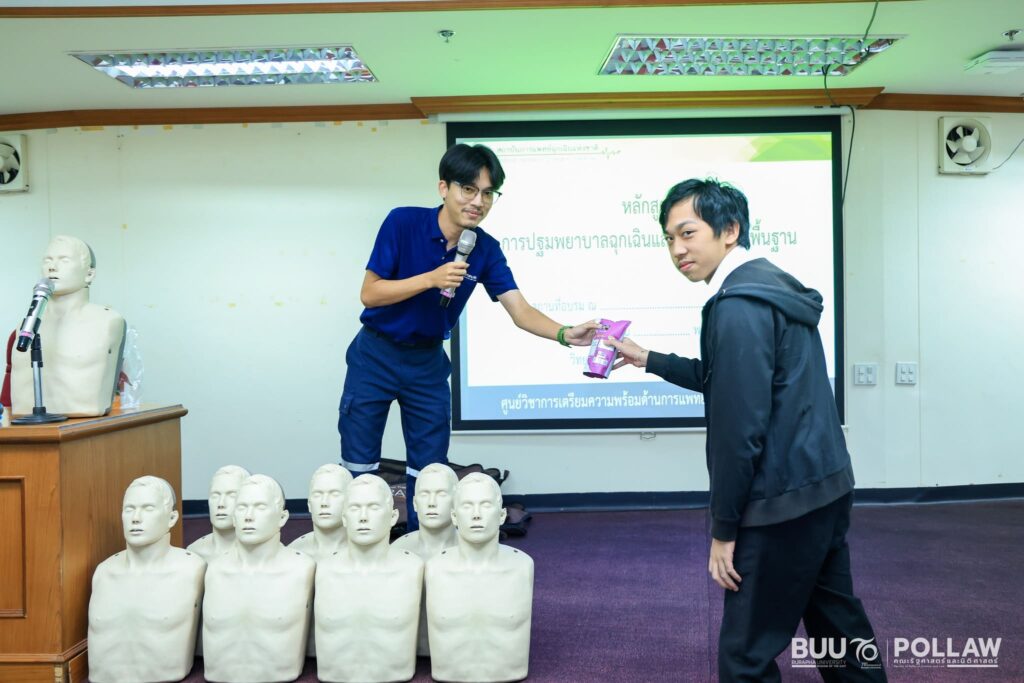
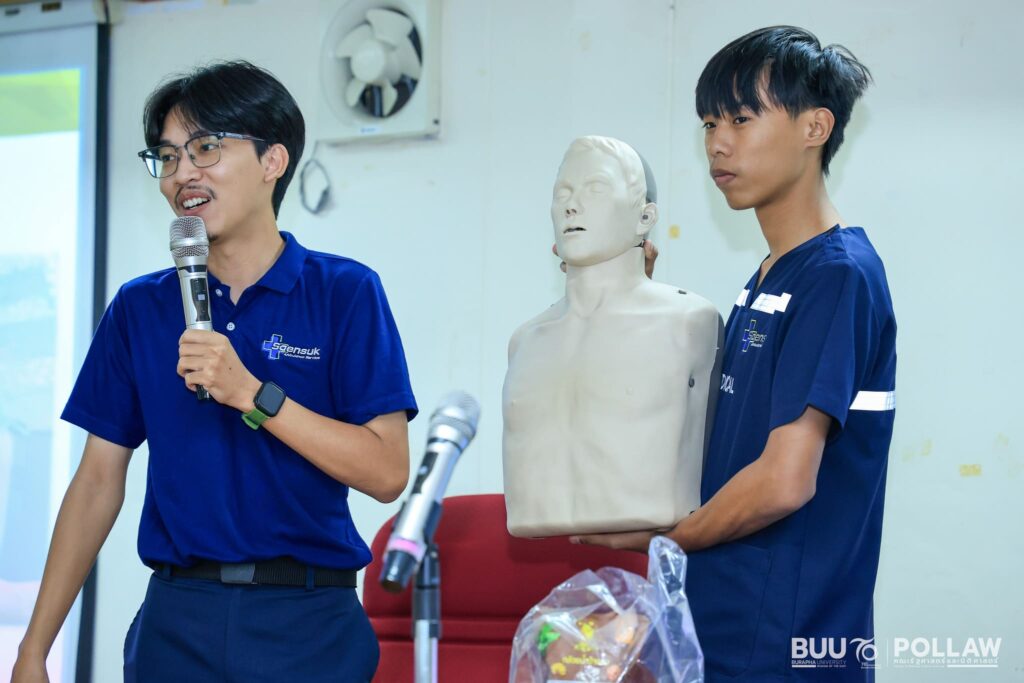
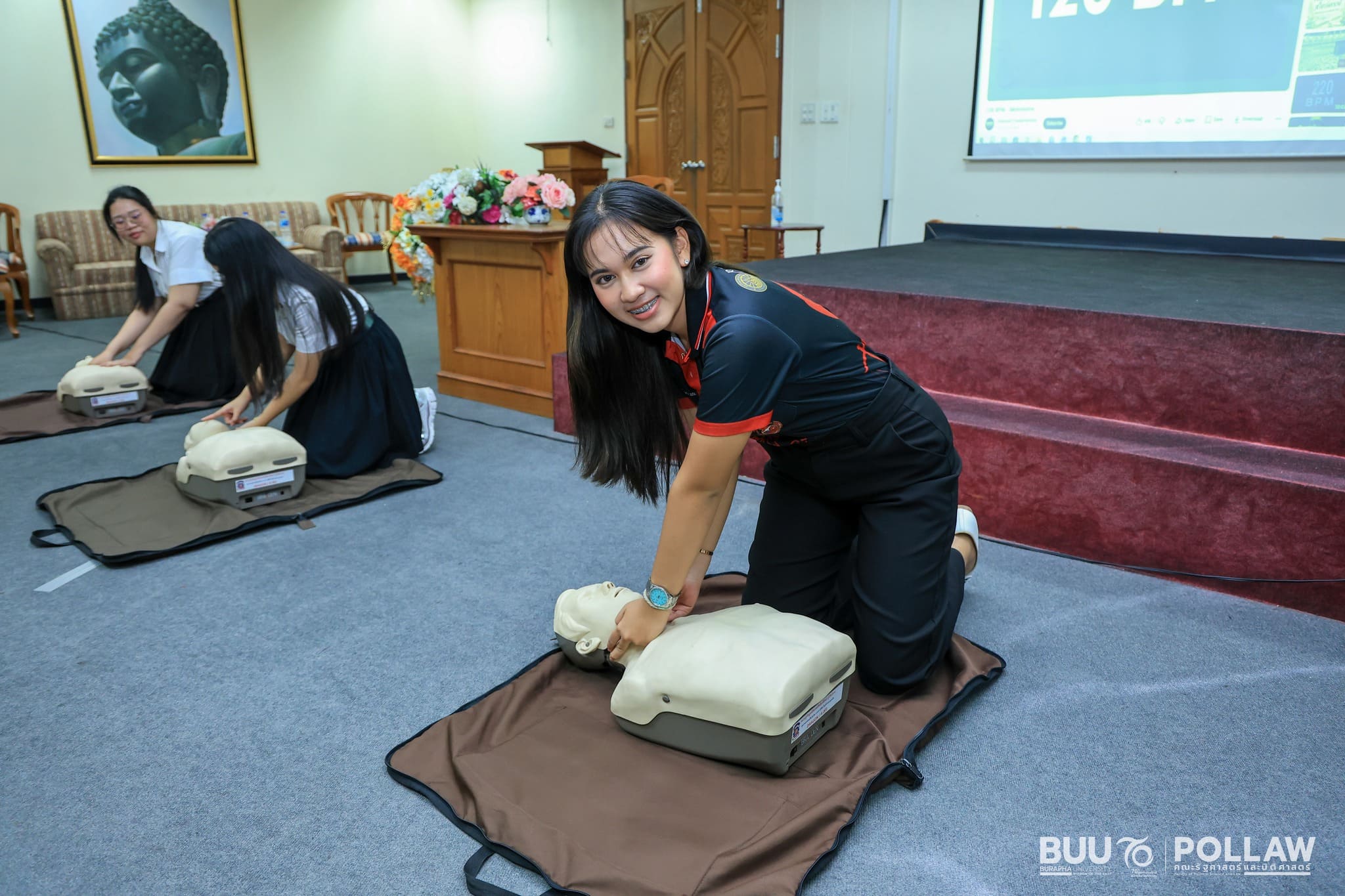
The Faculty of Political Science and Law, Burapha University, organised the Practical Global Citizenship Skills Development Project on Emergency Response: Cardiopulmonary Resuscitation (CPR) on 20 March 2026, from 12:30 p.m. to 4:15 p.m., at Room 603, Faculty of Political Science and Law Building 2, Burapha University. The target participants included faculty members, support staff, and students, for a total of 96 participants. The activities included registration, a lecture, and hands-on training on “Basic Life Support and Cardiopulmonary Resuscitation (CPR),” conducted by qualified and experienced trainers. The project aimed to ensure that participants could apply these skills to protect themselves and properly assist others during emergencies.
Expected Outcomes (Impacts):
This project generated positive impacts on health promotion and safety within the university community. Participants gained knowledge and practical skills in basic life support, developed a better understanding of emergency response procedures, and became more confident in providing initial assistance to those in need. The project also helped build a network of staff and students who are prepared to respond to emergencies, reduce the risk of loss of life, and strengthen a culture of mutual care within the faculty. The project aligns with SDG 3: Good Health and Well-being by promoting life-saving skills, reducing health-related risks, and creating an environment that supports the well-being and safety of all.
Date of Implementation: Mar 20, 2026