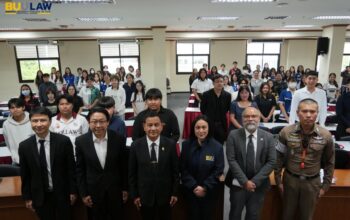
Maritime transportation within the EEC faces substantial risks from oil pollution, which severely impacts both ecosystems and the economy. The 2022 Map Ta Phut incident underscores the complexity of associated legal disputes. Consequently, the Department of Law has initiated this project to develop a specialised workforce proficient in International Maritime Law—including MARPOL, CLC, and the FUND Convention—to support industrial growth in the EEC and advance Sustainable Development Goals.
The aims:
1.To enhance the knowledge and understanding of legal provisions concerning oil pollution management for students and the general public.
2.To enable students to effectively apply acquired knowledge to their legal studies and future professional careers, in alignment with the labor force demands of the Eastern Economic Corridor (EEC) and the national economy.
3.To provide a platform for students to engage in knowledge exchange on the subject matter with distinguished legal experts.
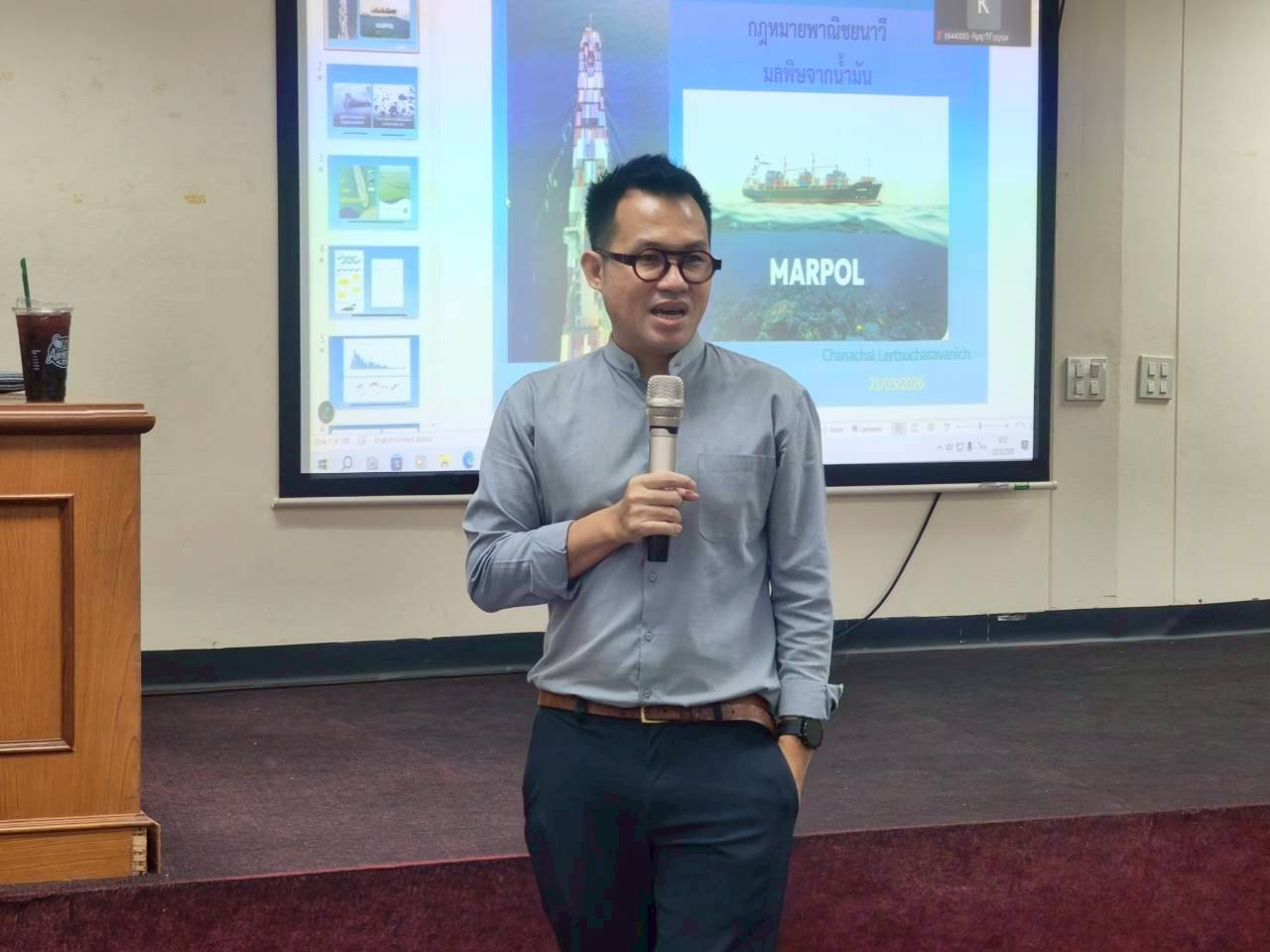
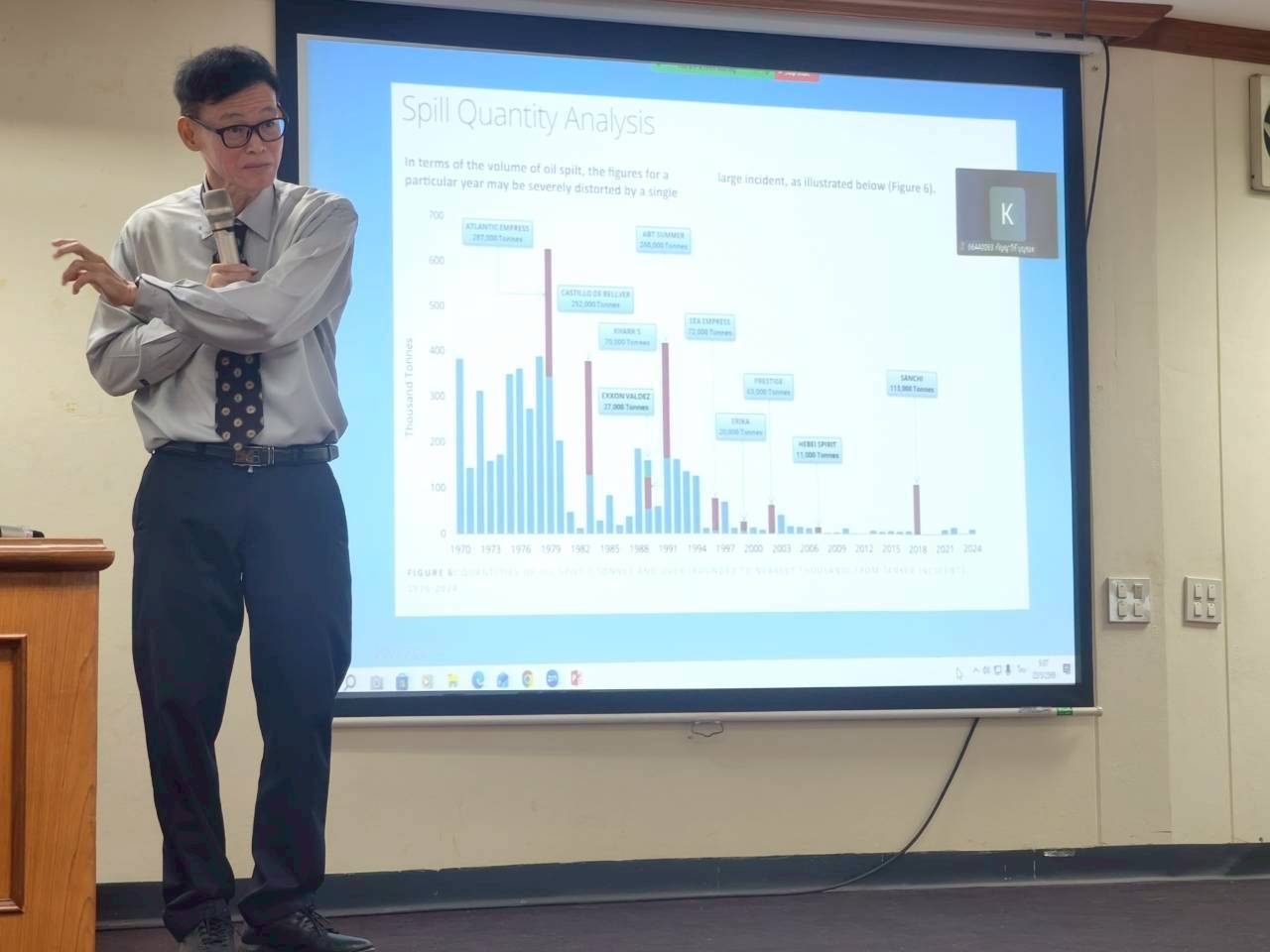
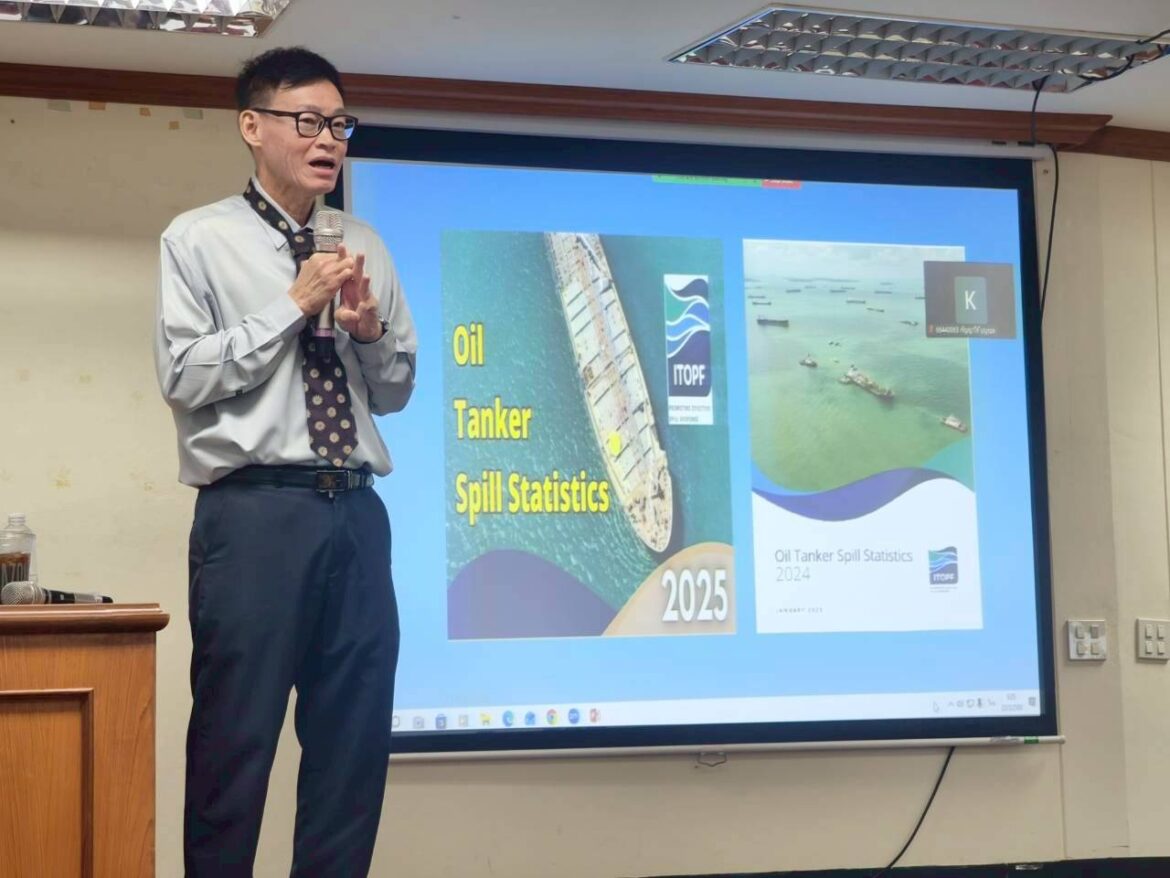
The morning session features a comprehensive keynote lecture entitled “An Overview of International Maritime Law Concerning Oil Pollution Management.” This session is conducted by Mr. Chanachai Lertsuchatavanich, a distinguished expert with extensive direct experience from the Marine Department and the Thai Maritime Enforcement Command Center (Thai-MECC). The afternoon session transitions into an in-depth panel discussion on the topic: “The Implementation of International Maritime Law Concerning Oil Pollution in Thailand: Practical Procedures and Challenges.” This workshop-style seminar facilitates a multi-dimensional dialogue among the following experts: 1.Mr. Chanachai Lertsuchatavanich: Providing perspectives from Thai Maritime Enforcement Command Center (Thai-MECC). 2.Dr. Chitaporn Pisolyabutra Tovisetkul: Offering academic insights and comparative legal analysis. 3.Mr. Tanapat Lekkiatkhachorn: Serving as the moderator and participating in the legal discourse.
The impacts:
1.Students gain in-depth knowledge and understanding of legal frameworks and marine oil pollution management strategies, with the ability to apply such expertise to relevant courses, such as Maritime Law, Environmental Law, Industrial Law, and Environmental Law Seminars.
2.External stakeholders and interested individuals enhance their legal skills and knowledge regarding management and liability mechanisms for oil pollution, facilitating practical application in professional or operational contexts.
3.Law students achieve significant potential development through knowledge exchange and direct experience sharing from distinguished experts and guest speakers, effectively strengthening their extracurricular learning skills.
Activity Date: March 22, 2026
Project Leader: Mr. Tanapat Lekkiatkhachorn