
Burapha University is currently moving toward Digital Administration to enhance efficiency, speed, and transparency in educational services. This transformation is particularly important in graduate education, where administrative processes are complex and involve multiple stages—from admission, course registration, thesis proposal examination, and thesis defence, to research publication and graduation.
These processes require extensive documentation and involve many stakeholders, including students, advisors, examination committees, academic programs, and supporting administrative units. Currently, the Graduate School monitors students’ academic progress through internal databases within individual units. However, this approach often results in outdated information, delays in verification, and limited access for students to track their own academic progress.
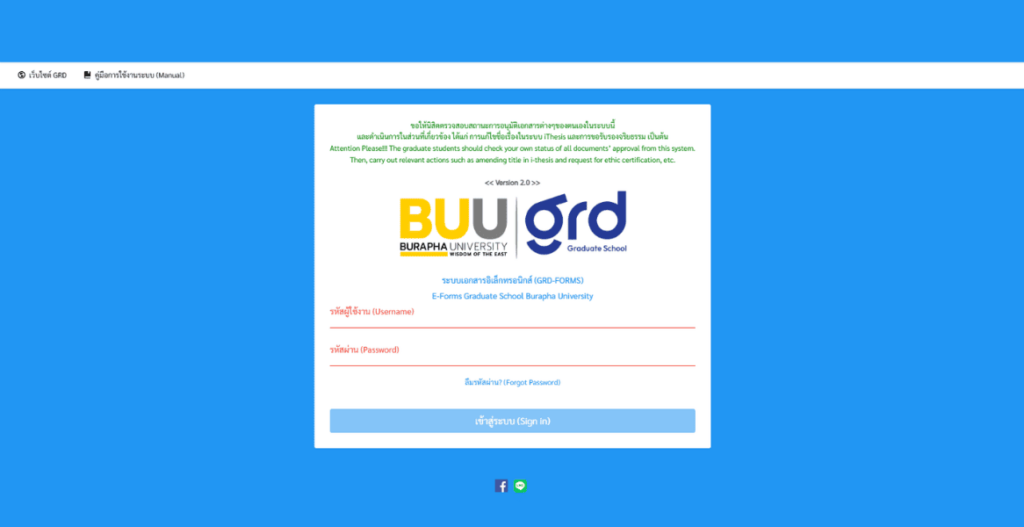
To address these challenges, the Graduate School proposes developing an Integrated Student Status Tracking System supported by an electronic document management system. This initiative represents a key mechanism for advancing the university’s Digital University strategy.
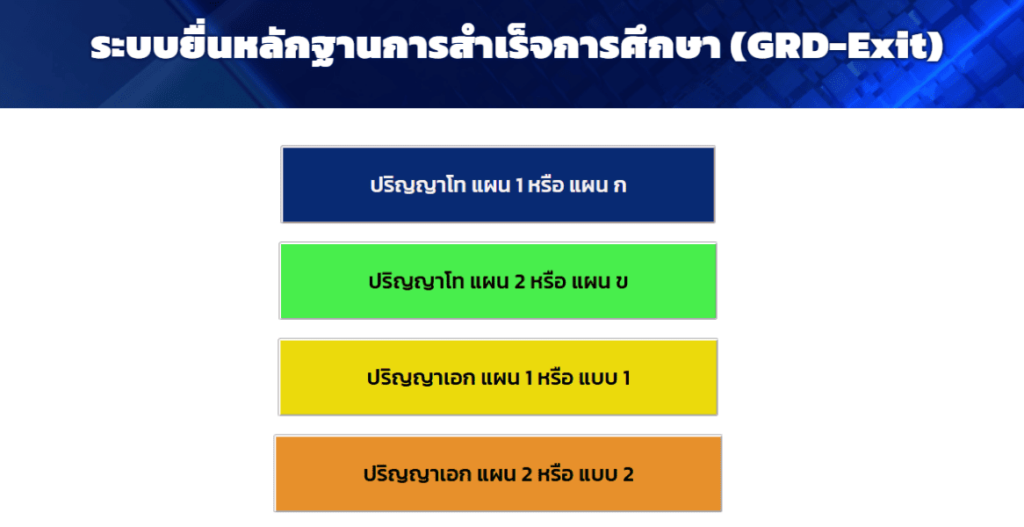
The system will organise essential data systematically, enable efficient record verification, reduce paper usage, and support governance principles such as transparency, accountability, and traceability. Through this system, students will be able to monitor their academic progress, track document status, and understand expected timelines independently. This will improve academic planning, reduce delays, and enable advisors to closely monitor student progress—factors critical to improving graduation rates and enhancing graduate quality.
Furthermore, the system will support data-driven decision-making by providing statistical insights to administrators, including average graduation timelines, process bottlenecks, and staff workload distribution. These insights can guide improvements in administrative processes and organisational efficiency.
The project will also enhance the student experience by shifting services from a reactive approach to a proactive digital service model, reducing unnecessary procedures and strengthening the university’s modern institutional image. The reduction in paper use further contributes to sustainable organisational development, aligning with the Sustainable Development Goals (SDGs) by promoting efficient resource use and reducing environmental impact.
Project Coordinator: Asst.Prof.Dr.Montana Rungsiyopas

Objectives:
To develop an integrated electronic document management system.
To establish a real-time graduate student status tracking system.
To improve the operational efficiency of the Graduate School.
To support data-driven organisational management.
To enhance the quality of services and the student experience.
Program Activities:
The project is implemented through six key phases:
- Needs Assessment and System Design
The project begins by analysing the current document management and student status-tracking processes. Input from stakeholders—including students, faculty members, administrative staff, and executives—is collected to identify challenges and system requirements. The system architecture is then designed to support key processes, including online document submission, multi-level approval workflows, automated notifications, and real-time status display, while ensuring data security and personal data protection. - System Development and Integration
The electronic document system and student status tracking platform are developed as a user-friendly digital platform accessible across multiple devices. The system is integrated with existing university databases to minimise data redundancy and ensure accuracy. A user access control system is also implemented to manage data access based on user roles. - System Testing and Improvement
A pilot testing phase is conducted with selected users to evaluate system functionality, reliability, and usability. Feedback collected during this stage is used to refine and improve the system before full implementation. - Training and Change Management
Training sessions are organised for staff and relevant stakeholders to ensure proper understanding of the system’s operation and electronic document management procedures. Communication initiatives are also conducted to promote awareness and encourage acceptance of the transition from traditional workflows to digital processes. - Implementation and Evaluation
Once fully prepared, the system is officially implemented within the Graduate School. Operational guidelines and standards are established, and system usage is continuously monitored using key performance indicators, including reduced processing time, user satisfaction, and improved student progress tracking. - Continuous Improvement
The system will be regularly reviewed and updated to accommodate new technologies and evolving educational policies. Future expansion to other administrative processes within the Graduate School will help create a comprehensive digital ecosystem for academic management.
Expected Outcomes (Impacts):
The implementation of this project is expected to produce significant benefits across operational efficiency, organisational management, and educational service quality.
- The Graduate School will have an integrated electronic document system that improves data management, accuracy, and traceability, strengthening the reliability of administrative information.
- Graduate students will be able to track their academic status in real time, enabling better planning for coursework and research while reducing delays in academic processes.
- Faculty members and staff will benefit from digital tools that reduce paperwork and redundant procedures, allowing them to focus more on academic and educational development.
- Administrators will gain access to comprehensive and up-to-date data to support data-driven decision making, including monitoring graduation timelines, identifying process bottlenecks, and planning staffing strategies.
- Operational transparency and accountability will be enhanced, as all procedures are documented and traceable within the system.
- The quality of educational services will significantly improve through faster, more accessible digital services, strengthening the university’s image as a modern and student-centred institution.
- The project will reduce paper consumption and physical storage needs, supporting environmentally responsible operations and sustainable organisational development while lowering long-term operational costs.
Date of Implementation: Starting from 11 February 2026 onward (One Fiscal Year)