
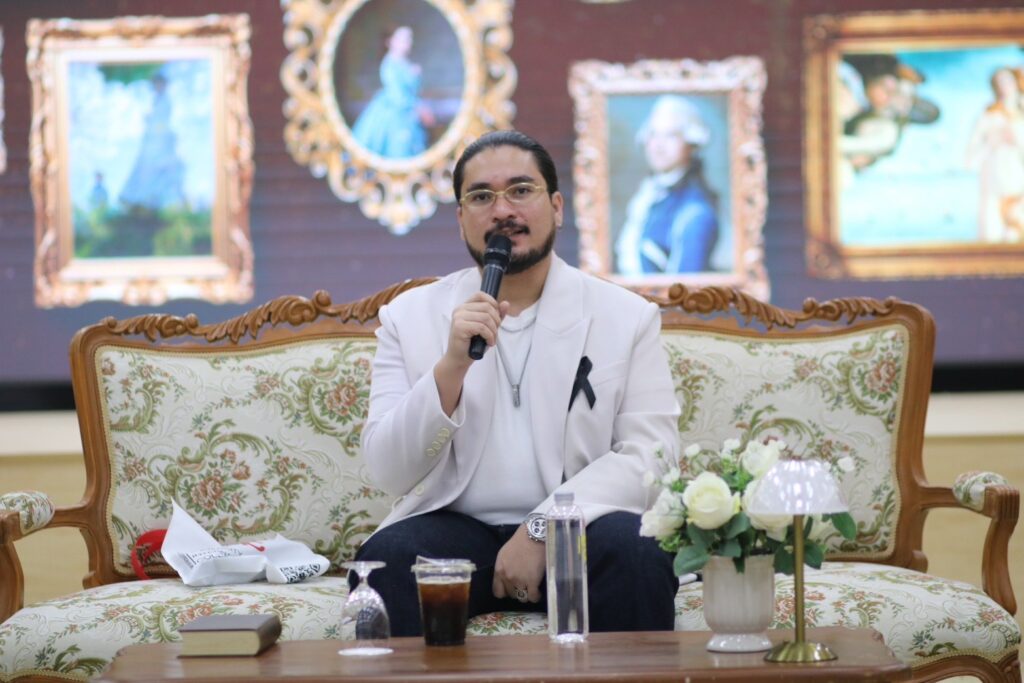
The panel discussion entitled “The History of Beauty Standards” was organized through a collaboration between Pharaoh from The Common Thread and the International College of Burapha University. The activity was developed in alignment with the academic context of the Bachelor of Arts Program in Business Communication and Contemporary Media offered by the International College. The project was designed to serve as an academic and public platform for knowledge dissemination, focusing on the historical evolution of beauty standards from the past to the present and their connection to social structures, cultural norms, and media representation. In particular, the discussion highlighted how beauty standards in different historical periods have reflected the oppression of women and the unfair use of female bodies, revealing deeply rooted forms of gender-based discrimination embedded in society.
The panel discussion provided an inclusive learning space for lecturers, staff, and students of the International College, as well as participants from other faculties of Burapha University and members of the general public who are interested in history, beauty culture, and gender-related issues. Through expert-led discussions, the activity encouraged participants to critically examine how beauty norms have shaped and reinforced unequal power relations and gender inequality across different eras. The session also enabled open dialogue and knowledge exchange, fostering greater awareness of the social implications of cultural and aesthetic norms in contemporary society.
This project directly supports the United Nations Sustainable Development Goal (SDG) 5: Gender Equality, particularly Target 5.1, which aims to end all forms of discrimination against women and girls everywhere. By analysing historical beauty standards as mechanisms of exclusion and control, the discussion promoted a deeper understanding of gender-based discrimination and contributed to the promotion of non-discrimination in social and cultural contexts. In addition, the project emphasises the use of enabling technologies, especially information and communication technologies, to promote women’s empowerment. This alignment was reflected in the strategic use of digital media and online communication channels to disseminate knowledge, broaden public engagement, and amplify discussions on gender equality beyond the physical event space.
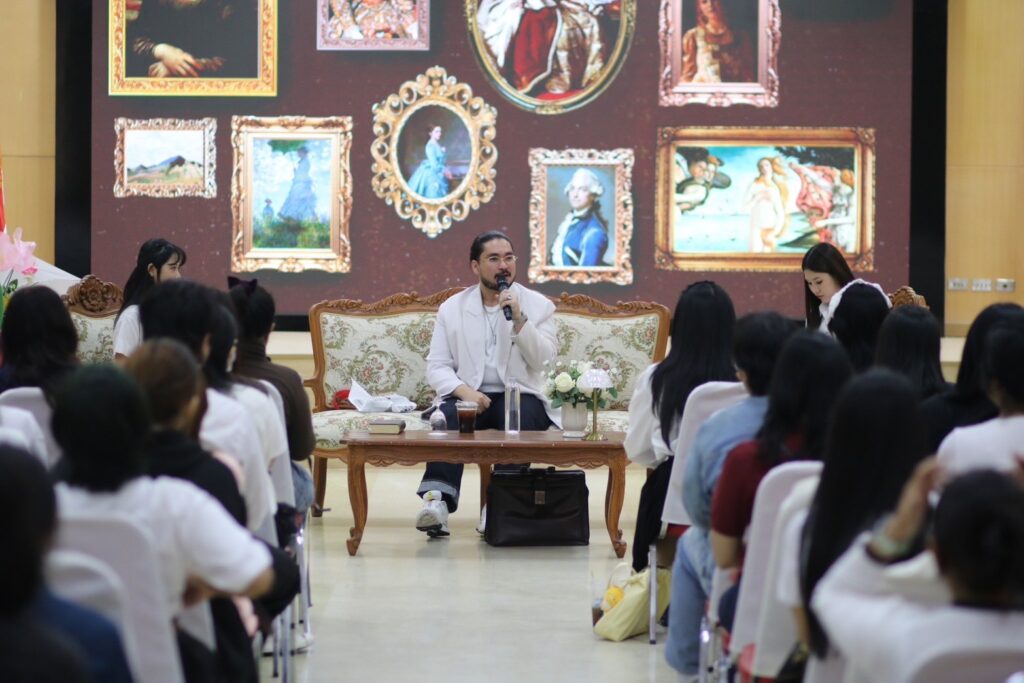
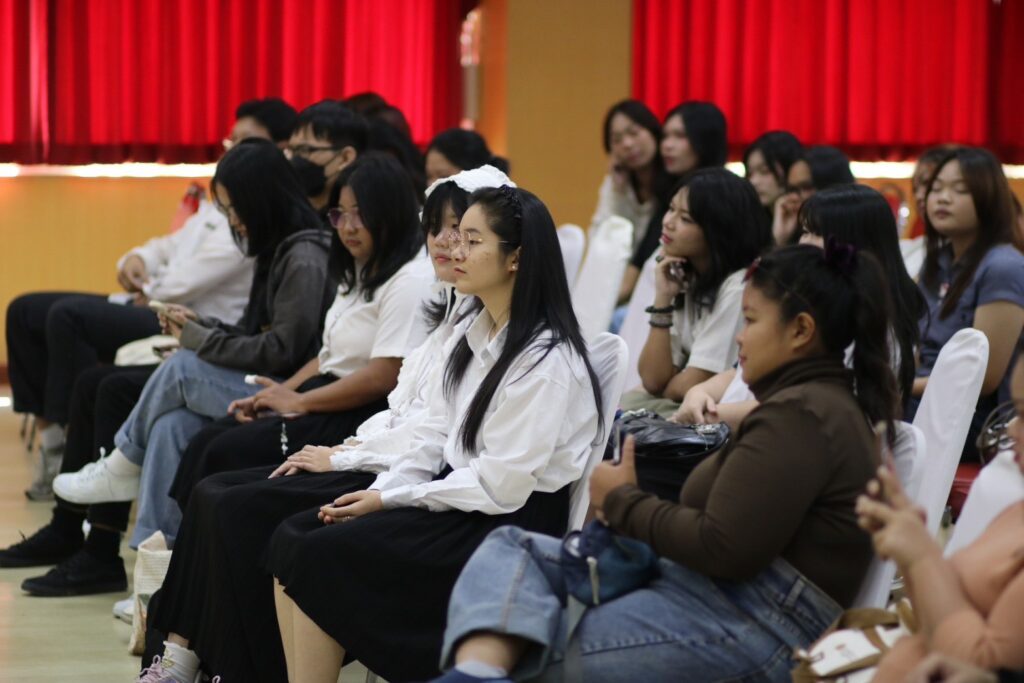
The objectives of the project included increasing public awareness of the Bachelor of Arts Program in Business Communication and Contemporary Media and strengthening the visibility of the International College, Burapha University, among external stakeholders. At the same time, the panel discussion functioned as a mechanism for advancing SDG 5 by integrating academic knowledge with social discourse on gender equality. The project was systematically planned and implemented, beginning with the formulation of clear objectives focused on communicating historical narratives of gender oppression through beauty standards, followed by the proposal and approval of the project in accordance with institutional planning processes.
The activity was carried out through a structured panel discussion led by a subject-matter expert, emphasizing how women have been unfairly treated or objectified through beauty norms in different historical periods. Participants were encouraged to actively engage in discussions and reflect on how historical patterns of inequality continue to influence present-day perceptions of gender and identity. To extend the social impact of the project, related content and key messages on gender equality were disseminated through social media platforms and the university’s SDG and sustainability website, ensuring wider public access to the knowledge shared during the event.
Evaluation and reporting were integral components of the project. The success of the activity was assessed through participant satisfaction and engagement levels, and the outcomes were summarized in a report prepared in English for publication on Burapha University’s sustainability platforms in accordance with established SDG reporting criteria. These results will also serve as a reference for the design and implementation of future initiatives aimed at promoting gender equality and inclusive development.
Overall, the project generated positive social impact by directly contributing to the achievement of SDG 5. By communicating historical and cultural perspectives on beauty standards and their social consequences, the activity raised awareness of gender inequality among approximately 100 participants, including students, university personnel, and members of the public. The panel discussion emphasized the deconstruction of beauty norms that have historically perpetuated discrimination against women, thereby promoting principles of non-discrimination and equality. Through this initiative, Burapha University reaffirmed its commitment to advancing gender equality and fostering a more inclusive and sustainable society. The panel discussion was held on 27 November 2025.
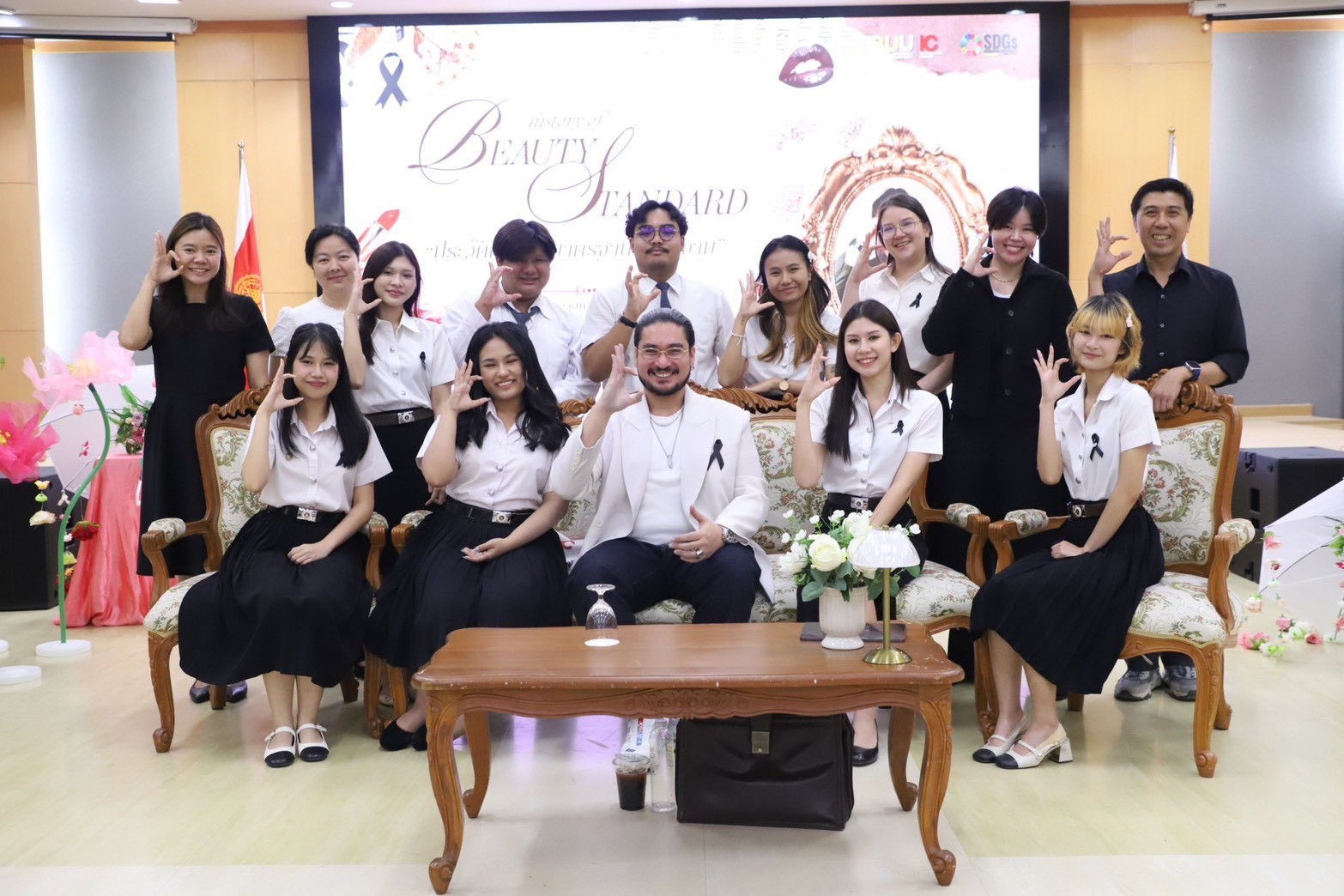
Project Leader: Asst. Prof. Waraporn Theerasak (Lecturer of the BA Program)