Organizing academic conferences serves as a vital mechanism for advancing academic excellence, scientific research, technology, and innovation. These conferences play a crucial role in promoting knowledge exchange, fostering collaborative networks, and disseminating high-quality research to the public at both national and international levels. They provide a platform for researchers, scholars, and students from various disciplines to present their work, share new techniques and methodologies, and develop ideas that lead to further academic progress and future research questions.
Moreover, academic conferences facilitate diverse forms of collaboration, including joint research projects, academic activities, and the exchange of researchers and students. Such interactions not only elevate the standards of research but also encourage cross-institutional learning and cooperation.
As an institution recognized for its strong commitment to academic development, Burapha University views the organization of academic conferences as a key strategy to enhance its reputation, credibility, and visibility within the academic community, both domestically and internationally.
Objectives:
- Dissemination of Research and New Knowledge
Provide opportunities for researchers to present their work and innovative ideas, fostering knowledge exchange and development strategies among experts in related fields, thereby encouraging continuous research advancement. - Exchange of Ideas and Experiences
The conference serves as an open platform for participants to engage in discussions, debates, and constructive critiques, leading to new perspectives and the expansion of knowledge that keeps pace with societal changes. - Academic Networking and Collaboration
Facilitate connections among researchers from various institutions, creating long-term collaborations such as joint research projects, academic activities, and researcher or personnel exchange programs. - Enhancement of Researcher and Student Potential
Presenting research at the conference hones essential academic skills, including communication, analytical thinking, and fielding academic questions—especially for graduate students and early-career researchers—preparing them for professional academic engagement.
Project Implementation
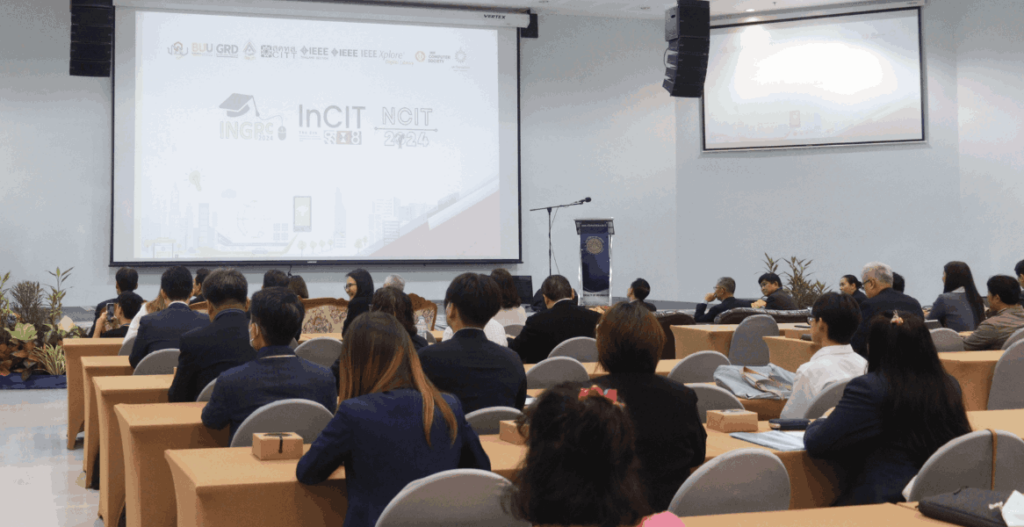
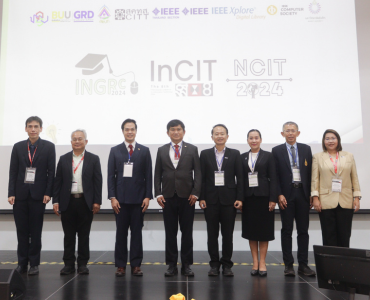
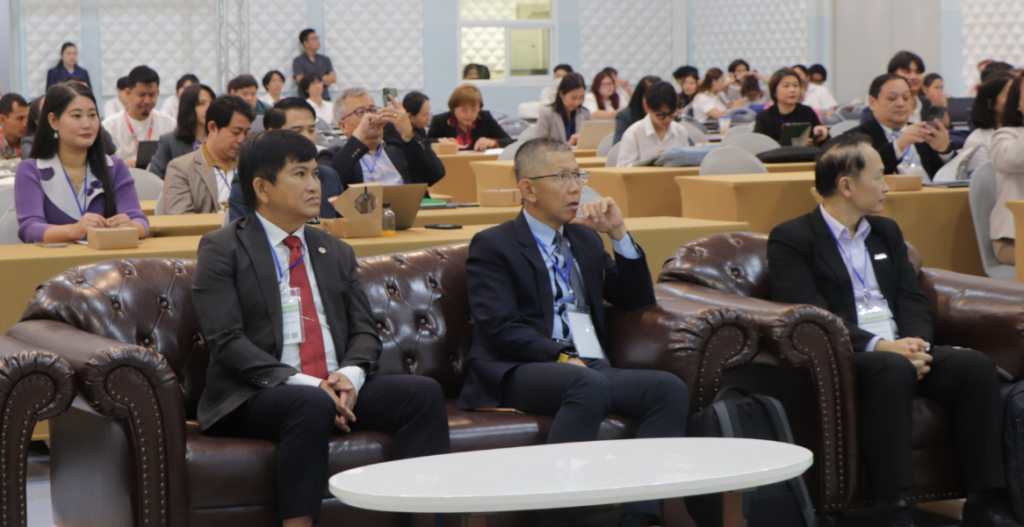
The academic conference was held on November 14, 2024, to foster knowledge exchange among researchers. The event featured keynote speeches and panel discussions by national and international experts in education management, as well as a meeting of graduate school administrators from over 30 universities.
Key Implementation Steps:
- Define Objectives and Main Themes
Clearly outline the objectives and main themes of the conference, such as research dissemination and academic networking, to provide a structured framework for planning. - Establish Organizing Committees
Form working committees with clear responsibilities in areas such as academic content, public relations, and event management. - Plan Date, Venue, and Event Format
Select an appropriate date and venue, ensuring it accommodates the expected participants, and decide on a suitable format (onsite, online, or hybrid) to align with current contexts. - Open Call for Research Papers with Transparent Review Process
Invite research paper submissions relevant to the conference themes and conduct a fair peer review process to ensure quality and academic integrity. - Promote the Event and Open Registration
Disseminate event information through online platforms and promotional materials, while facilitating participant registration through an accessible system. - Prepare for Event Day Operations
Plan detailed activities for the event day, including the opening and closing ceremonies, presentation schedules, keynote sessions, panel discussions, and logistical support (e.g., audiovisual systems, internet connectivity, supporting materials). - Evaluation and Reporting
Conduct a post-event evaluation of participant satisfaction and operational effectiveness, compile a comprehensive report, publish the conference proceedings, and issue certificates of participation. - Follow-up Communication and Academic Impact
Continue to promote the outcomes of the conference through journal publications, policy recommendations, or expanded academic collaborations within the established networks.
Organizing a high-quality academic conference can generate positive outcomes across multiple dimensions, including:
- Knowledge Dissemination and Advancement
One of the key outcomes of an academic conference is providing a structured platform for scholars, researchers, and students to present their work. This encourages academic discourse, constructive feedback from experts, and opportunities for further development and refinement of research. Such interactions enhance the potential for publication in academic journals and contribute to the advancement of knowledge. - Building Collaborative Networks (Networking)
Academic conferences bring together experts from various fields and institutions, fostering interactions that lead to future collaborations. These may include joint research projects, student and staff exchange programs, or other academic initiatives that contribute to the development of individual and institutional capacities. - Enhancing the Competencies of Researchers and Students
Participants, especially graduate students, gain valuable experience in presenting their research, responding to academic inquiries, and communicating effectively in academic settings. Receiving expert feedback further enriches their learning process, helping them to develop essential academic and professional skills. - Elevating Institutional Academic Standards
Organizing academic conferences reflects an institution’s capability to execute high-quality academic activities. It also strengthens the institution’s reputation, enhancing its recognition and credibility at both national and international levels.
Project Manager
Asst. Prof. Dr. Montana Rungsiyopas