Aligned with the United Nations Sustainable Development Goal (SDG) 11: Sustainable Cities and Communities, the special lecture and discussion, titled “The Development of Pollution in Thailand’s Eastern Region: From the Eastern Seaboard (ESB) to the Eastern Economic Corridor (EEC),” marked a critical intersection between historical documentation and social advocacy. It operated under the broader umbrella of the Knowledge Promotion Project on History and Culture, representing a strategic partnership between by the Department of History, Faculty of Humanities and Social Sciences, Burapha University, and the Ecological Alert and Recovery – Thailand (EARTH) Foundation, a non-profit, non-governmental organization legally registered in August 2009. Prior to its formal registration, the organization had operated under the name Campaign for Alternative Industry Network (CAIN) since early 1998.
Its mission focuses on academic research and advocacy, as well as supporting communities affected by pollution and hazardous substances to ensure access to justice, particularly for vulnerable and marginalized groups who face heightened risks to their health, environment, and economic well-being as a result of industrial expansion. In addition, EARTH promotes assistance, remediation, and fair compensation for affected communities, while advocating for long-term social and environmental sustainability. The discussion revealed that Thailand’s industrial growth has come at a significant ecological cost. The conversion of farmland into industrial zones has led to widespread environmental damage, including severe pollution and the depletion of natural resources. These shifts have directly threatened the livelihoods and health of local populations. Experts noted that industrial expansion and infrastructure projects are now major drivers of public health risks, with local residents facing dangerous levels of air pollution and chemical exposure.
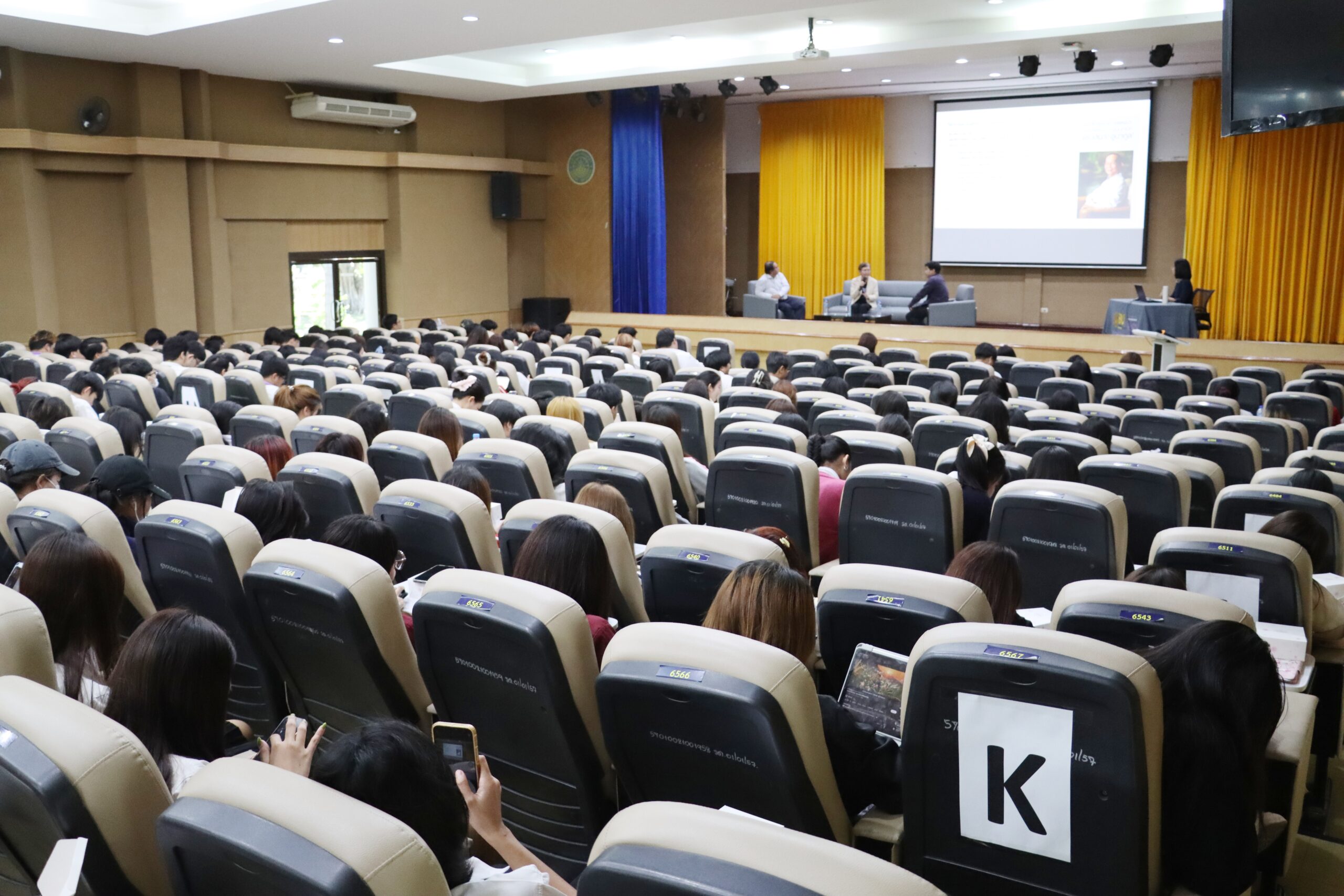
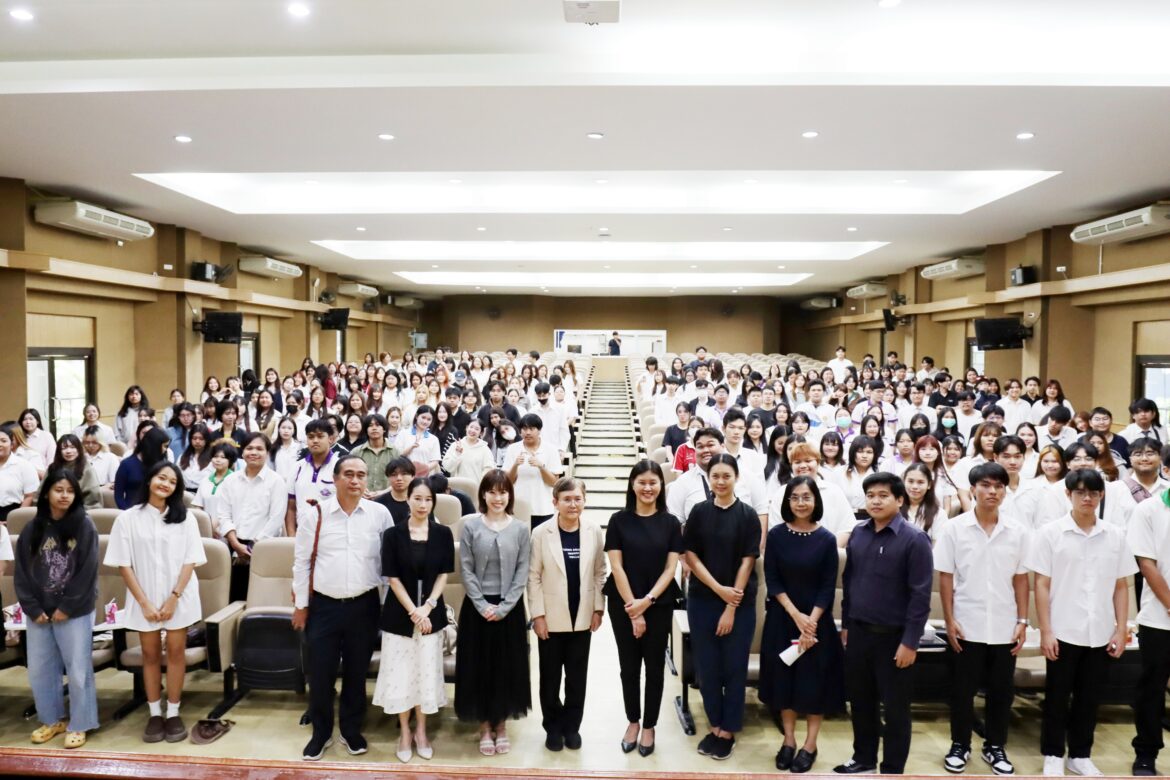
The project was implemented through the organization of a special lecture and academic discussion entitled “The Development of Pollution in Thailand’s Eastern Region: From the Eastern Seaboard (ESB) to the Eastern Economic Corridor (EEC)”, under the Knowledge Promotion Project on History and Culture. The activity was jointly organized by the Department of History, Faculty of Humanities and Social Sciences, Burapha University, in collaboration with the Ecological Alert and Recovery – Thailand (EARTH) Foundation. The activity focused on disseminating historical, social, and environmental knowledge concerning the development of industrial pollution in Thailand’s Eastern Region, tracing the transformation from the Eastern Seaboard (ESB) development phase to the Eastern Economic Corridor (EEC). The lecture and discussion highlighted the conversion of agricultural land into industrial zones and examined its consequences, including environmental degradation, resource depletion, and increased health risk for local communities due to air pollution and chemical exposure.
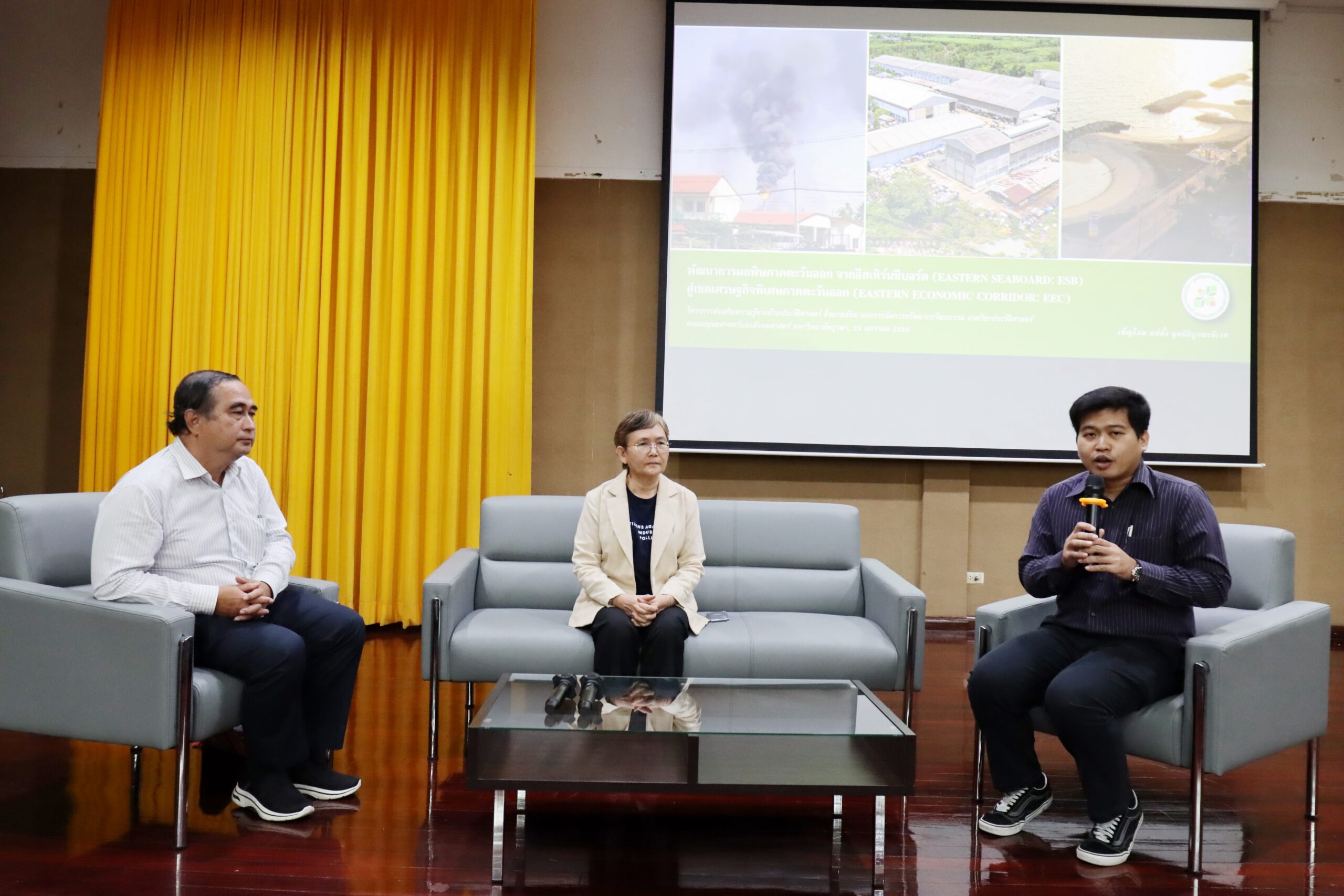
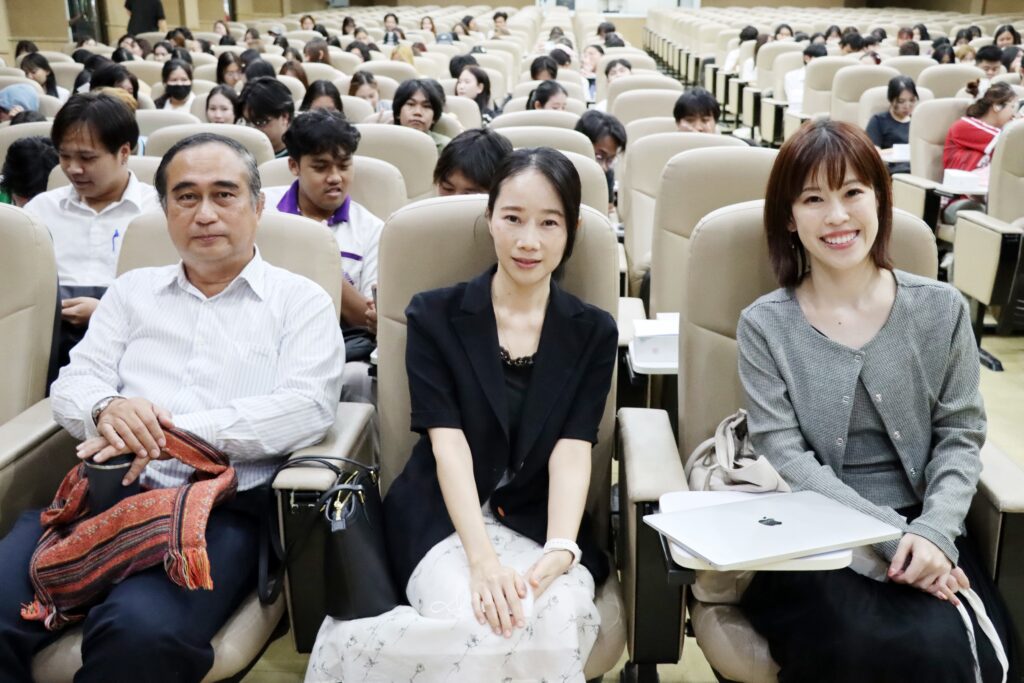
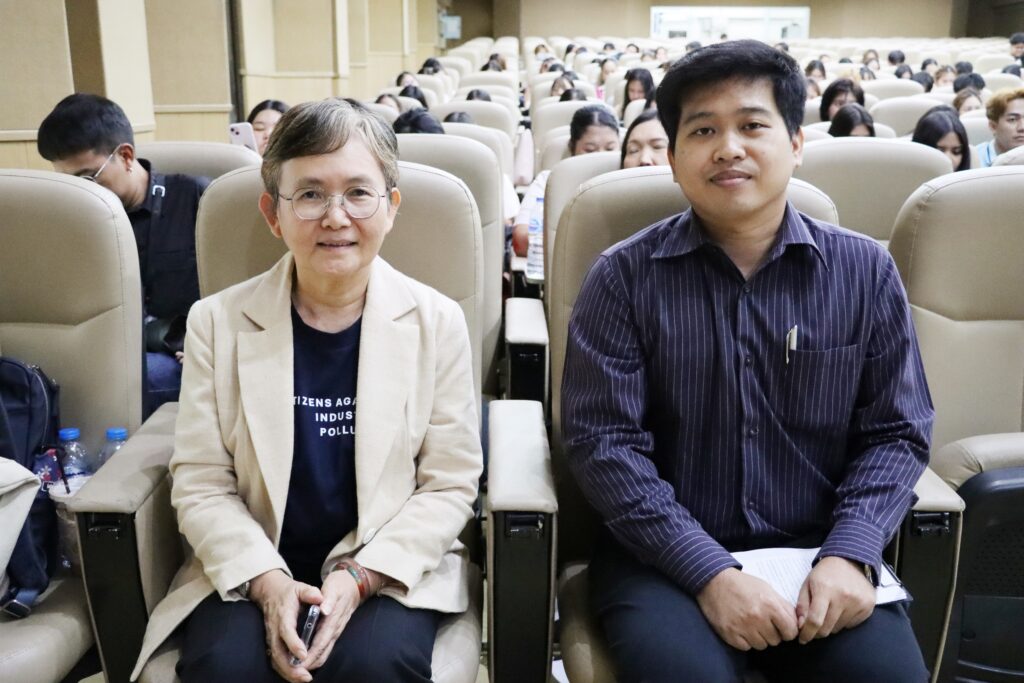
The project increased participants’ awareness and understanding of environmental pollution issue in Thailand’s Eastern region by identifying key sources of pollution and examining their impacts on the environment and local communities. Participants gained insight into how industrial development has contributed to environmental degradation, resource depletion, and health-related risk. As a result, participants became more aware of current and emerging environmental challenges, as well as the long-term air pollution trends caused by industrial expansion. The activity also encouraged participants to recognize the importance of sustainable development and environmental responsibility.
The people in charge of this project are Assistant Professor Dr. Sarunya Prasopchingchana and Lecturer Prawit Saisanguanwong, Department of History, Faculty of Humanities and Social Sciences, Burapha University.
Event Date: December 18, 2025