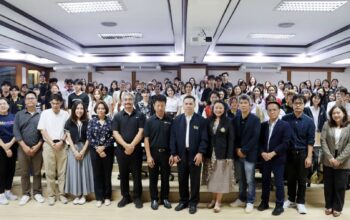
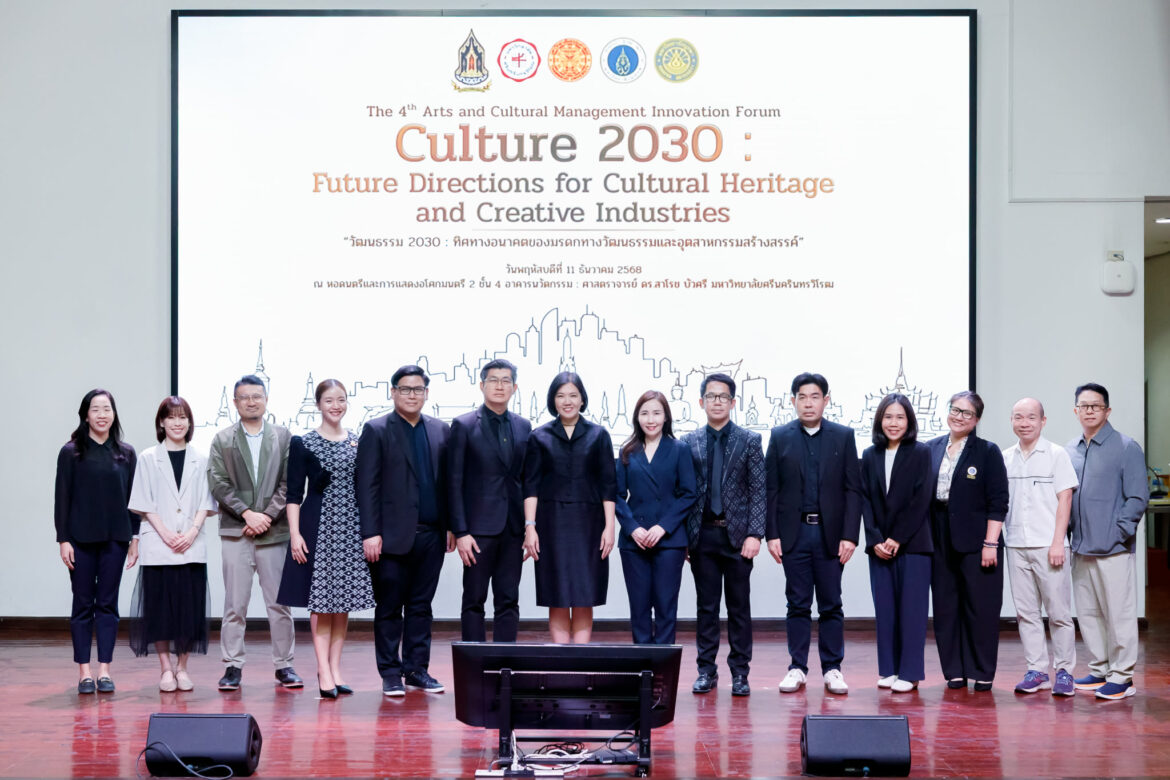
In a world facing rapid transformation across technology, economy, society, and the environment, cultural heritage and creative industries have emerged as crucial drivers of sustainable development. The United Nations has established the Sustainable Development Goals (SDGs) with a target year of 2030, in which culture plays a key role—particularly in strengthening community identity, advancing the creative economy, and promoting cultural diversity. Thailand possesses a rich abundance of both tangible and intangible cultural heritage, offering strong potential to be developed as cultural capital and to generate added economic value. However, cultural heritage and creative industry management in the 21st century requires innovation, interdisciplinary integration, and forward-looking knowledge to ensure responsiveness to global changes and long-term sustainability.
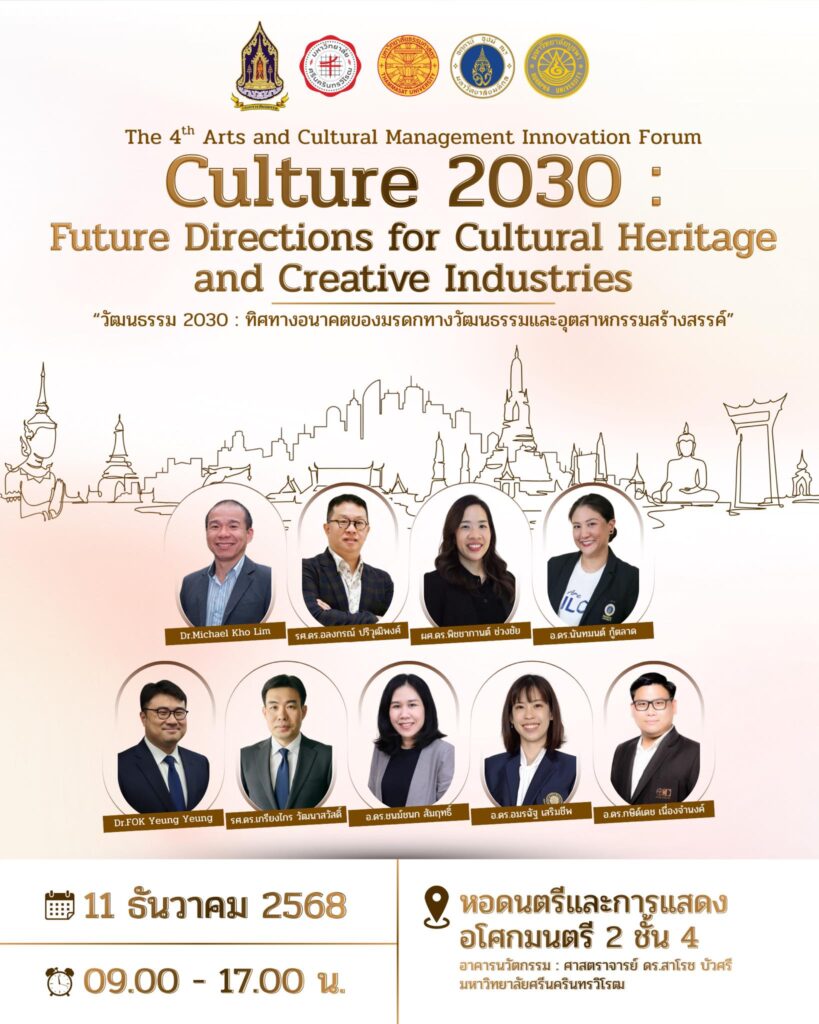
To address these needs, the Department of Arts and Cultural Management Innovation, Faculty of Fine Arts, Srinakharinwirot University, together with the Institute of Culture and Arts (Srinakharinwirot University), the Ministry of Culture, Thammasat University’s College of Innovation, Mahidol University’s Research Institute for Languages and Cultures of Asia, the Department of History of Burapha University’s Faculty of Humanities and Social Sciences, and other partner institutions, jointly organized the 4th Arts and Cultural Management Innovation Forum under the theme “Culture 2030: Future Directions for Cultural Heritage and Creative Industries.”
This forum serves as an important platform for analyzing and presenting future trends, strategic directions, and cultural heritage and creative industry management approaches aligned with the evolving global context of the coming decade. The event emphasizes the integration of arts and culture, technological innovation, and sustainable development frameworks to support the secure, creative, and sustainable future of Thailand’s cultural heritage.
Project Objectives
- To raise awareness of the value and importance of cultural heritage and creative industries in driving national economic and social development.
- To provide a knowledge-sharing platform for exchanging experiences and best practices in cultural heritage and creative industry management under the cultural dimension of SDGs 2030 and UNESCO Culture|2030 Indicators, including alignment with the UNESCO Culture|2030 Indicators framework.
- To strengthen cooperation networks among academics, practitioners, government and private organizations, educational institutions, and communities to collectively advance arts and culture initiatives.
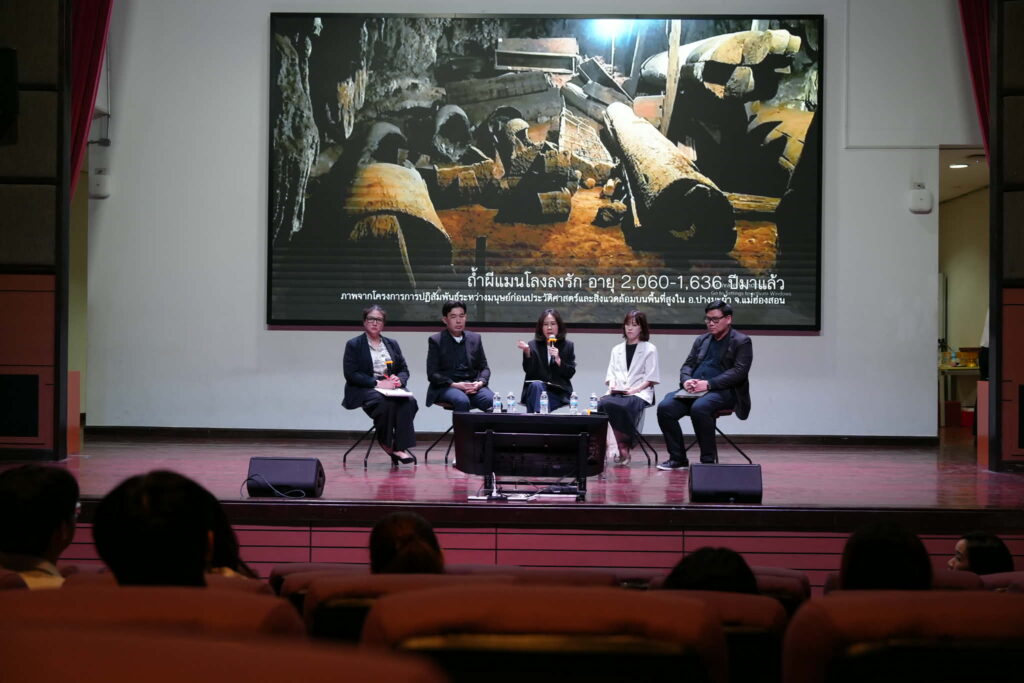
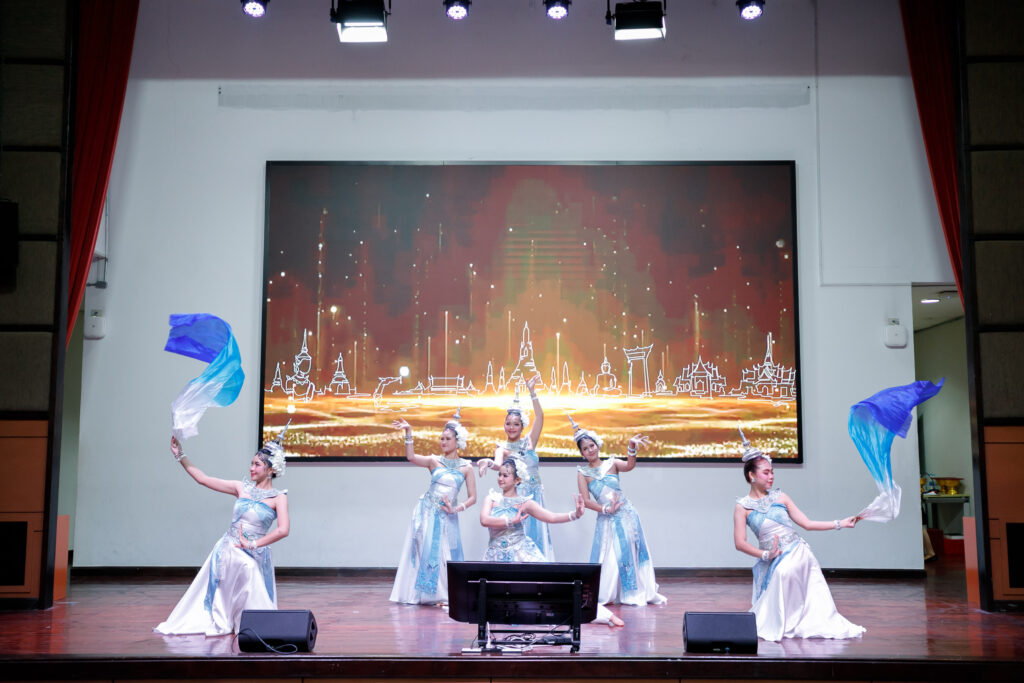
The forum was held on Thursday, December 11, 2025, from 08.00 to 17.15, featuring an opening ceremony presided over by the Deputy Permanent Secretary of the Ministry of Culture, followed by the opening performance “Sainatee Sri Ayodhya.” The morning sessions included a panel discussion on “Future Directions for Creative Industries” and a keynote lecture titled “Reconstructing the Past for a Sustainable Future? Exploring the Heritage Revitalisation Policy in Hong Kong,” delivered by Dr. FOK Yeung Yeung from the Department of History, The Chinese University of Hong Kong. The afternoon session concluded with an expert panel on “Future Directions for Cultural Heritage,” with contributions from specialists in cultural heritage and creative industry management from host institutions including Chulalongkorn University, as well as international experts from the University of Glasgow (UK) and the University of Glasgow and the University of Glasgow, along with the University of Glasgow and the University of Glasgow, with additional expert representation from the University of Glasgow and the University of Glasgow.
This forum fosters international and domestic knowledge exchange by linking cultural heritage and creative industry management with sustainable development goals through UNESCO Culture|2030 Indicators and global case studies from Thailand and abroad. It also highlights collaborative insights from experts across diverse institutions and academic disciplines.
The project generates valuable contributions to both academic and policy spheres by offering conceptual frameworks and perspectives that can support cultural-driven policy planning, research, curriculum development, and knowledge dissemination to cultural industry professionals, students, and the public. Ultimately, it strengthens understanding of culture’s role as a foundation for sustainable development in the long term.
Host Institutions (Main Hosts)
Department of Arts and Cultural Management Innovation, Faculty of Fine Arts, Srinakharinwirot University
Institute of Culture and Arts, Srinakharinwirot University
Co-Hosts (Partner Hosts)
Ministry of Culture, Thailand
College of Innovation, Thammasat University
Research Institute for Languages and Cultures of Asia, Mahidol University
Department of History, Faculty of Humanities and Social Sciences, Burapha University — represented by experts from the Cultural Resource Management Program. Burapha University representatives also served as members of the project operating committee, including Dr. Amornchat Sermcheep, who acted as the moderator for the morning panel discussion and as a speaker in the afternoon panel, and Dr. Chonchanok Samrit, who served as a speaker in the afternoon panel discussion.