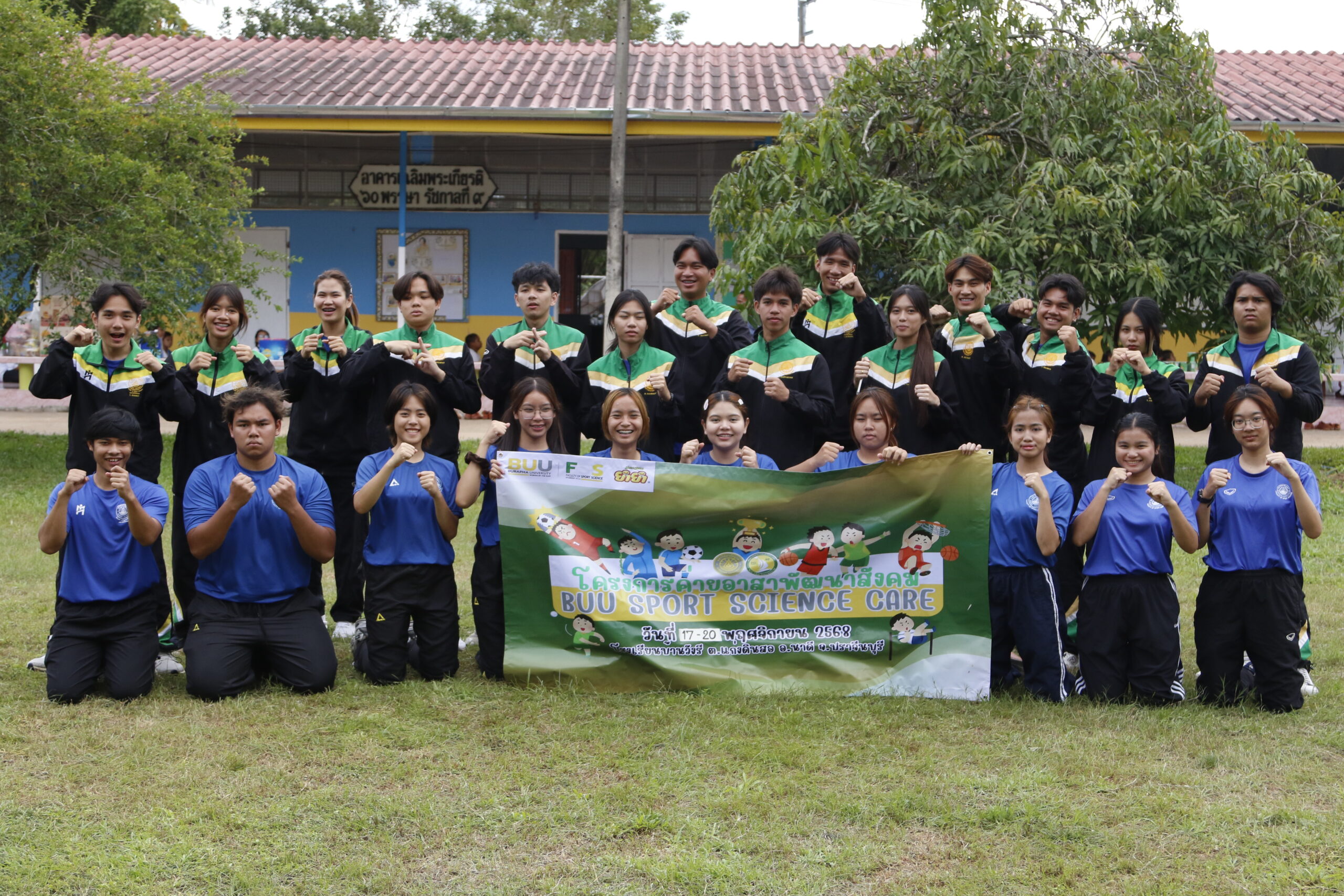
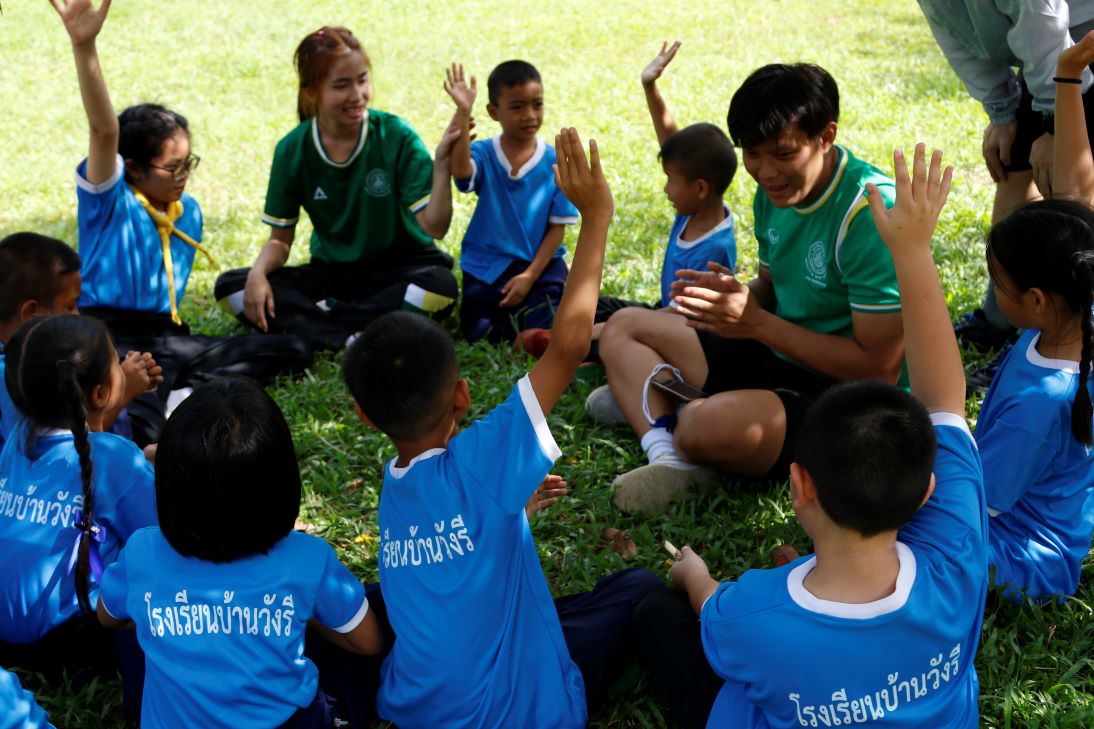
The Faculty of Sports Science Student Club in collaboration with the Student Development and Alumni Relations Division has organized the 9th Social Development Volunteer Camp “BUU Sport Science Care” for 2025. This initiative represents a comprehensive approach to integrating academic learning with community service, embodying the university’s commitment to University Social Responsibility (USR). The project addresses the critical need for educational and developmental support in schools and communities within the Eastern region of Thailand, particularly in underserved rural areas. By mobilizing students to apply their academic knowledge in sports management, sports instruction, recreation, facility development, and educational media creation, the project creates meaningful opportunities for real-world learning while simultaneously contributing to community development. The camp serves as a platform for cultivating volunteer spirit and social consciousness among students, helping them develop into ethical and morally responsible citizens who actively contribute to society. This initiative recognizes that quality education and healthy living conditions are fundamental rights that should be accessible to all children, regardless of their geographic location or socioeconomic status. The project demonstrates the practical application of sports science knowledge in addressing community needs while fostering personal growth and professional development among participating students.
The project aims to integrate academic teaching and learning with student development activities by applying classroom knowledge to provide academic services for the development of schools and communities in the Eastern region. A primary objective is to promote and cultivate a “volunteer spirit” of sacrifice, participation, and doing good deeds for society, allowing students to learn and gain practical work experience. This experience is crucial for students’ personal development in terms of morality, ethics, volunteerism, helping others, and becoming good citizens of society. The project seeks to enhance the school environment and promote student health by providing educational opportunities and life skills training to children in rural communities. Additionally, the initiative aims to demonstrate the practical value of sports science education in community development contexts while strengthening students’ sense of social responsibility. The project endeavors to create sustainable partnerships between the university and rural communities, establishing models for ongoing collaboration and support. Furthermore, it aims to inspire participating students to continue engaging in volunteer work and community service throughout their lives, recognizing the importance of giving back to society and contributing to the common good beyond their professional careers.
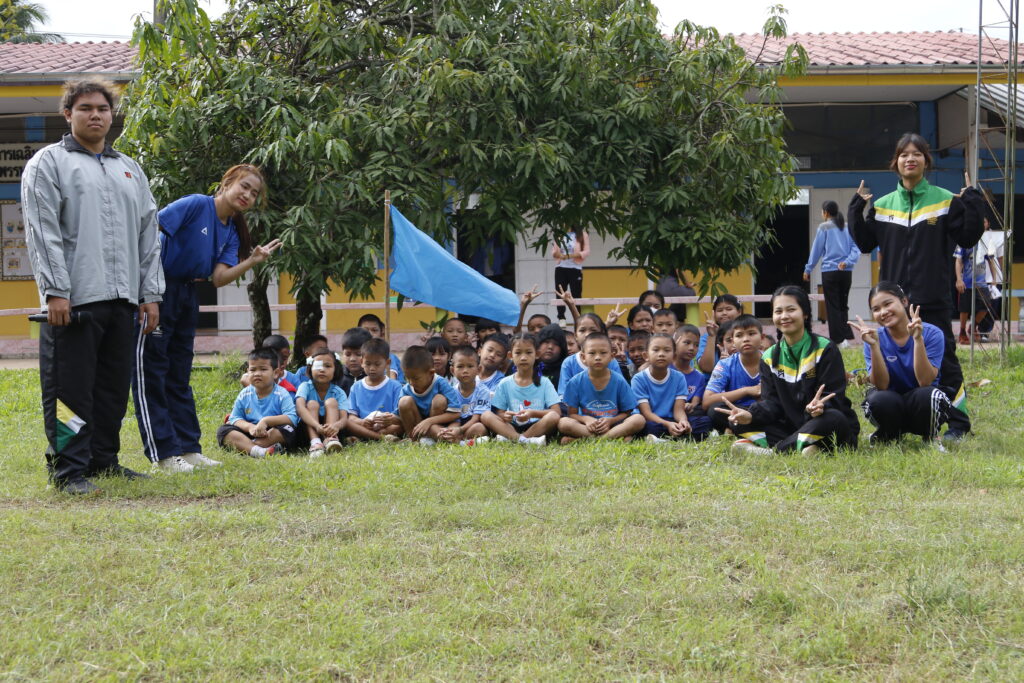
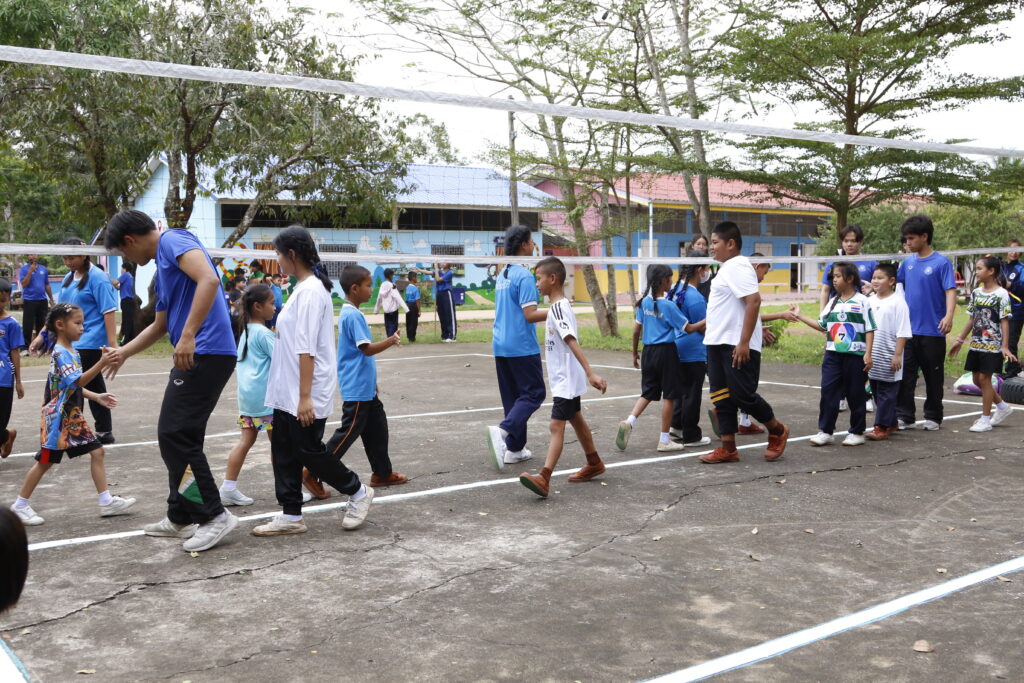
The project was implemented at Ban Wang Ri School, Kaeng Din So Subdistrict, Na Khi District, Prachinburi Province, through a comprehensive integration of academic learning and student development activities. Students applied their academic knowledge in management, sports instruction, recreation, facility development, and educational media production to provide services for school and community development in the Eastern region. The implementation included five major activity components designed to address various aspects of school and student development. Recreational activities were organized to promote social interaction and enjoyment among students. Sports skills instruction sessions were conducted to teach fundamental movement skills and specific sports techniques to students of various age groups. Basic movement skill training programs were delivered to enhance students’ physical literacy and motor development. A color house sports competition was organized to foster teamwork, school spirit, and healthy competition among students. School and sports facility development activities were undertaken to improve the physical environment and create better learning and playing conditions for students. All activities were designed and delivered by Faculty of Sports Science students under the supervision of faculty members, ensuring quality while providing valuable hands-on experience for the volunteer students. The project exemplified University Social Responsibility through direct engagement with underserved communities.
The project generated significant multidimensional impacts for all stakeholders involved. Participating university students gained invaluable practical experience in applying their sports science knowledge in real community settings, developed leadership and teamwork skills, and cultivated a deep sense of social responsibility and volunteer spirit that will guide their future civic engagement. The students at Ban Wang Ri School benefited from enhanced physical education opportunities, improved sports facilities, and exposure to structured recreational and competitive activities that promoted their physical, social, and emotional development. Teachers and school administrators received support in curriculum enrichment and facility improvement, enabling them to provide better educational experiences for their students. The improved school environment, including renovated sports facilities and new educational materials, created lasting benefits that will serve the school community for years to come. The project strengthened the relationship between Burapha University and rural communities in the Eastern region, establishing a sustainable model for university-community partnerships. Students from both institutions developed cross-cultural understanding and appreciation for different life experiences. The initiative demonstrated the tangible benefits of University Social Responsibility, showing how academic institutions can meaningfully contribute to addressing educational inequality and promoting community development. The volunteer students reported increased confidence, enhanced problem-solving abilities, and a deeper understanding of social issues facing rural communities, preparing them to be socially conscious professionals.
The activity period is 17–20 November 2025.
Project Leaders: Mr. Atthaporn Sowat and Assistant Professor Dr. Nakin Khumsri, Associate Dean for Academic Services and Alumni Relations