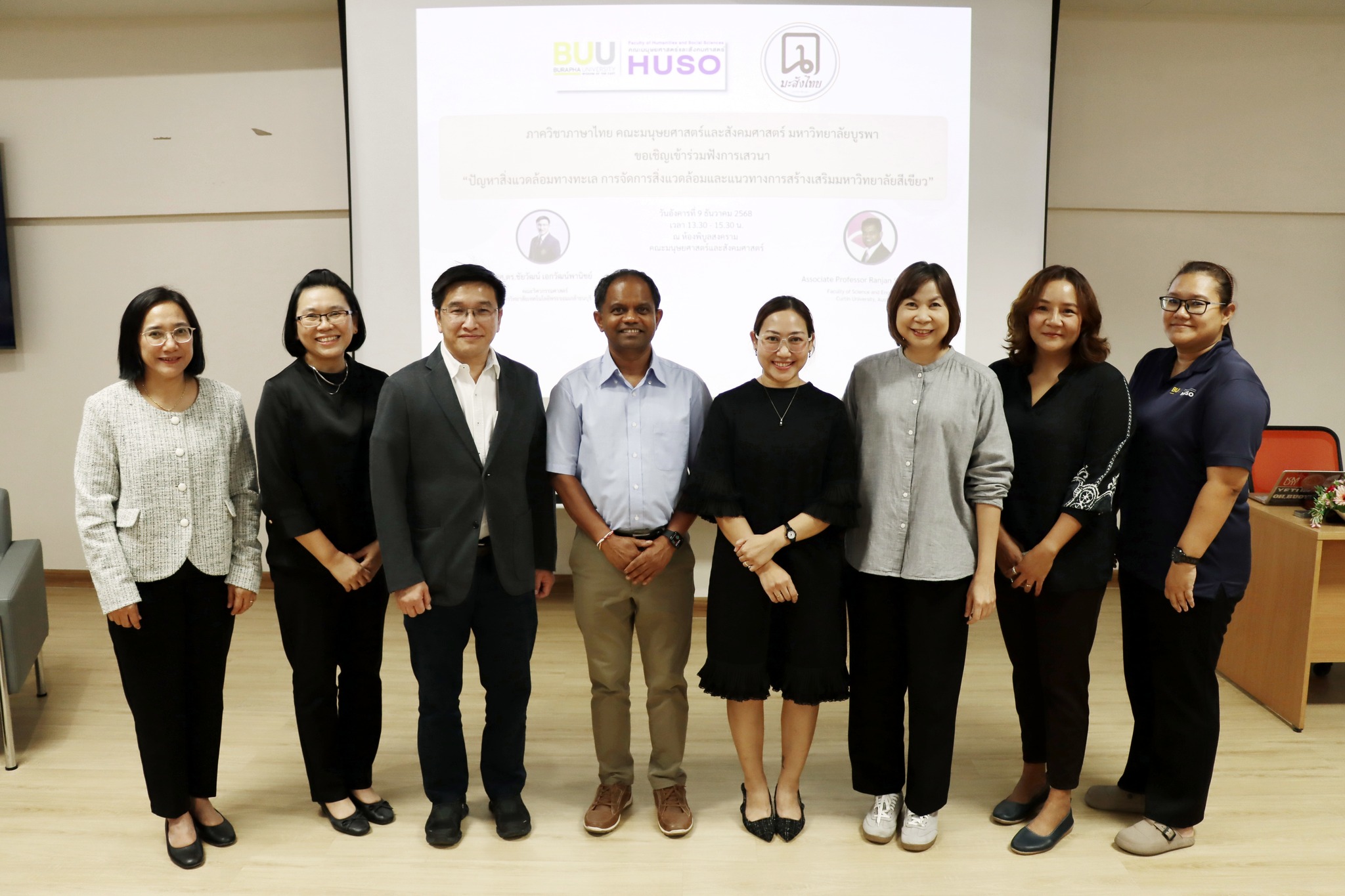
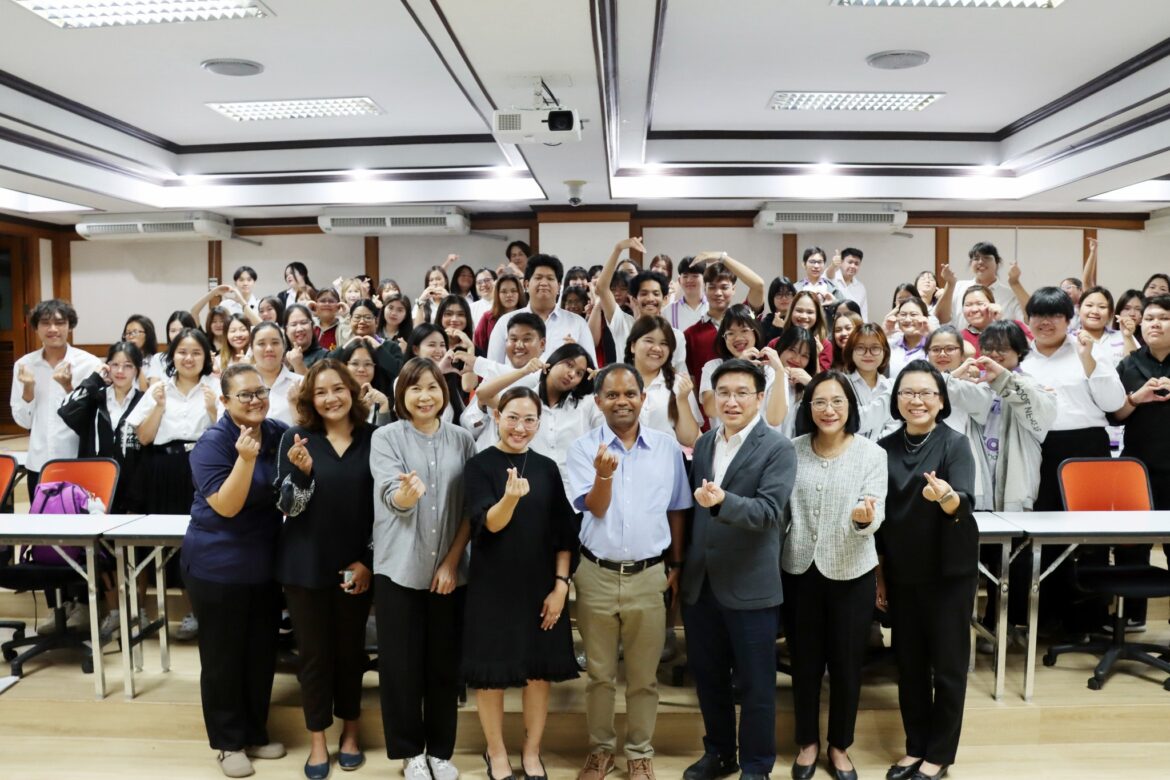
Burapha University is located in Chonburi, a key eastern seaboard province with marine ecosystems that are vital to coastal communities and the regional economy. Currently, the coastline and ocean are facing multiple environmental challenges, including global climate change, rising temperatures, sea level rise, intensifying natural disasters, and degradation of natural resources. Recognizing the urgency of these local realities, the Department of Thai, Faculty of Humanities and Social Sciences, organized the “Thai Language for Marine Bonds Project” on December 9, 2025, to raise student awareness of coastal and marine environmental issues while promoting understanding of Burapha University’s Green University vision.
By integrating Thai language skills with marine and campus environmental conservation, students are empowered to communicate, advocate, and lead environmental campaigns effectively through creative, public-facing language-based activities. The project also fosters social and environmental responsibility, shaping graduates with public spirit and a strong commitment to advancing sustainable societies.
This project aligns with SDG 14: Life Below Water, which promotes sustainable conservation and use of oceans, seas, and marine resources. It also supports the Faculty’s Green University strategy, emphasizing responsible resource use, waste reduction, and environmental learning culture.
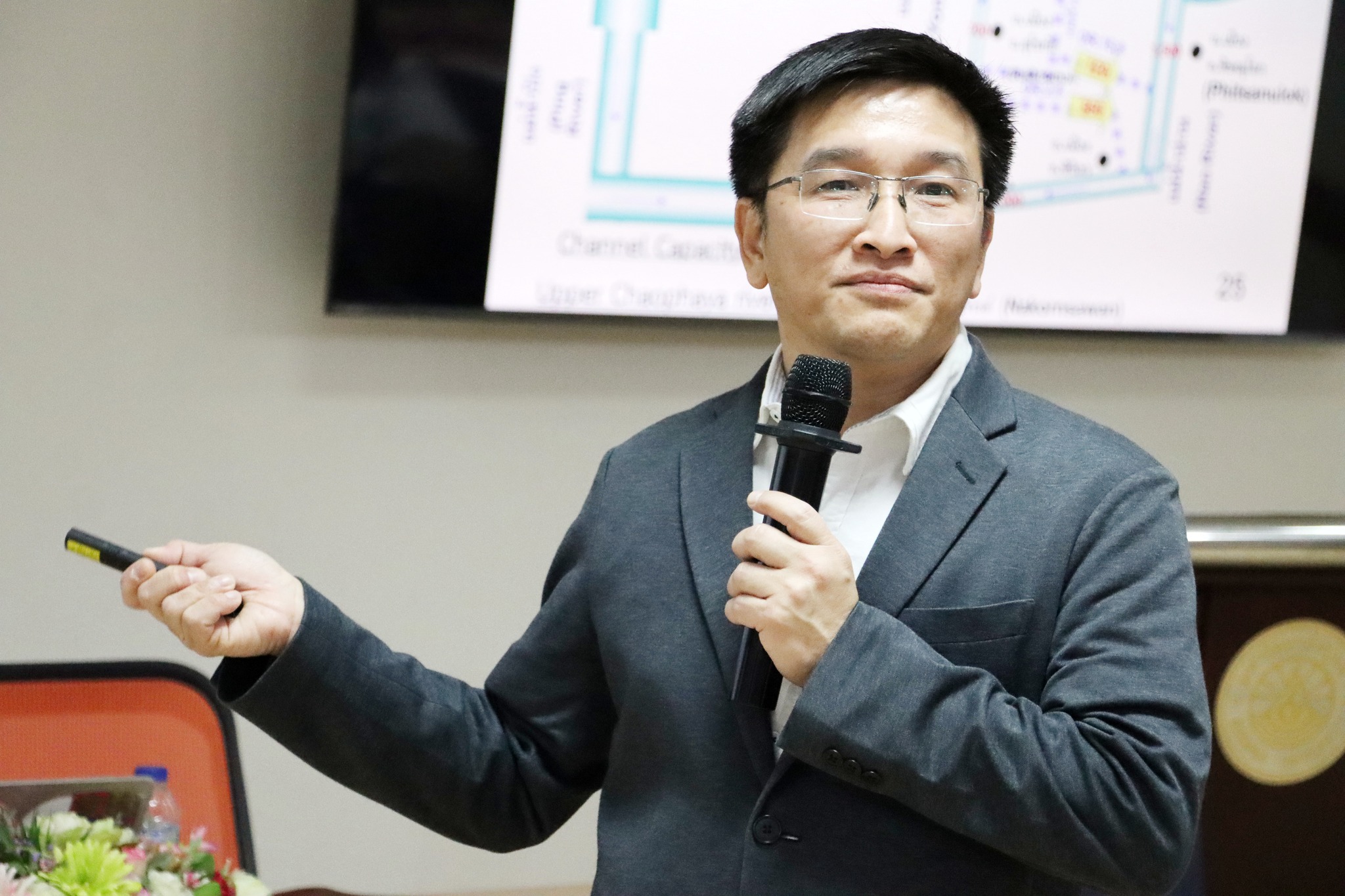
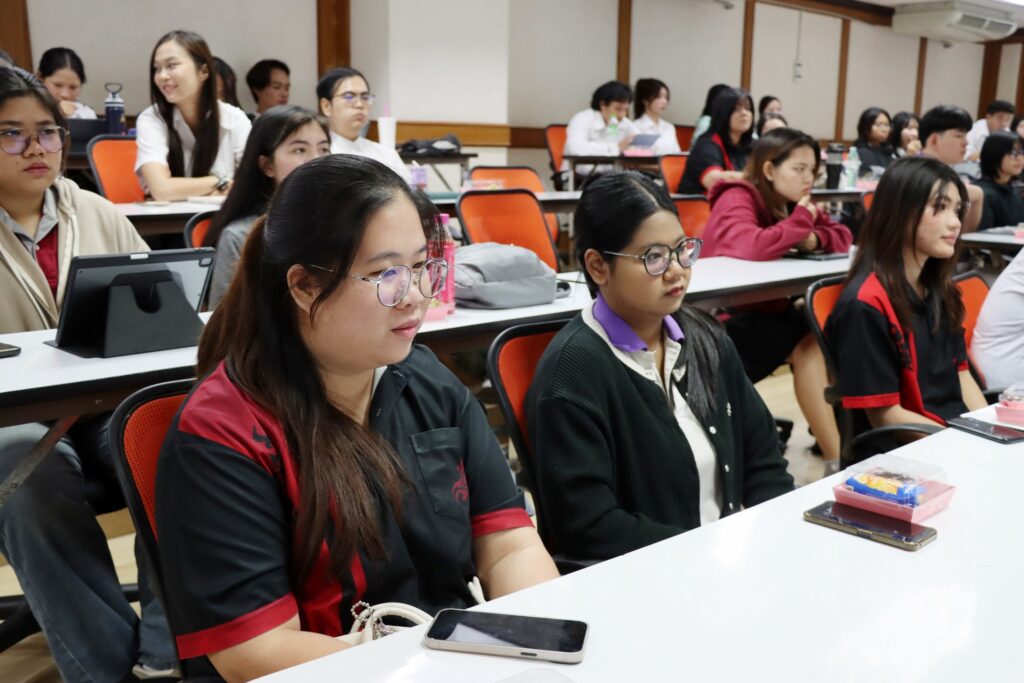
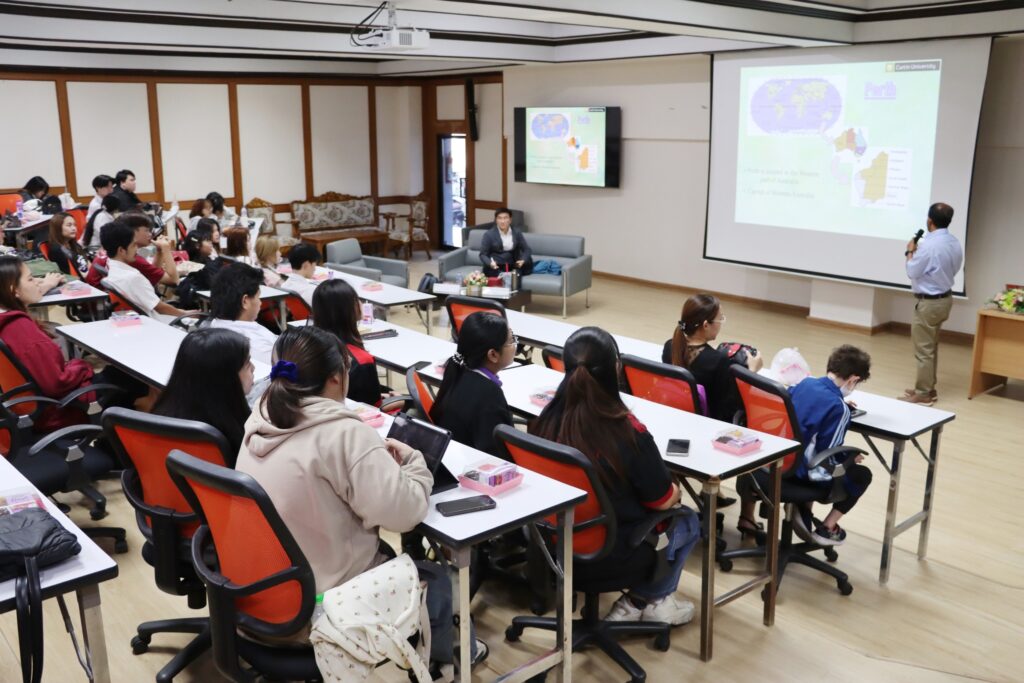
Key activities included a panel discussion on “Marine Environmental Challenges, Environmental Management, and Pathways to a Green University,” featuring Assoc. Prof. Ranjan Sarukkalige from Curtin University, Australia, and Asst. Prof. Dr. Chaiwat Aekwatpanich, Vice Dean for Industry Relations, Faculty of Engineering, King Mongkut’s University of Technology Thonburi. Students also participated in a creative Thai language group activity titled “Slogan Writing for Environmental and Green University Advocacy.”
Objectives
- To enhance student knowledge and understanding of sustainable marine resource conservation and the Green University concept.
- To promote the integration of Thai language skills as a tool for environmental communication and marine conservation advocacy.
- To cultivate social and environmental responsibility through collaborative activities.
Impacts
Students demonstrated improved knowledge and the ability to integrate Thai language into sustainable marine and coastal conservation efforts, in line with SDG 14 (Life Below Water). They applied Thai language competencies to communicate and advocate on marine environmental challenges—including marine waste, overexploitation of resources, habitat destruction, and ecosystem impacts from climate change—through creative speaking, writing, and learning activities. The project also strengthened student environmental consciousness and their commitment to responsible marine stewardship, using Thai language as a bridge to foster cooperation among the university, local communities, and society toward long-term marine sustainability.
Project Leaders: Lecturer Chanikant Kukeati and Lecturer Sarinya Kwantong