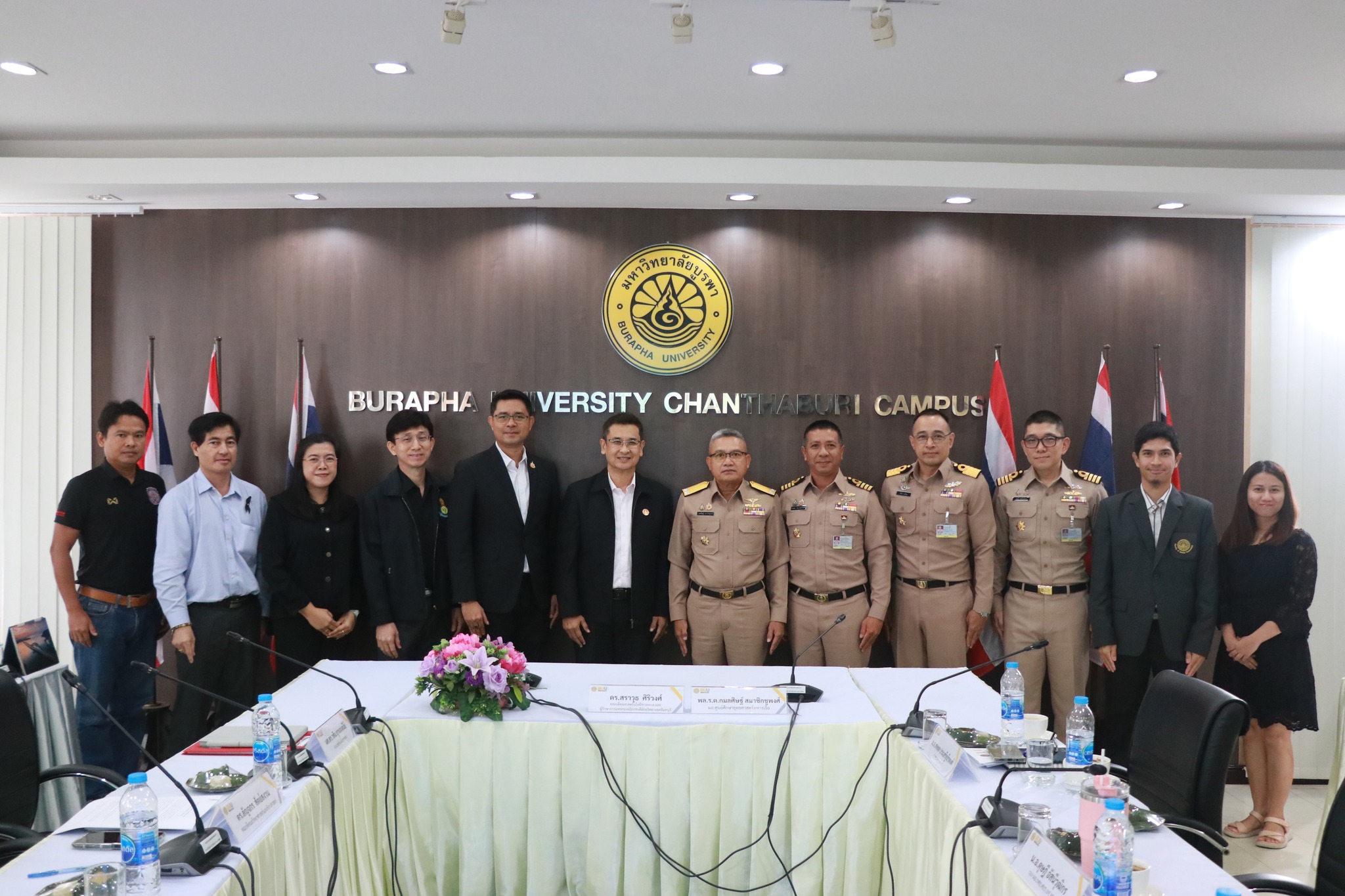
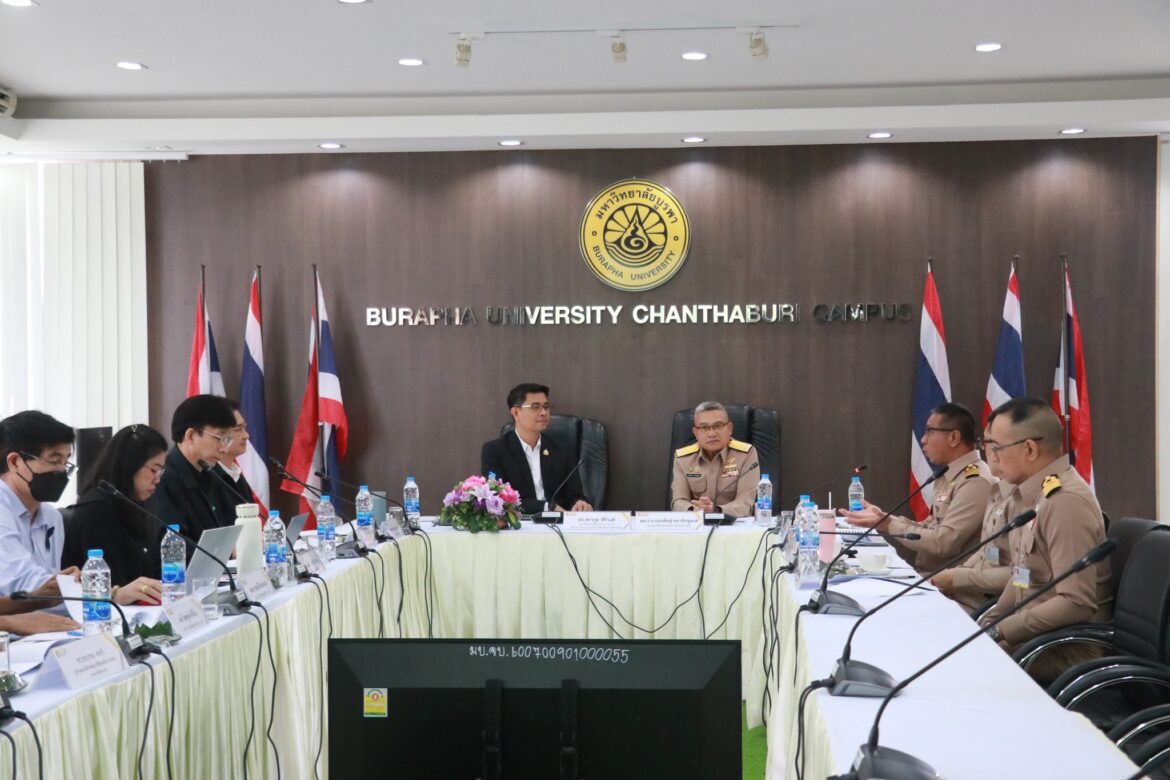
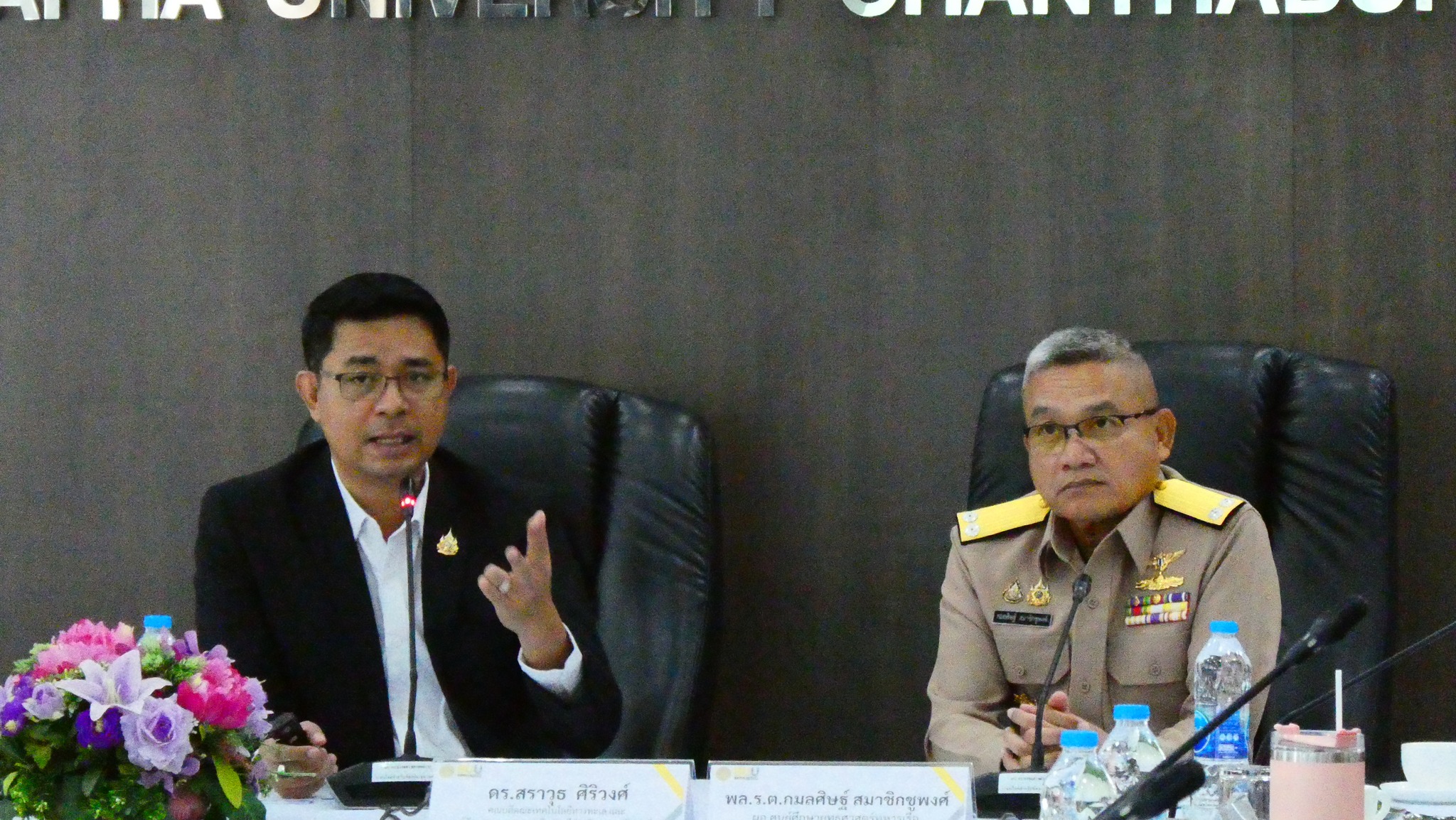
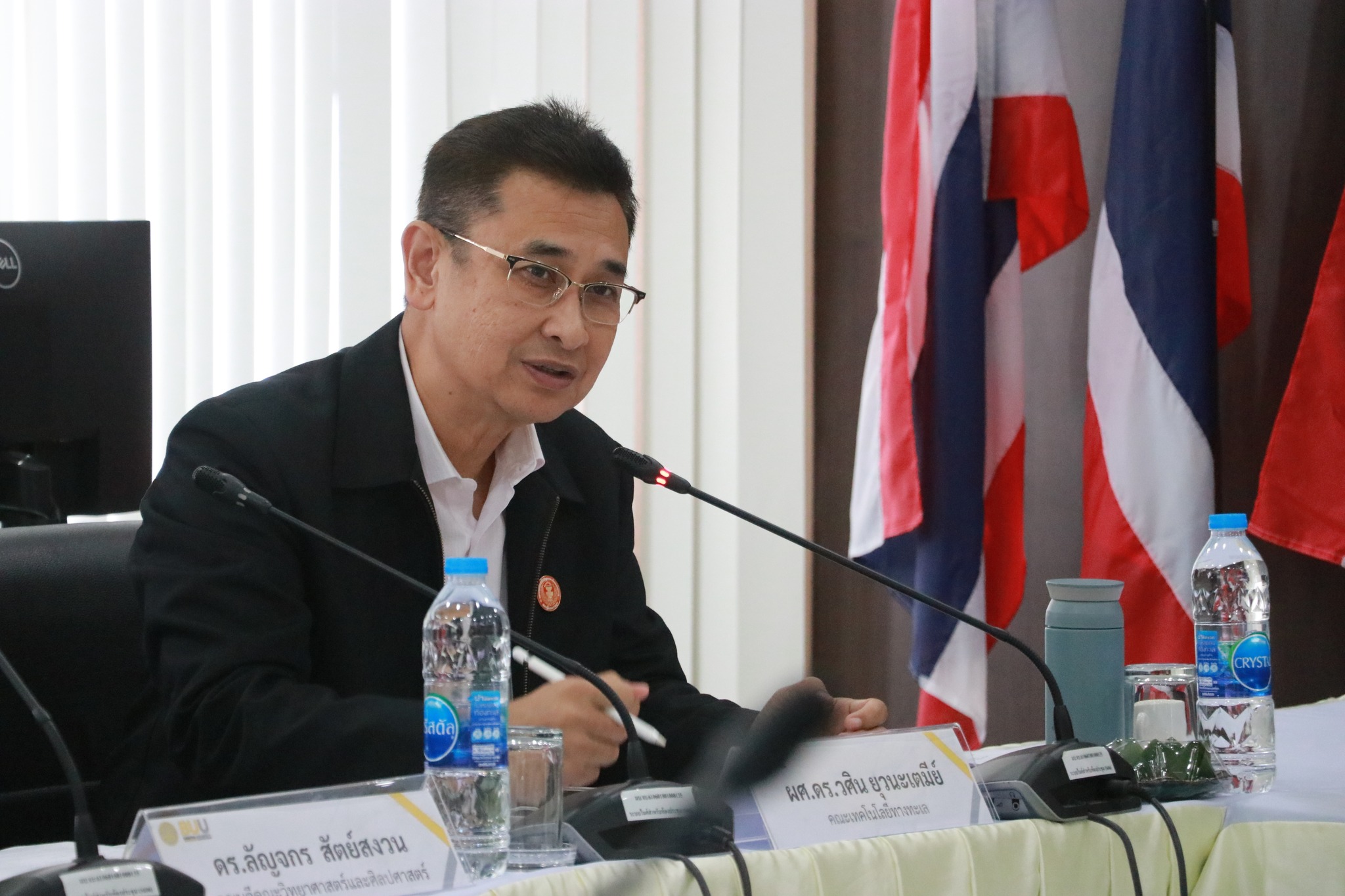
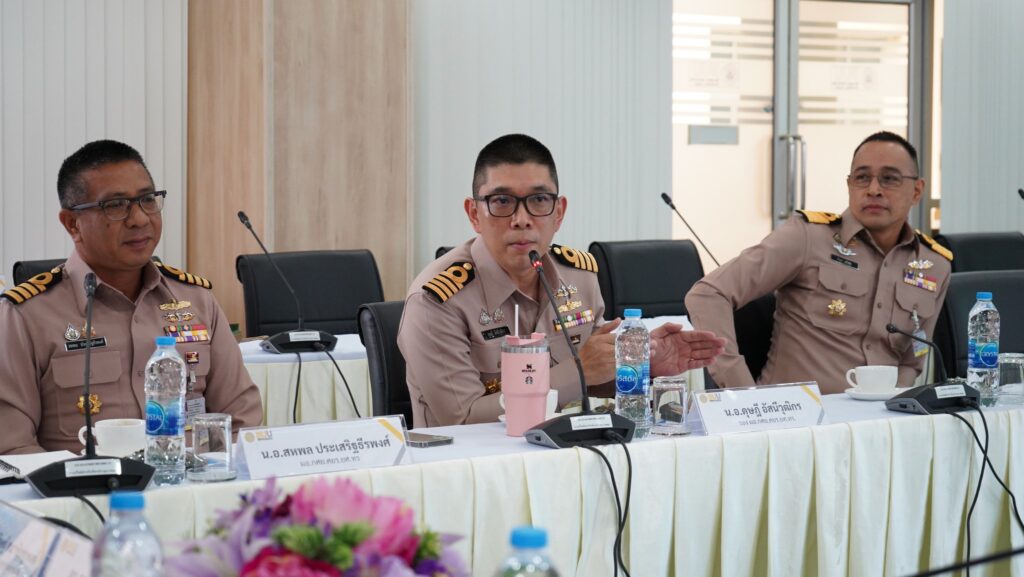
On 18 November 2025, Burapha University, Chanthaburi Campus, led by Dr. Sarawut Siriwong, Acting Vice President for the Chanthaburi Campus, together with Dr. Lanjakorn Satsanguan, Dean of the Faculty of Science and Arts, Asst. Prof. Dr. Wasin Yuwanatemi, lecturer from the Faculty of Marine Technology, as well as faculty members and relevant staff, participated in a meeting with the Royal Thai Navy. The meeting was chaired by Rear Admiral Kamolsit Samatchu¬phong, Director of the Naval Strategic Studies Center, along with Captain Sahaphon Praserttheeraphawat, Director of the Strategic Studies Division (NSC–NDA), Captain Dusadee Asaneewutikorn, Deputy Director of the Strategic Studies Division (NSC–NDA), and Captain Kitcha Chaengsuk, Naval Warfare Officer of the Strategic Studies Division (NSC–NDA). The discussion focused on exchanging information and exploring approaches for jointly driving forward the “Thailand Maritime Knowledge Management Organization,” with the aim of laying a strong foundation for long-term, sustainable collaboration. This initiative represents a strategic partnership between the Royal Thai Navy and the academic sector, integrating the nation’s maritime knowledge in a systematic manner—encompassing strategy, security, the environment, innovation, and the development of a national network of experts.
This collaboration marks an important step toward establishing a well-structured, accessible, and practical national maritime knowledge database for Thailand. The partnership is expected to support national initiatives across a broad spectrum, including maritime security strategy, management of marine resources, ecological monitoring, and the advancement of research and marine innovation. Such efforts are becoming increasingly crucial amid evolving geopolitical dynamics, emerging maritime threats, and the accelerating impacts of climate change.
Moreover, the partnership reflects the vital role of higher education institutions as key contributors to generating new knowledge and technologies that enhance the country’s capacity in sustainable marine resource management. Simultaneously, the Royal Thai Navy, as the primary agency responsible for national maritime security, provides critical support through strategic information, real operational environments, and established networks. This synergy ensures that the development of maritime knowledge is comprehensive, bridging academic insights with real-world operational needs.
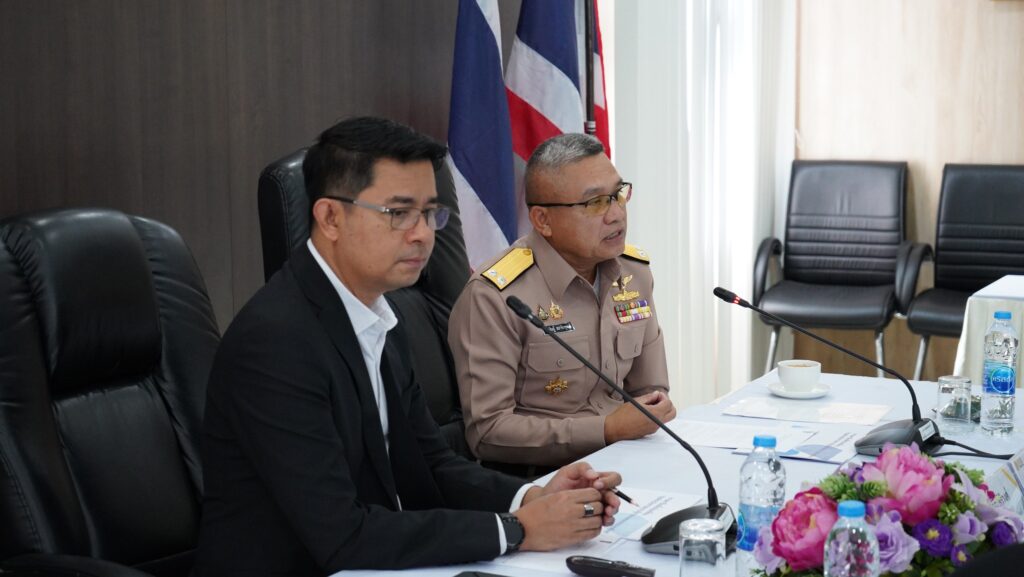
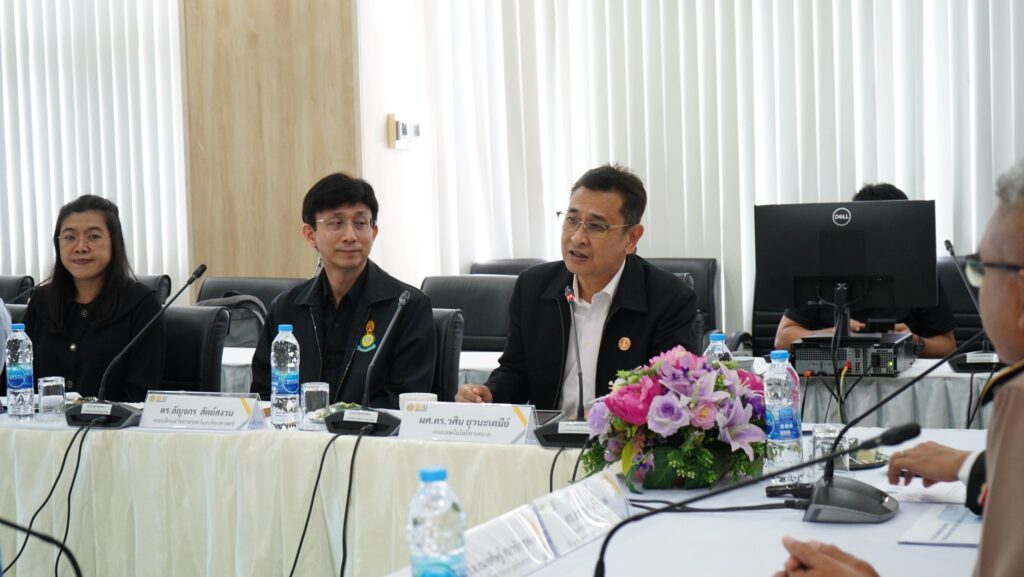
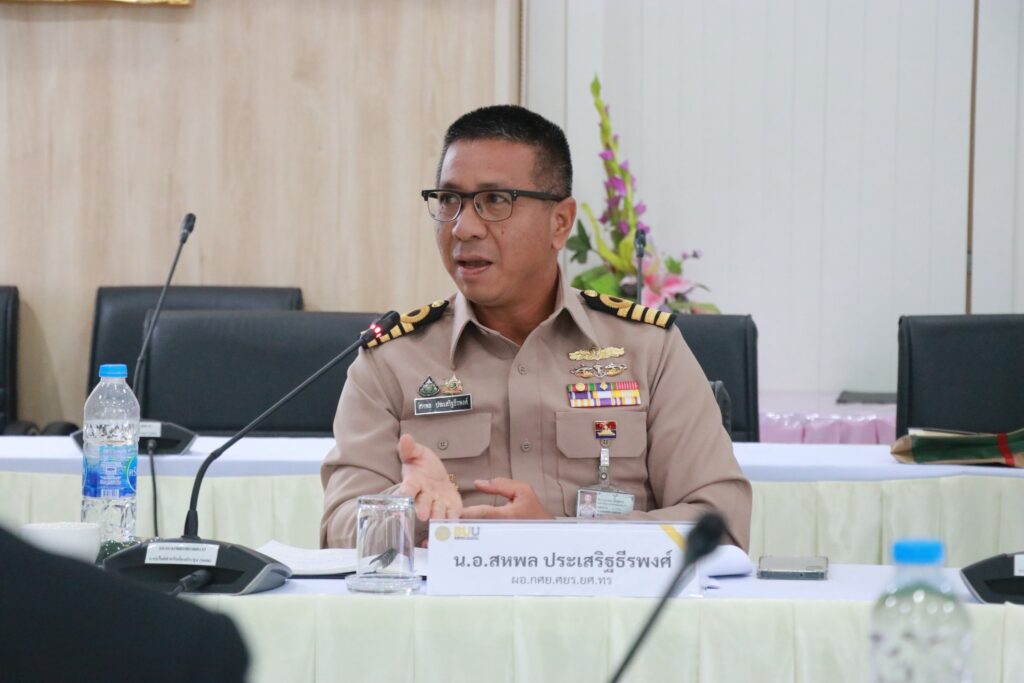
The collaboration also directly supports the United Nations Sustainable Development Goals (SDGs), particularly in promoting the sustainable use and conservation of marine and coastal resources. It reinforces cooperation among government sectors, academia, and local communities to effectively manage marine areas, while fostering research, innovation, and risk-reduction strategies that safeguard Thailand’s marine environment and strengthen national maritime security. In addition, this strategic partnership plays a significant role in enhancing the expertise of Thailand’s maritime workforce, ensuring their readiness for future demands in technology, surveillance, threat management, and ecosystem research.
Guided by a shared vision between both institutions, this collaboration not only aims to develop a comprehensive maritime knowledge management system but also introduces a forward-looking approach to marine governance in Thailand—one that is adaptive, integrated, and aligned with global trends. Ultimately, it is expected to elevate national maritime security, advance natural resource conservation, and strengthen marine research and innovation for the long-term benefit of the country.