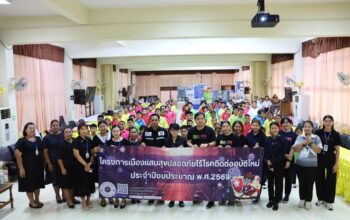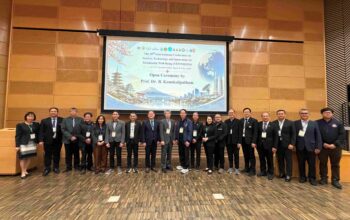
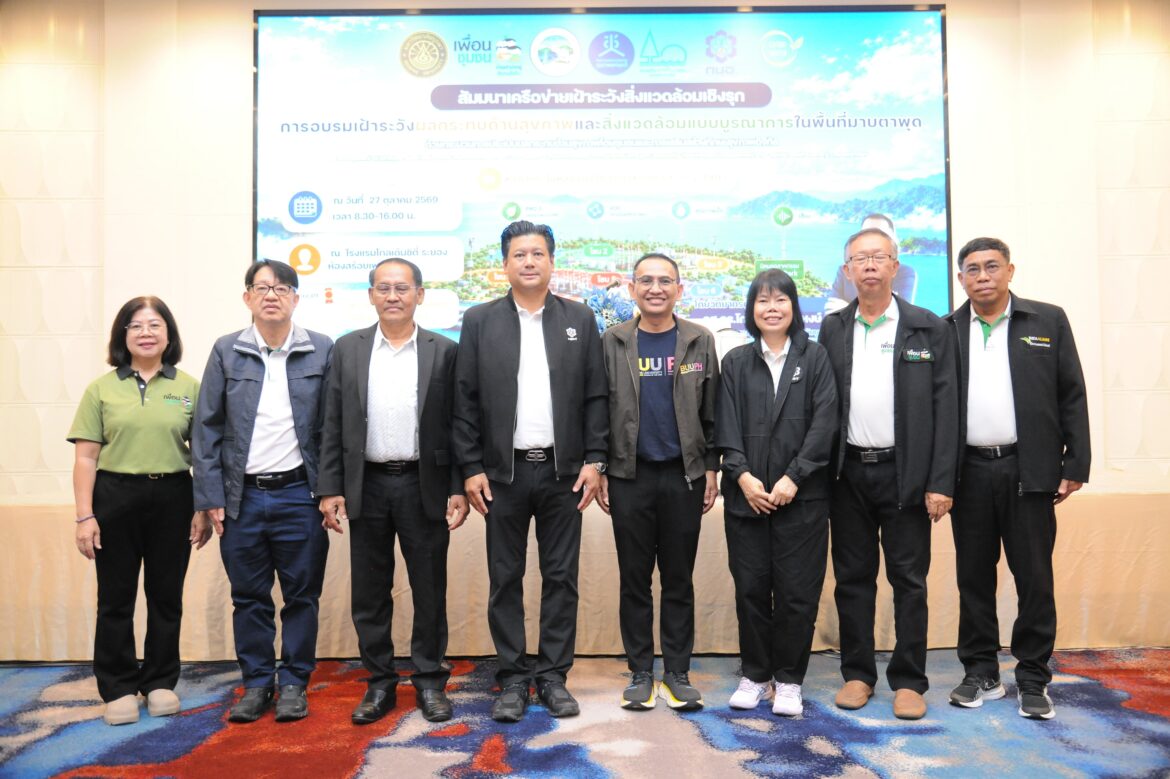
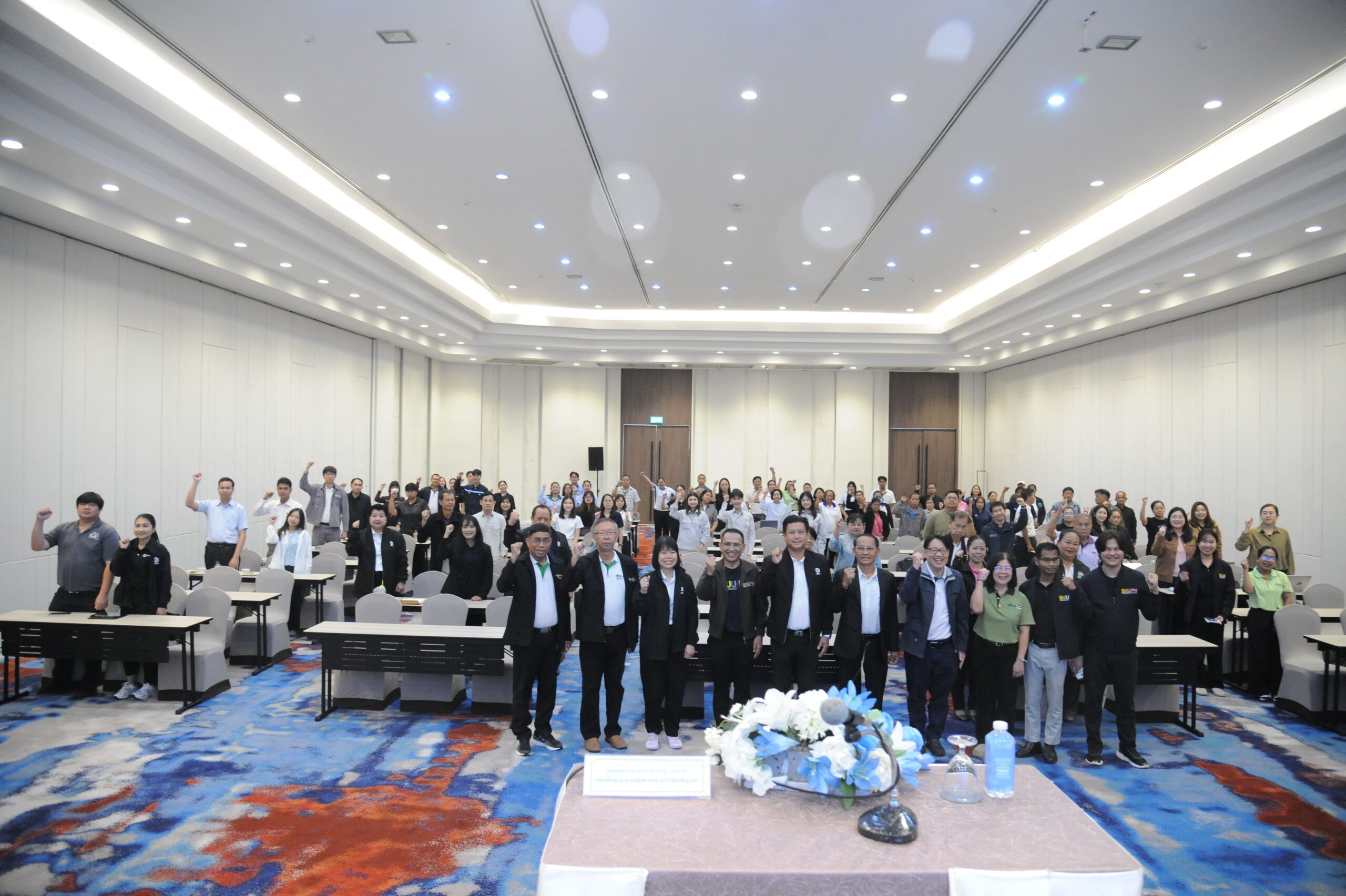
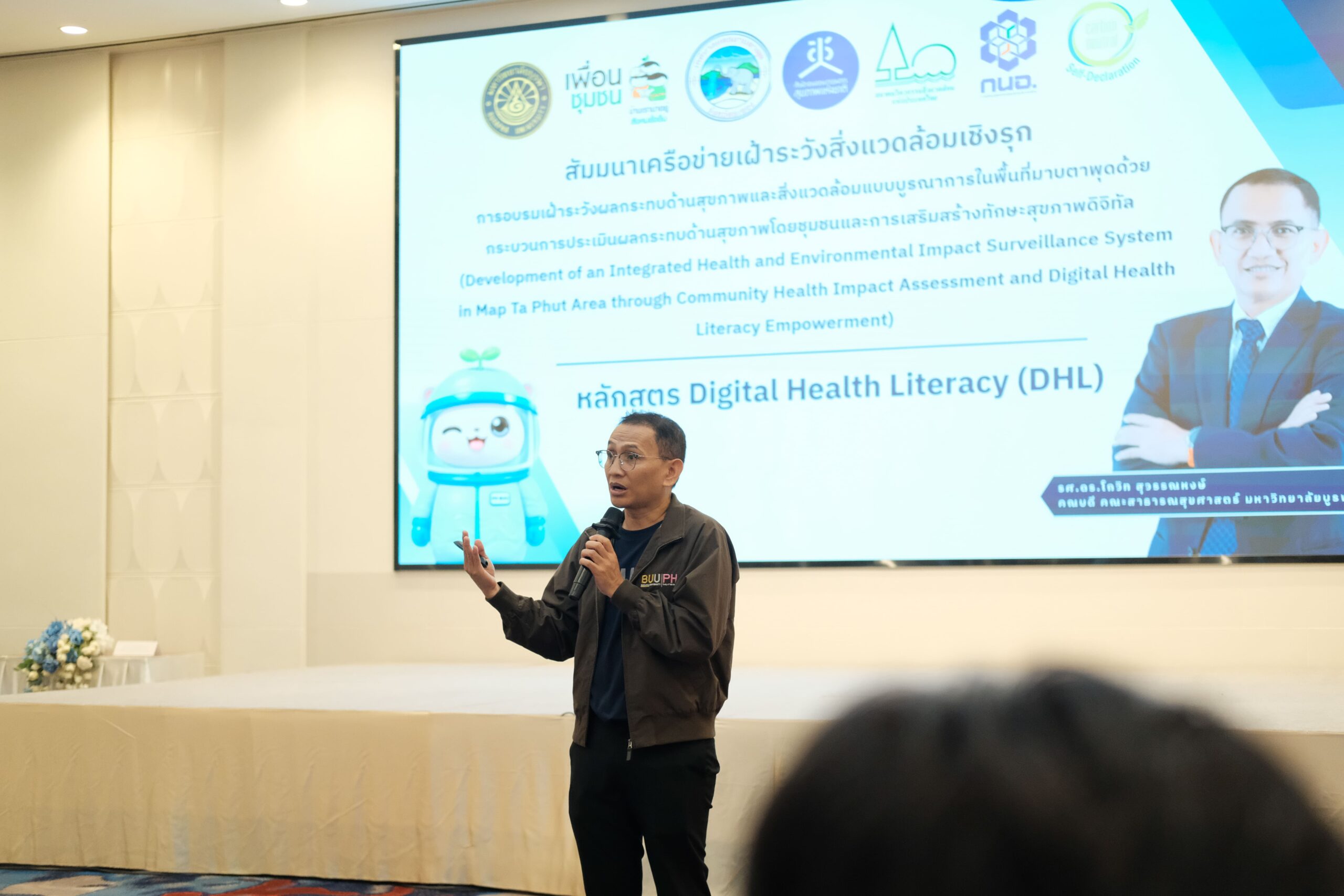
Industrial development in the Map Ta Phut area of Rayong Province has contributed significantly to regional economic growth while presenting complex challenges related to environmental quality and community health. Effective environmental health management requires integrated surveillance systems, scientific risk assessment, and meaningful community participation. In response, the Faculty of Public Health, Burapha University, participated in the “Proactive Environmental Surveillance Network Seminar” on October 27, 2026, at the Golden City Rayong Hotel, Rayong Province. The initiative brought together Burapha University, the Community Partnership Association, Map Ta Phut City Municipality, the National Health Commission Office (NHCO), the Environmental Engineering Association of Thailand (EEAT), the Industrial Estate Authority of Thailand (IEAT), and the Academic Center for Air Pollution Management, together with local community and industrial networks. The seminar emphasised integrating Community Health Impact Assessment (CHIA) and Digital Health Literacy (DHL) to strengthen participatory environmental health surveillance. Associate Professor Dr Kowit Suwannahong, Dean of the Faculty of Public Health, Burapha University, contributed as an invited speaker, sharing expertise in environmental health surveillance, risk assessment, and community engagement. The Faculty also participated through Dr Teeranun Nakyai, Dr Pitsanu Pannaracha, and students from the Environmental Health Program, reflecting its commitment to academic engagement, experiential learning, and community-oriented environmental health education. The initiative promotes a Zone-based Community Health Impact Assessment (ZC-HIA) framework covering 7 zones, 53 communities, and 98 monitoring locations, supporting evidence-informed environmental health management and the sustainable development of Map Ta Phut as an Eco-Industrial Town.
Project Coordinator: Associate Professor Dr. Kowit Suwannahong, Dr. Teeranun Nakyai, and Dr. Pitsanu Pannaracha

Objectives:
- To strengthen integrated health and environmental surveillance through Community Health Impact Assessment (CHIA) and Digital Health Literacy (DHL).
- To enhance community capacity for environmental health risk identification, assessment, and evidence-informed decision-making.
- To promote a zone-based surveillance framework integrating environmental monitoring and community health information.
- To strengthen collaboration among academic institutions, government agencies, industrial organisations, and local communities in sustainable environmental health management.
- To promote academic engagement and experiential learning opportunities for Environmental Health students through participation in community-based environmental health initiatives.


Program Activities:
- Organising a proactive environmental surveillance network seminar to facilitate knowledge exchange and stakeholder collaboration.
- Providing academic knowledge on community-based health impact assessment, environmental health surveillance, and risk assessment, with contributions from faculty members and participating academic networks.
- Introducing the Zone-based Community Health Impact Assessment (ZC-HIA) framework covering 7 zones, 53 communities, and 98 monitoring locations.
- Promoting the integration of air quality, volatile organic compounds (VOCs), water quality, environmental noise, and community health data for environmental health risk identification.
- Strengthening Digital Health Literacy (DHL) to enhance community access to, understanding of, and utilisation of environmental and health information.
- Introducing the Input–Process–Output–Outcome–Impact (IPOOI) framework to support participatory planning, monitoring, and evaluation.
- Facilitating the participation of Dr Teeranun Nakyai, Dr Pitsanu Pannaracha, and Environmental Health students in academic knowledge exchange and community-engaged learning activities related to environmental health surveillance and sustainable industrial development.
Expected Outcomes (Impacts):
- Strengthened Community-Based Surveillance: Improved capacity of local networks to participate in integrated environmental health surveillance and identify area-specific health and environmental concerns.
- Enhanced Digital Health Literacy: Greater community capacity to access, evaluate, interpret, and apply environmental and health information in risk communication and decision-making.
- Multi-Stakeholder Collaboration: Strengthened cooperation among academic institutions, government agencies, industrial organisations, professional associations, and local communities in participatory environmental health governance.
- Evidence-Informed Risk Management: Improved foundations for identifying environmental health risks, prioritising concerns, and developing locally appropriate preventive and mitigation measures.
- Academic and Student Capacity Development: Enhanced opportunities for faculty members and Environmental Health students to engage in interdisciplinary learning, community-based environmental health activities, and practical applications of academic knowledge.
- Sustainable Eco-Industrial Development: Long-term contributions to improved community well-being, environmental quality, and the sustainable development of Map Ta Phut as an Eco-Industrial Town.
Date of Implementation: October 27, 2026