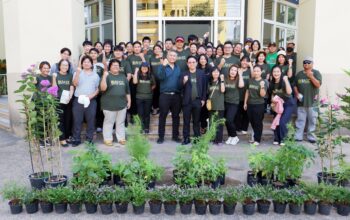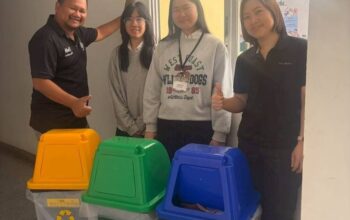
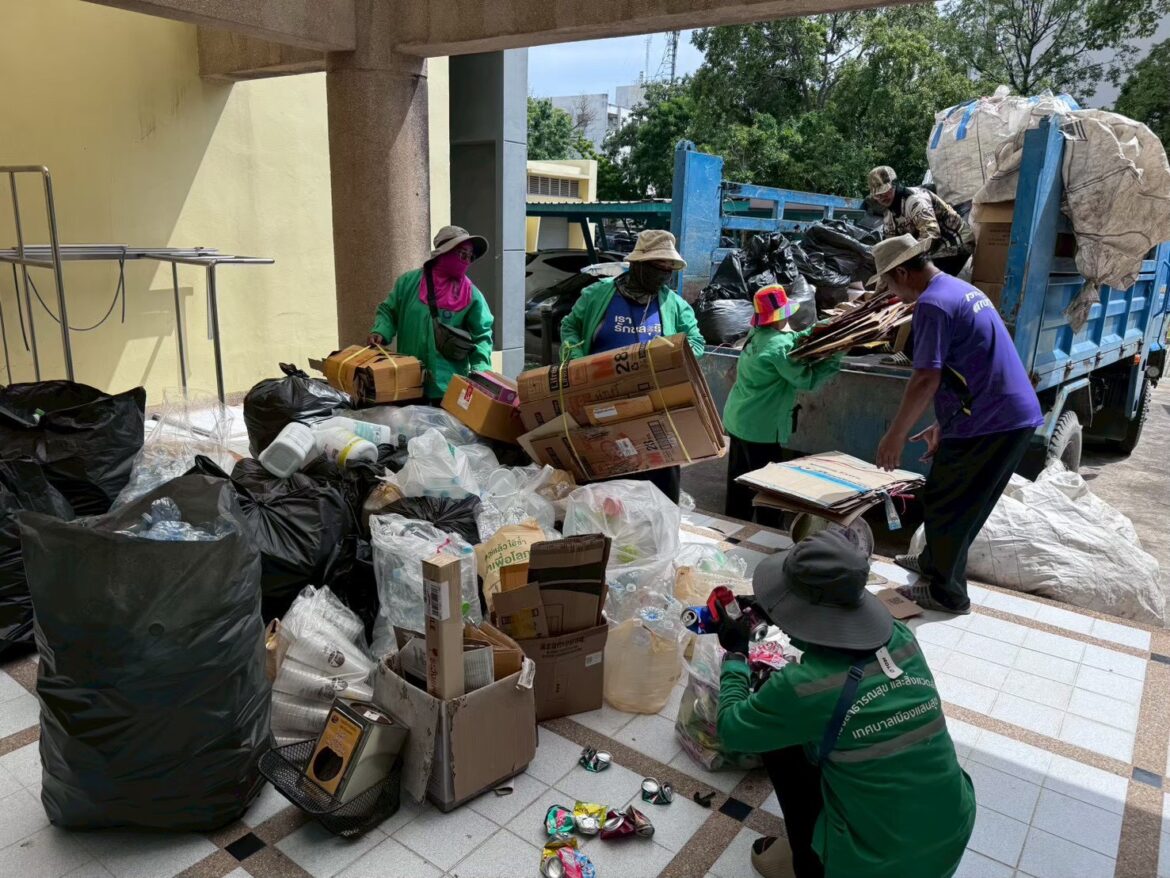
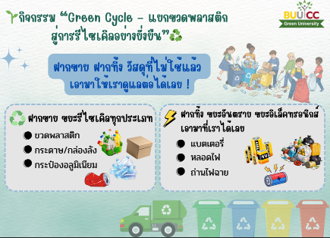
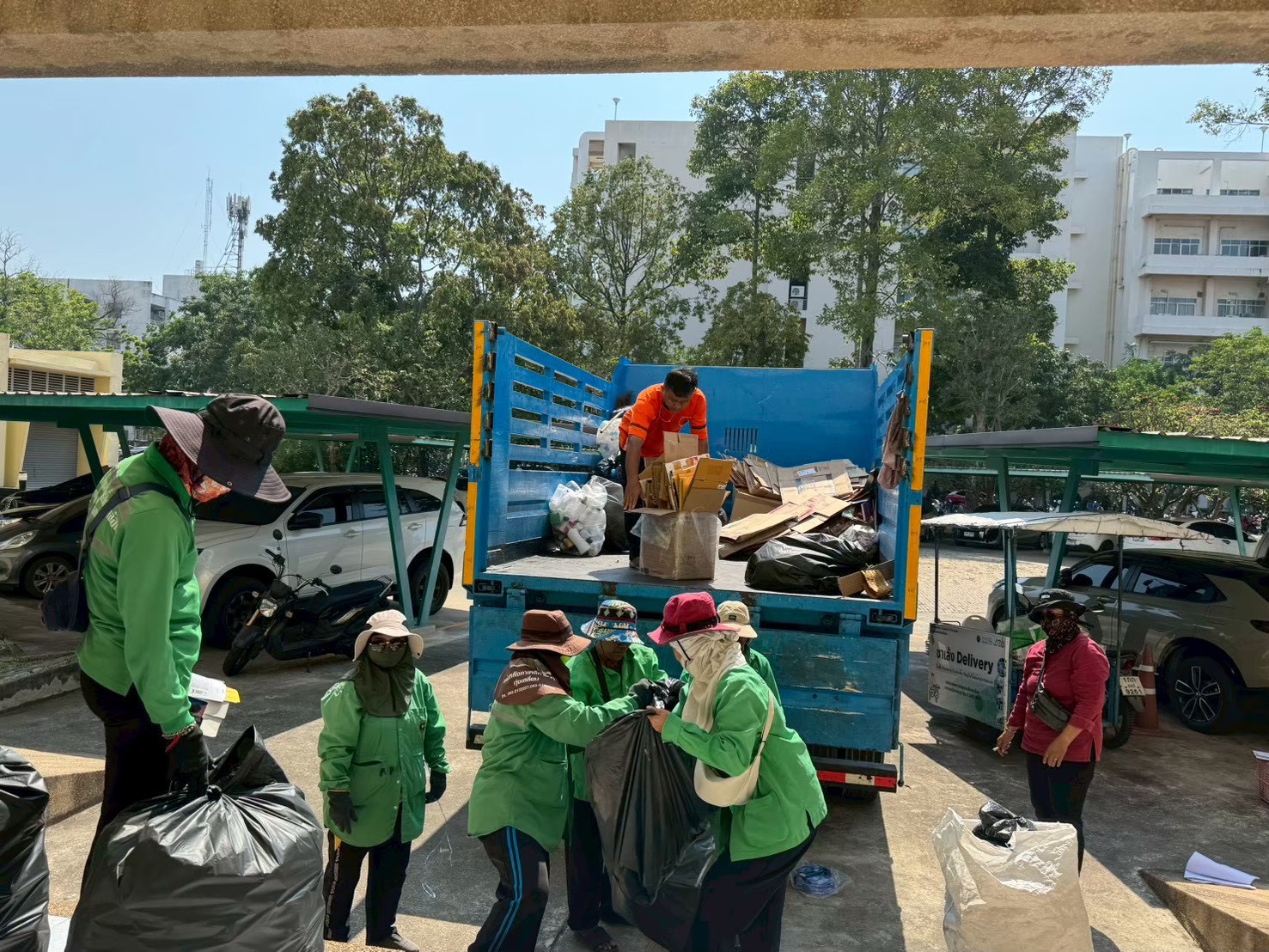
The proliferation of plastic and hazardous waste is a severe global environmental crisis that deeply impacts ecosystems and human health. If not properly sorted and recycled, single-use plastics become residual waste that takes hundreds of years to decompose or ends up in landfills and waterways as marine debris and microplastics. Furthermore, hazardous office waste—such as batteries, light bulbs, and electronic devices—can cause catastrophic chemical contamination in soil and water sources if disposed of with general waste. Driven by Burapha University’s “Green University” policy and the “Green Office” standards, the Computer Center has launched the activity “Green Cycle: Separating Plastic Bottles for Sustainable Recycling.” This initiative aims to establish a highly efficient management system for recyclable and hazardous waste within the building. By setting up designated waste-sorting drop-off points, we have forged a strong collaboration with the Public Health and Environment Division of Saen Suk Mueang Municipality through the “Saleng Delivery & Community Waste Bank” project, handing over sorted waste on the first Tuesday of every month. This activity not only tangibly reduces landfill waste but also returns resources to the Circular Economy, generating economic value. From March to August 2026, the project collected 521.6 kilograms of recyclable waste (generating 2,714 THB in revenue) and safely managed 50.7 kilograms of hazardous waste. Ultimately, it builds discipline, transforms behaviours, and instils a deep sense of environmental responsibility among our personnel, empowering them to care for the environment alongside the local community in a truly sustainable manner.
Project Coordinator: Mrs. Pissamai Namchan
Objectives:
- To develop a concrete sorting system for recyclable and hazardous waste by systematically establishing drop-off and separation points for plastic bottles and hazardous items within the Computer Center building.
- To promote resource reuse in accordance with Circular Economy principles by bringing plastic bottles and recyclables into the recycling process, thereby creating value and significantly reducing landfill waste.
- To integrate environmental management collaborations with local authorities by delivering recyclable and hazardous waste to the Public Health and Environment Division of Saen Suk Mueang Municipality via the “Saleng Delivery & Community Waste Bank” project.
- To instil environmental awareness and drive behavioural change among personnel regarding proper waste sorting, sustainably supporting the Green Office standards and Green University indicators.
Program Activities:
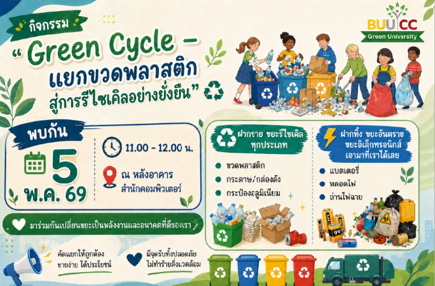
- Launch a PR campaign for the “Green Cycle” activity to inform and engage executives and staff.
- Coordinate with the Public Health and Environment Division, Saen Suk Mueang Municipality, to schedule the “Saleng Delivery & Community Waste Bank” collection on the first Tuesday of every month at the Computer Center building.
- Set up a designated plastic bottle drop-off point at the rear entrance of the Computer Center building, operating from 11:00 AM to 12:00 PM.
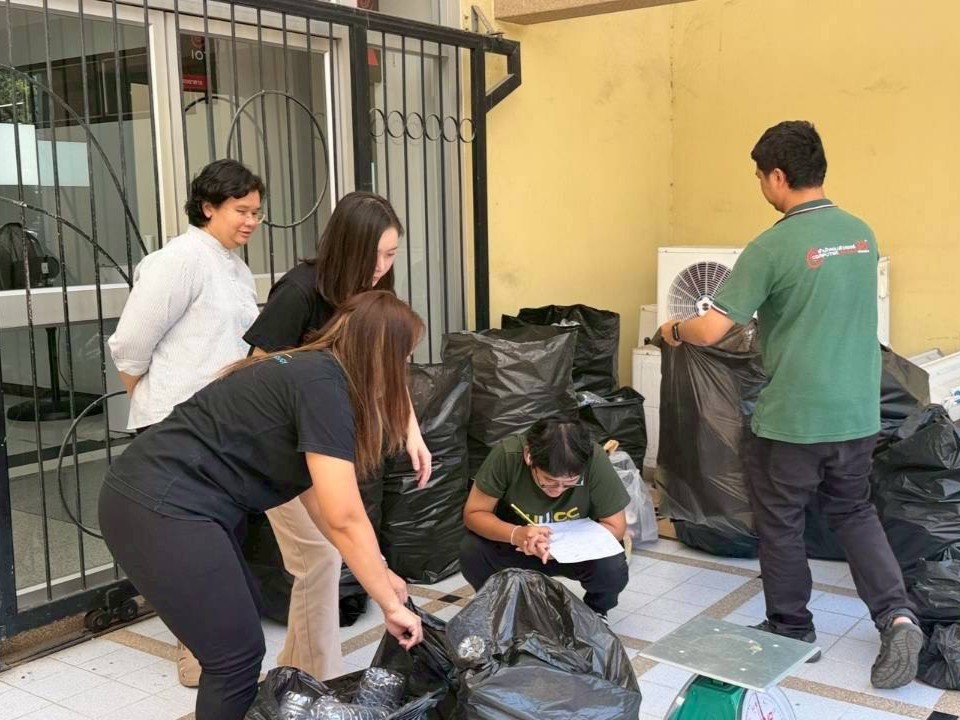
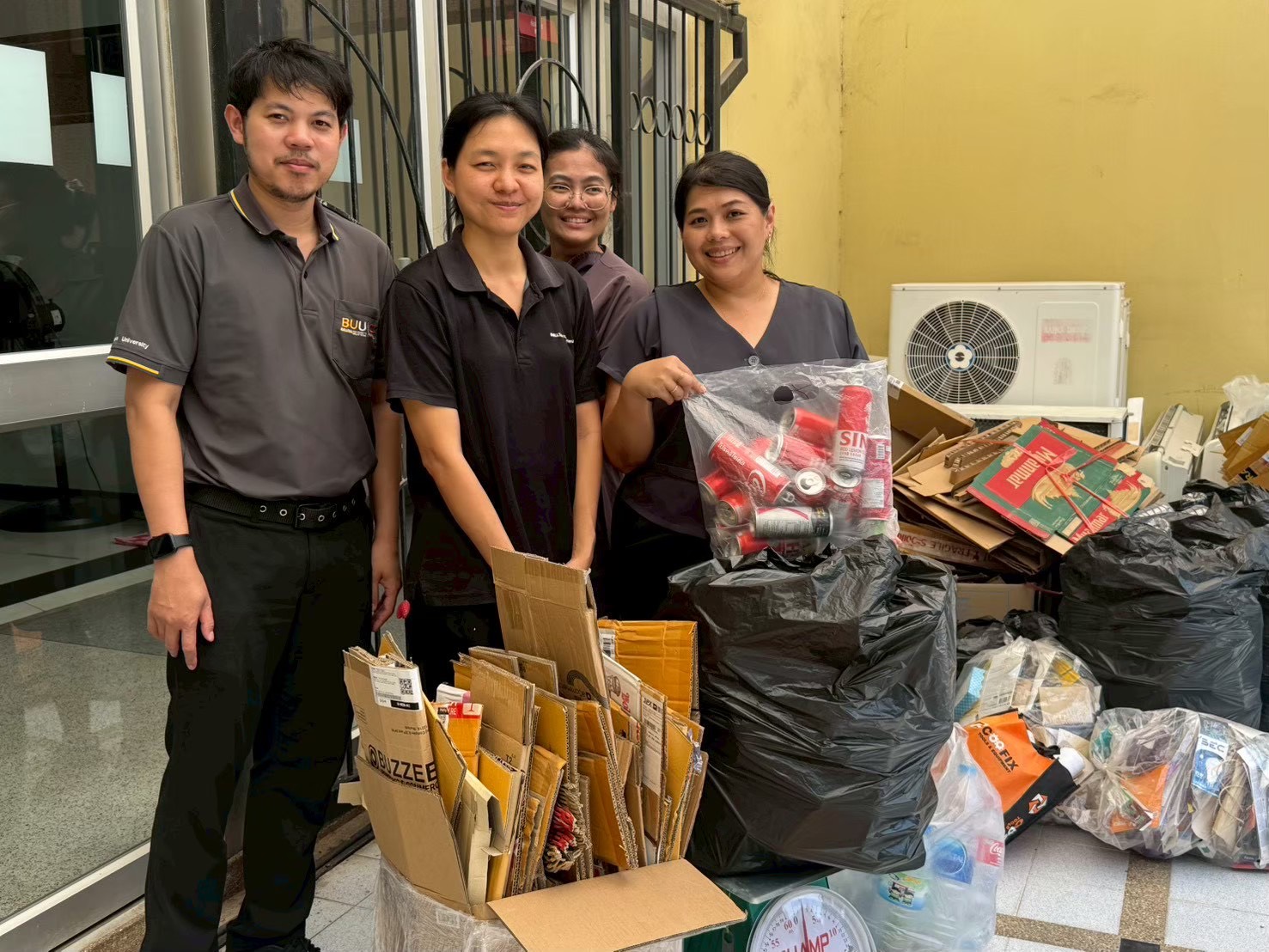
- Systematically sort and record the weight of the plastic bottles deposited by the personnel. 5. Hand over the collected plastic bottles to the municipality’s “Saleng Delivery & Community 6. Waste Bank” team according to the scheduled timeline. Conduct a satisfaction survey among activity participants to evaluate the project’s success.
Expected Outcomes (Impacts):
Waste Management and Environmental Conservation:
- Successfully sorted and collected 521.6 kg of recyclable waste (plastic bottles, paper, metal) to re-enter the processing cycle, tangibly reducing landfill waste.
- Safely diverted 50.7 kg of hazardous waste (light bulbs, batteries, electronic waste) for proper disposal, actively preventing chemical contamination in the environment.
- Contributed to the reduction of greenhouse gas emissions associated with new plastic production and waste landfilling. Economic Value (Circular Economy):
- Transformed recyclable waste into a revolving income for the department, totalling 2,714 THB.
- Promoted the maximum utilisation of resources, strictly following Circular Economy concepts within the organisation.
Partnerships and Society:
- Forged a strong environmental management network between the Computer Center and local government (Public Health and Environment Division, Saen Suk Mueang Municipality) through the “Saleng Delivery & Community Waste Bank.”
- Cultivated deep awareness among personnel, leading to sustained behavioural changes and active participation in waste sorting before disposal.
- Powerfully supported the achievement of Burapha University’s Green Office goals and Green University indicators (KPI C30.1).
Date of Implementation: February 16 – August 14, 2026