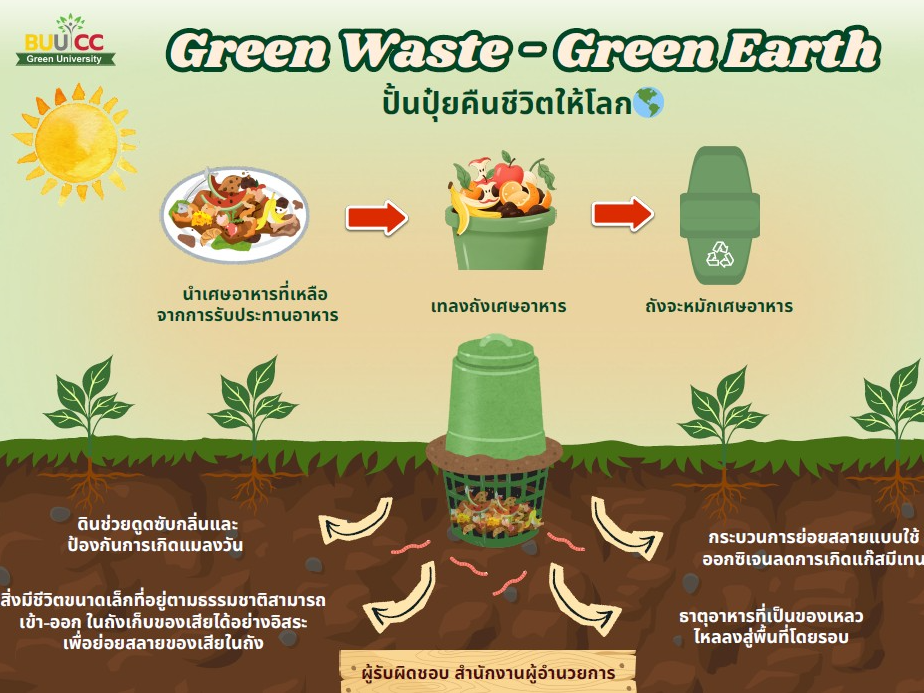
Organic waste and food scraps make up a major portion of the daily waste organisations generate. Without proper separation and management systems, this waste accumulates, emits foul odours, and becomes a breeding ground for pathogens and disease carriers. Furthermore, it adds to the immense burden of landfill waste, which generates methane—a potent greenhouse gas that directly accelerates global warming. The Computer Center at Burapha University is committed to driving the organisation toward sustainability. Aligned with the “Green Office” guidelines and Burapha University’s Strategic Platform 3: Sustainable Social Development (Program 3.1: Developing the University as a Model Organisation for Sustainable Development – KPI C30.1), we recognise the critical importance of tackling organic waste at its source. As a result, we have launched the “Green Waste – Green Earth” activity under our broader Green Waste Management Project. This initiative will systematically survey and establish designated collection points for organic and food waste across all dining areas in the Computer Center building. We then divert the collected waste into a natural composting process. This not only tangibly reduces residual food waste but also produces nutrient-rich compost. We then repurpose this compost to enrich the soil, restore local ecosystems, and nourish the trees and vegetable gardens on the organisation’s premises. Ultimately, this project reduces landscaping costs, promotes a Circular Economy, and cultivates a deep sense of environmental responsibility among our personnel, encouraging their active participation in sustainable environmental management.
Project Coordinator: Mrs. Pissamai Namchan
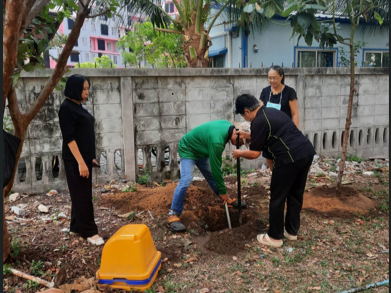
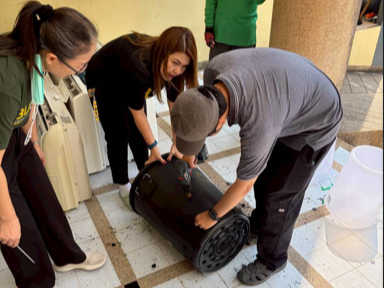
Objectives:
- To promote the systematic reduction and management of organic waste at its source within the Computer Center building by collecting food scraps from all dining areas and processing them into compost.
- To maximise the value of organic waste by utilising the resulting natural compost to improve soil quality, restore local ecosystems, and nourish plants and vegetable gardens within the organisation. This significantly reduces landfill waste and lowers the expenses associated with purchasing soil amendments.
- To encourage active participation and raise environmental awareness among the staff, inspiring a behavioural shift toward proper food waste separation, while sustainably supporting the goals of the Green Office and Green University initiatives.
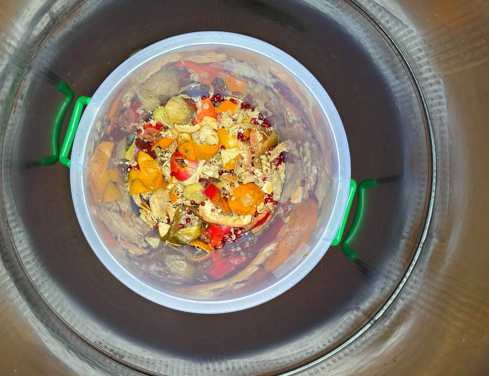
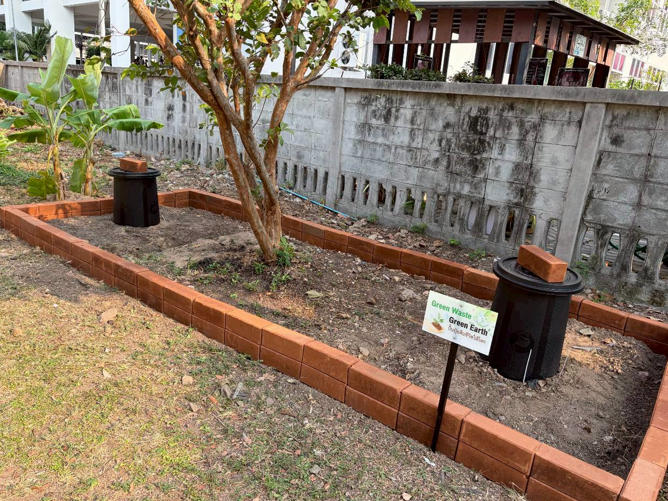
Program Activities:
- Conduct a site survey to designate appropriate locations for the installation of food waste composting bins.
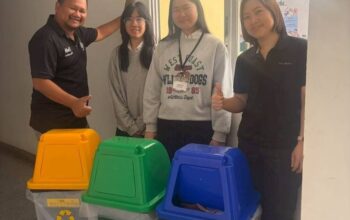
- Prepare and install the necessary equipment at the waste disposal points in all dining areas.
- Launch a PR campaign for the “Green Waste – Green Earth” activity to inform, engage, and inspire the staff.
- Execute on-site operations in close collaboration with the Computer Center personnel.
- Process the collected food scraps into compost and systematically record waste data.
- Conduct a satisfaction survey to evaluate the activity’s reception and effectiveness.
- Summarise the findings and report the project’s overall outcomes.
Expected Outcomes (Impacts):
The impacts of the “Green Waste – Green Earth” activity fall into three main areas: Environmental Management and Waste Reduction: – Tangibly reduces the accumulation of organic and food waste within the Computer Center building. – Mitigates odour pollution and eliminates potential breeding grounds for pathogens in the dining areas. – Decreases the volume of organic waste sent to landfills, thereby reducing the emission of methane and other harmful greenhouse gases. Circular Economy and Resource Utilisation: – Transforms food waste into natural compost, which is then reused to improve soil quality and nourish the organisation’s landscape and vegetable gardens. – Cuts down the organisation’s expenses on commercial fertilisers and soil amendments. Personnel and Organisational Development: – Raises awareness among executives and staff, driving positive behavioural changes regarding proper organic waste separation. – Fosters a clean, pleasant, and healthy working environment for everyone. – Directly supports the achievement of the Green Office criteria (Environment and Safety category) and Burapha University’s Green University indicators (KPI C30.1).
Date of Implementation: February 16 – August 14, 2026