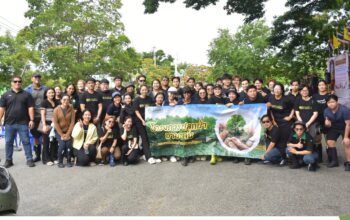
Community-based healthcare is a fundamental pillar of the national health system, with Village Health Volunteers (VHVs) serving as key agents in delivering essential health knowledge to the public. However, several persistent challenges remain, including improper medication use, inadequate wound care practices, and insufficient basic hygiene skills. These issues can lead to long-term consequences, including community-acquired infections, wound complications, and rising healthcare costs.
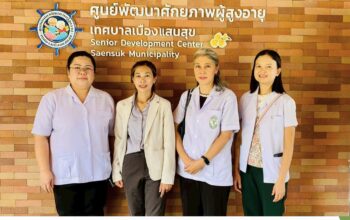
In response, the Faculty of Pharmaceutical Sciences at Burapha University, in collaboration with Saensuk Municipality, initiated this project to enhance VHVs’ knowledge and practical skills. The program aims to reduce household-level health risks while strengthening a sustainable and resilient primary healthcare system within the community.
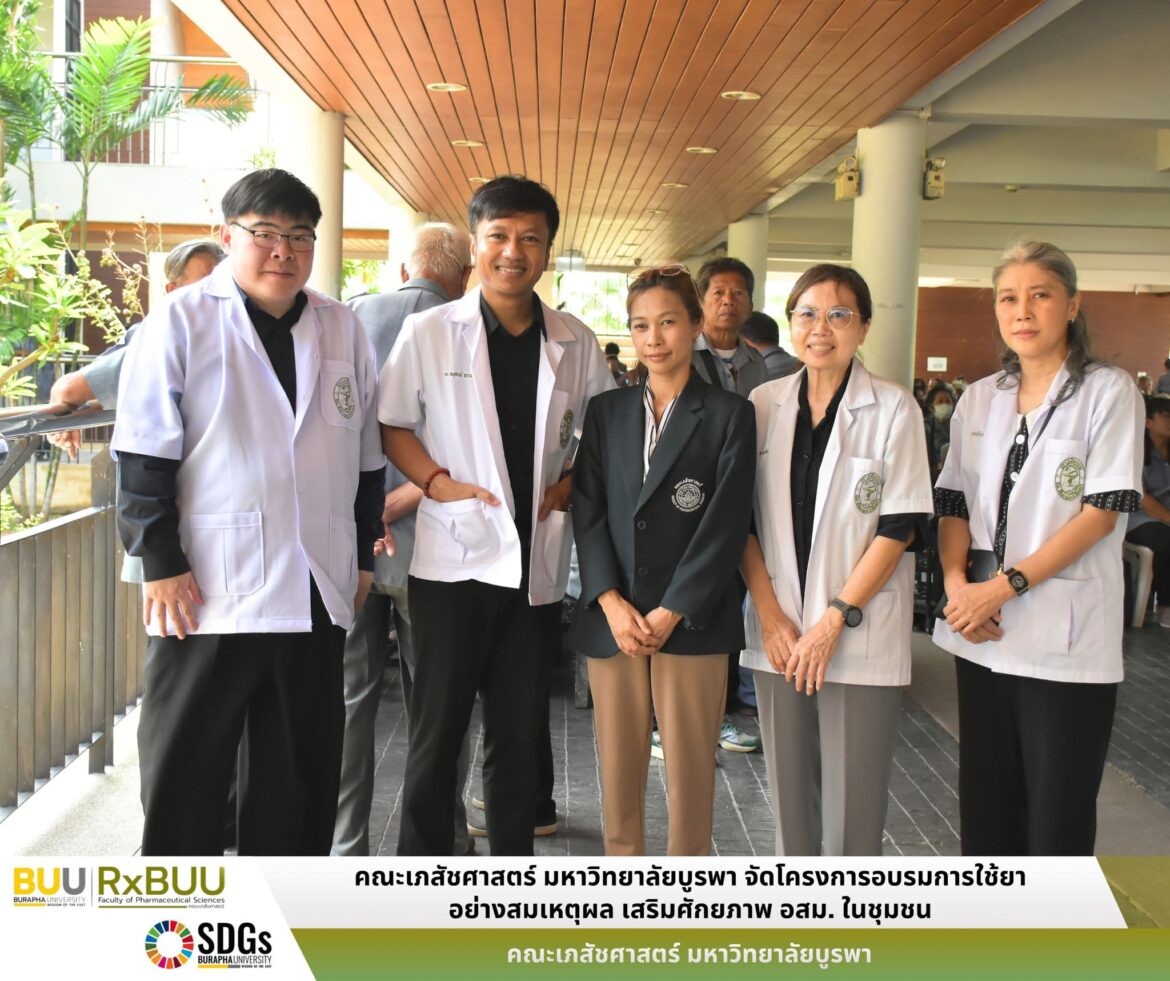
Project Coordinator: Assoc. Prof. Dr Wantana Reanmongkol, Pharm.D. Pharmacy Manager, Community Pharmacy Practice Unit
Objectives:
- To develop competencies in basic wound care and proper hygiene practices among VHVs, reducing infection risks and enabling them to apply and disseminate this knowledge within their communities effectively.
- To raise awareness of health promotion and disease prevention at both household and community levels.
- To translate academic expertise from the Faculty of Pharmaceutical Sciences, Burapha University into tangible community service.
- To strengthen collaboration among the university, local government organisations, and communities in advancing sustainable community health.
Program Activities:
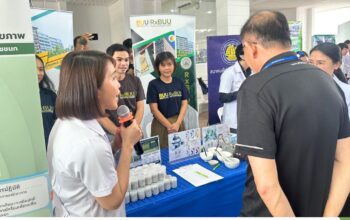
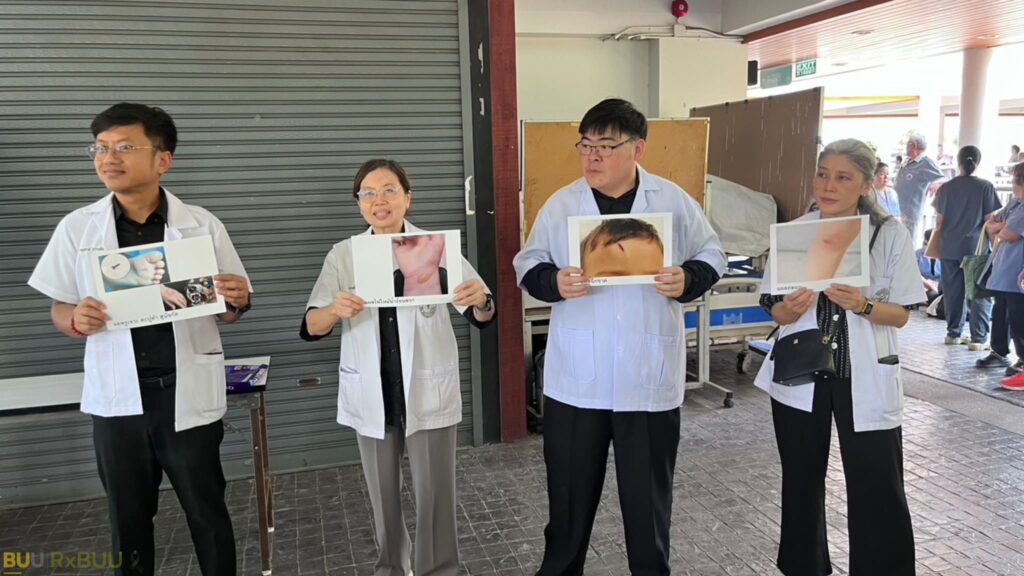
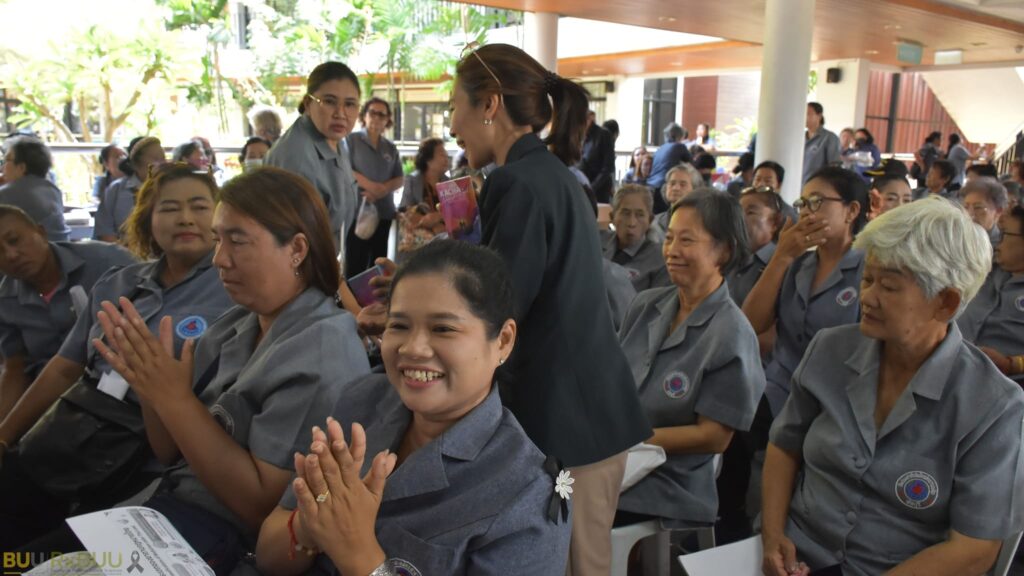
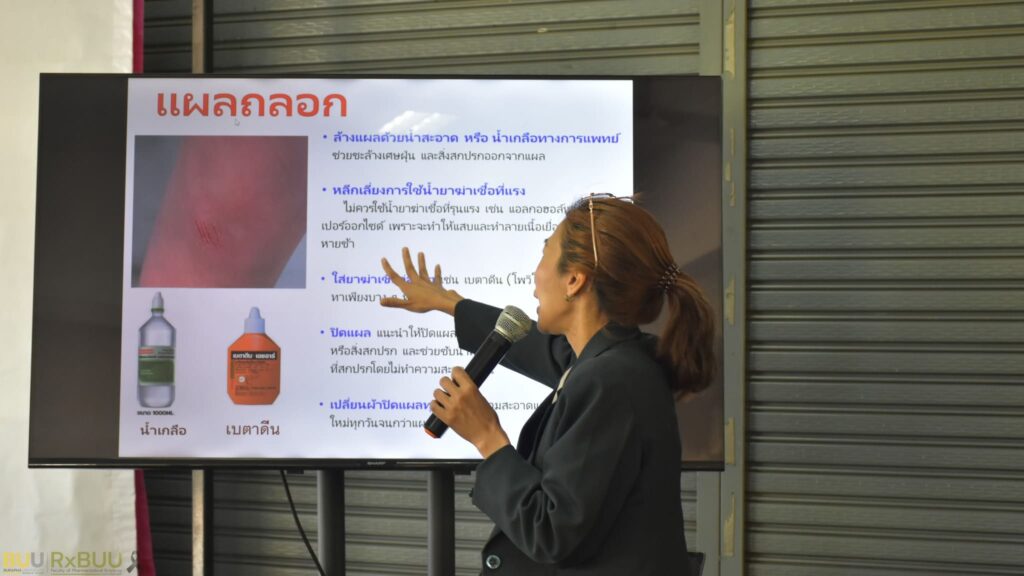
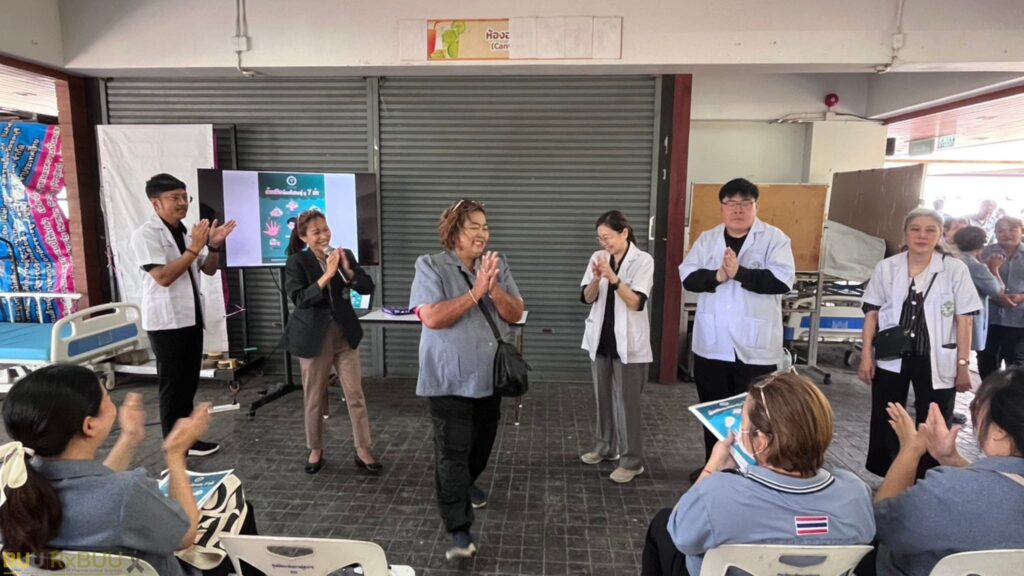
The Faculty of Pharmaceutical Sciences, led by Assoc. Prof. Dr Wantana Reanmongkol and her team conducted both theoretical and practical training sessions. The program included lectures on rational drug use, prevention of medication misuse, basic wound care principles, and proper hygiene practices, including handwashing techniques.
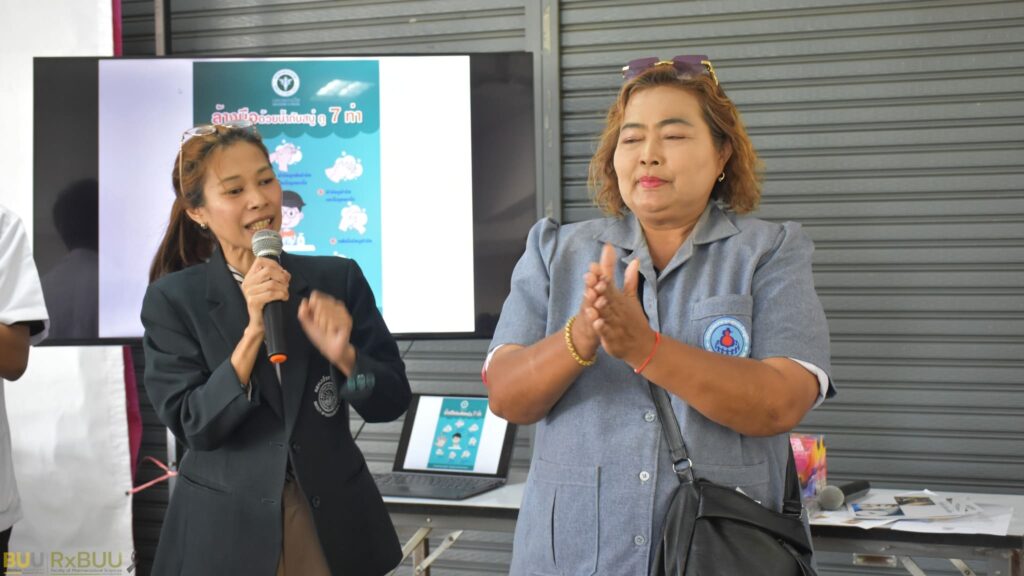
Hands-on activities were also provided, such as practising the seven-step handwashing method and wound care procedures (cleaning, dressing, and changing gauze) for various types of wounds, including abrasions, lacerations, and burns. Additionally, the program encouraged active participation through experience-sharing sessions, allowing VHVs to discuss real-world challenges and engage in interactive Q&A discussions.
Expected Outcomes (Impacts):
- Improved community knowledge in self-care, leading to reduced wound infections, preventable diseases, and misconceptions regarding wound treatment.
- Enhanced capacity of VHVs as community health leaders, fostering continuous knowledge transfer and strengthening community self-reliance in health management.
- Reduced household healthcare expenses and alleviated burdens on hospitals and the public health system, while minimising income loss due to illness—ultimately contributing to stronger local economies supported by healthier populations.
- Strengthened local health networks and increased community trust in academic institutions.
Date of Implementation: March 19, 2026