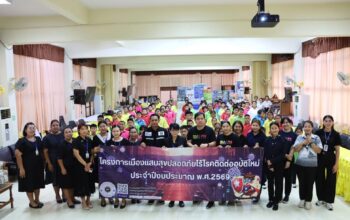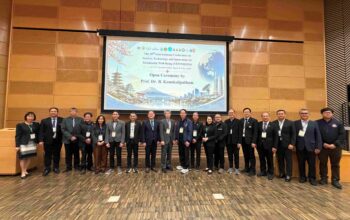
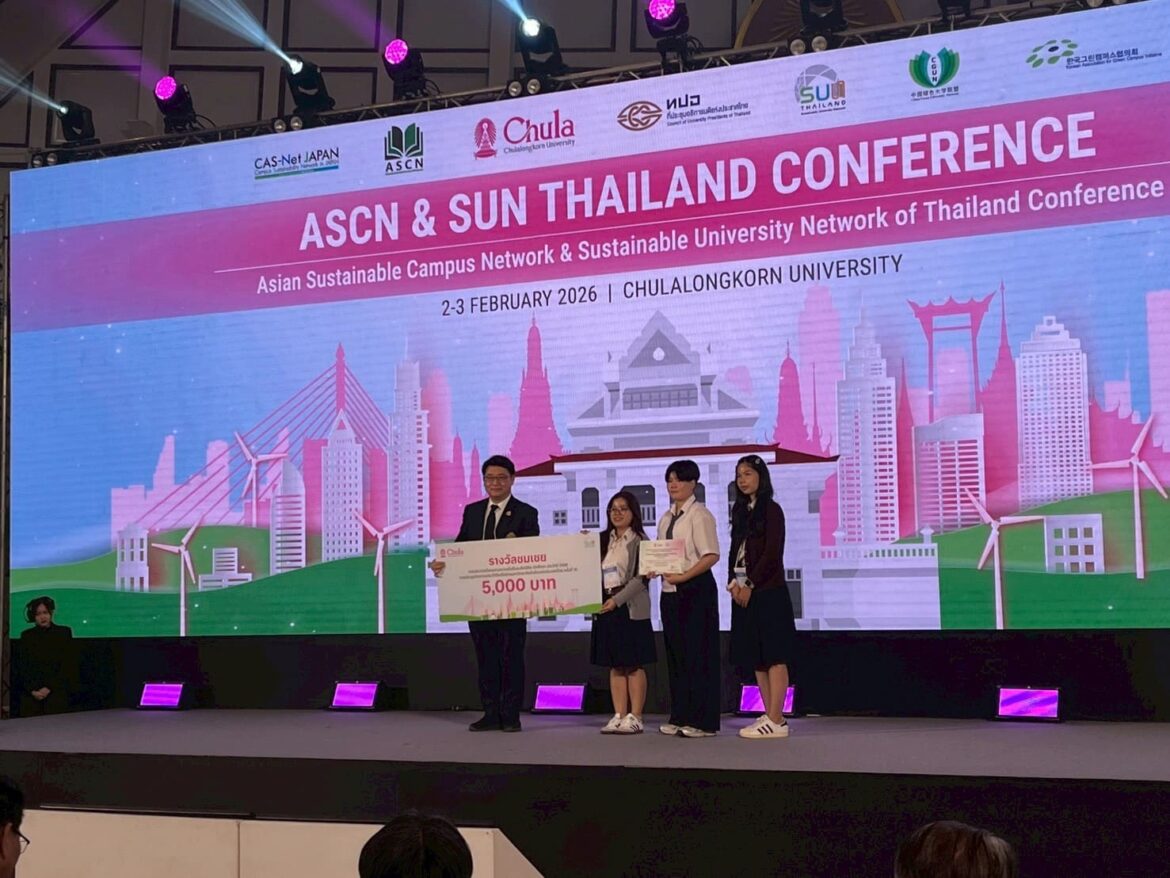
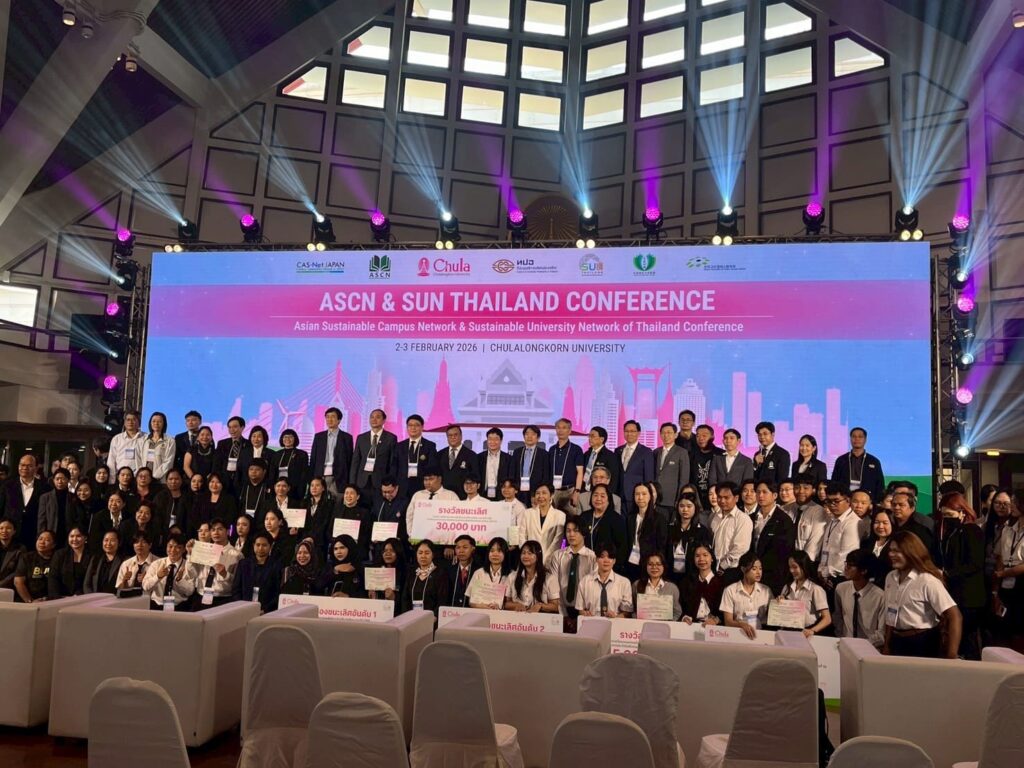
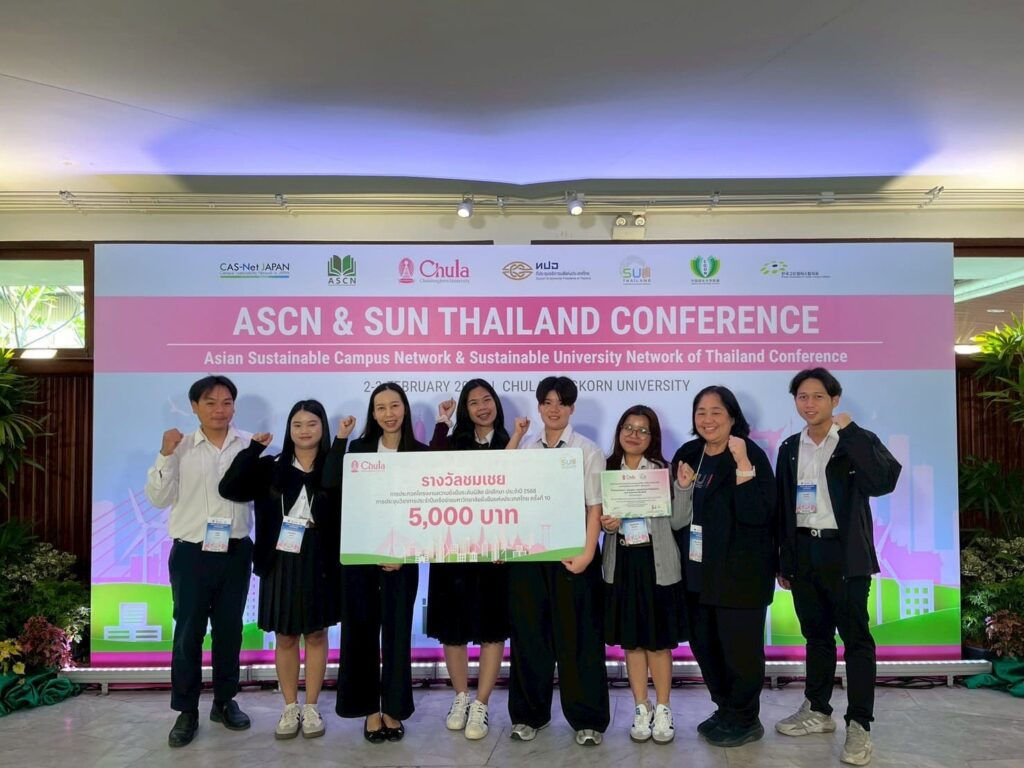
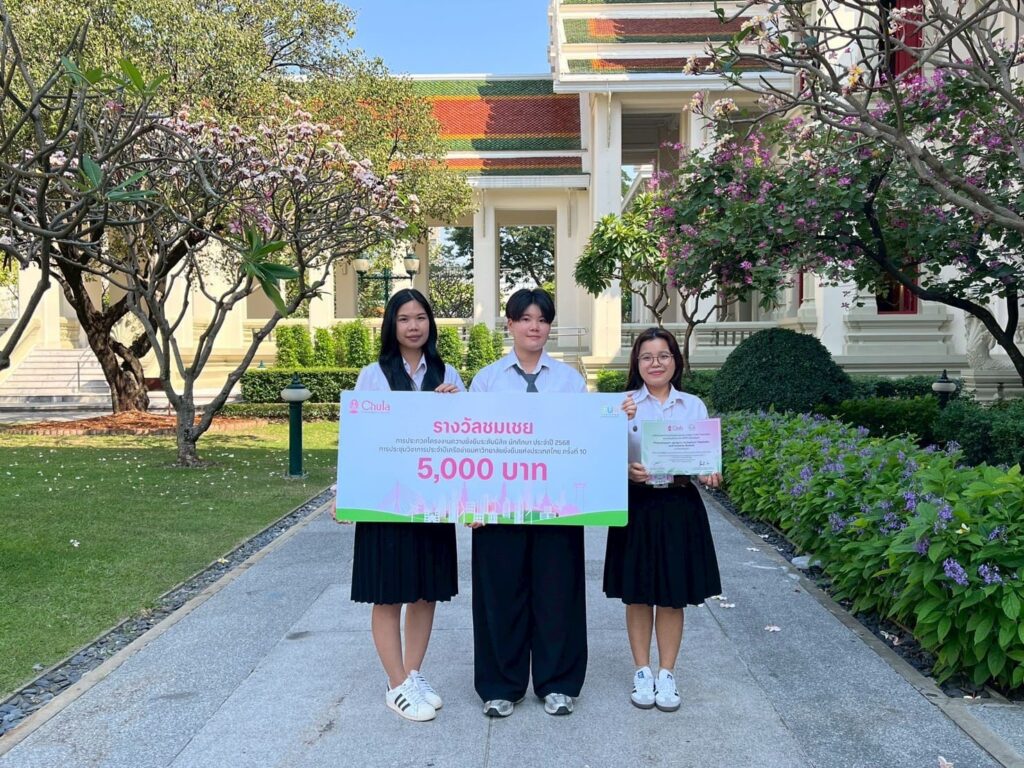
Students from the Environmental Health Program, Faculty of Public Health, Burapha University, received an Honorable Mention Award for presenting their innovation project, a lime peel–based antimicrobial spray, at the student sustainability project competition during the Asian Sustainable Campus Network Conference (ASCN) held alongside the 10th Sustainable University Network (SUN) of Thailand Annual Conference held from February 2-3, 2026 at Chulalongkorn University. The conference aimed to strengthen the network of sustainable universities in alignment with the Sustainable Development Goals. It encouraged students to actively participate in initiatives that help achieve these goals, particularly by promoting sustainable behaviours and lifestyles on university campuses. In addition, the conference fostered collaboration between Thai universities and institutions from other countries, enabling participants to share knowledge, experiences, and best practices in sustainable development.
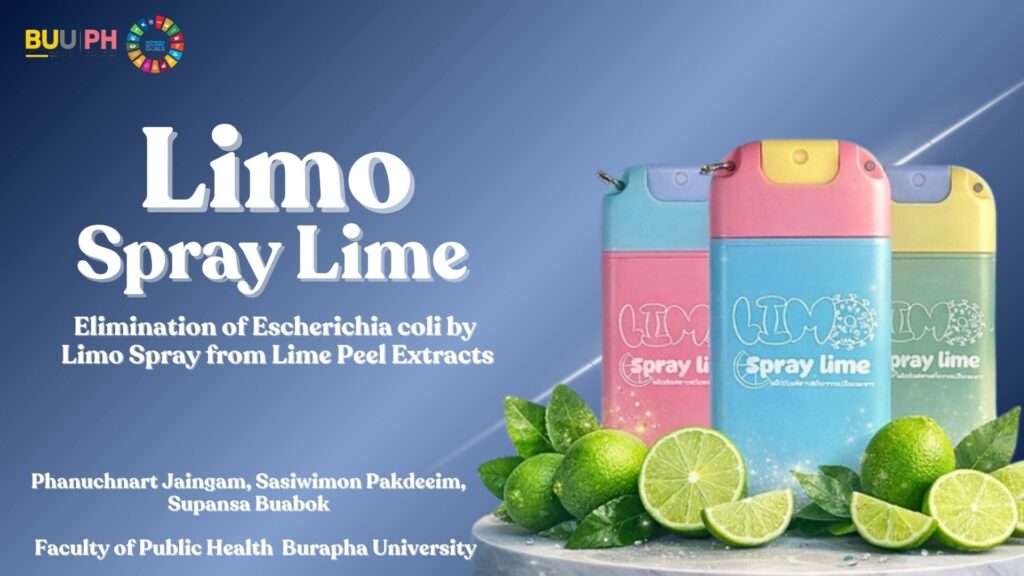
Project Coordinator: Phanuchanart Jaingam, Sasiwimon Pakdeeim, and Supansa Buabok. Advisor: Asst.Prof. Dr. Rotrudee Chotigawin
Objectives:
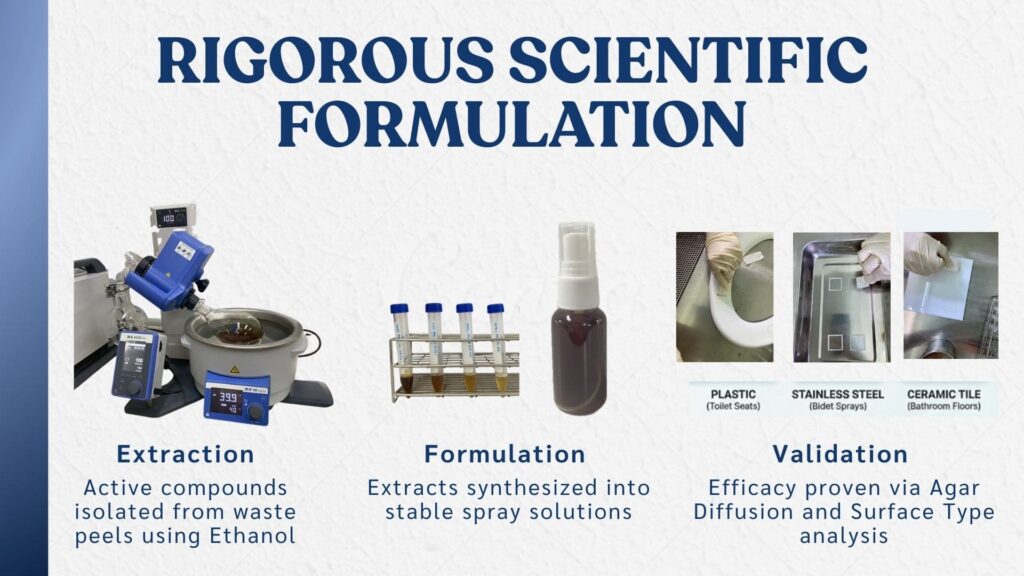
- To develop a formulation of an antimicrobial spray using extracts from orange peels and lime peels.
- To evaluate the effectiveness of the spray in eliminating E. coli bacteria on various surfaces of equipment in public restrooms.
- To present and disseminate the research in public forums to exchange knowledge and promote sustainability
Program Activities:
The student innovation demonstrates a 100% BCG-based, chemical-free approach that uses lime peel waste to produce an eco-friendly antimicrobial spray. The sprays were tested for their ability to inhibit microbial growth. E. coli was selected as the representative microorganism, as it is commonly found in the human gastrointestinal tract and serves as an indicator of faecal contamination. Laboratory results showed that the spray could reduce bacterial contamination on plastic surfaces by up to 83%, making it a promising solution for improving hygiene in public facilities while minimising environmental impact.
Expected Outcomes (Impacts):
The innovation highlights the potential to transform agricultural waste into environmentally friendly public hygiene solutions. By utilising lime peel extract in a spray formulation to reduce microbial contamination on surfaces commonly found in public restrooms. The project supports several SDGs, particularly responsible consumption and production (SDG12), good health and well-being (SDG3), and partnerships for sustainable development (SDG17), reflecting Burapha University’s commitment to advancing sustainability through student-led innovation.
Date of Implementation: February 2-3, 2026