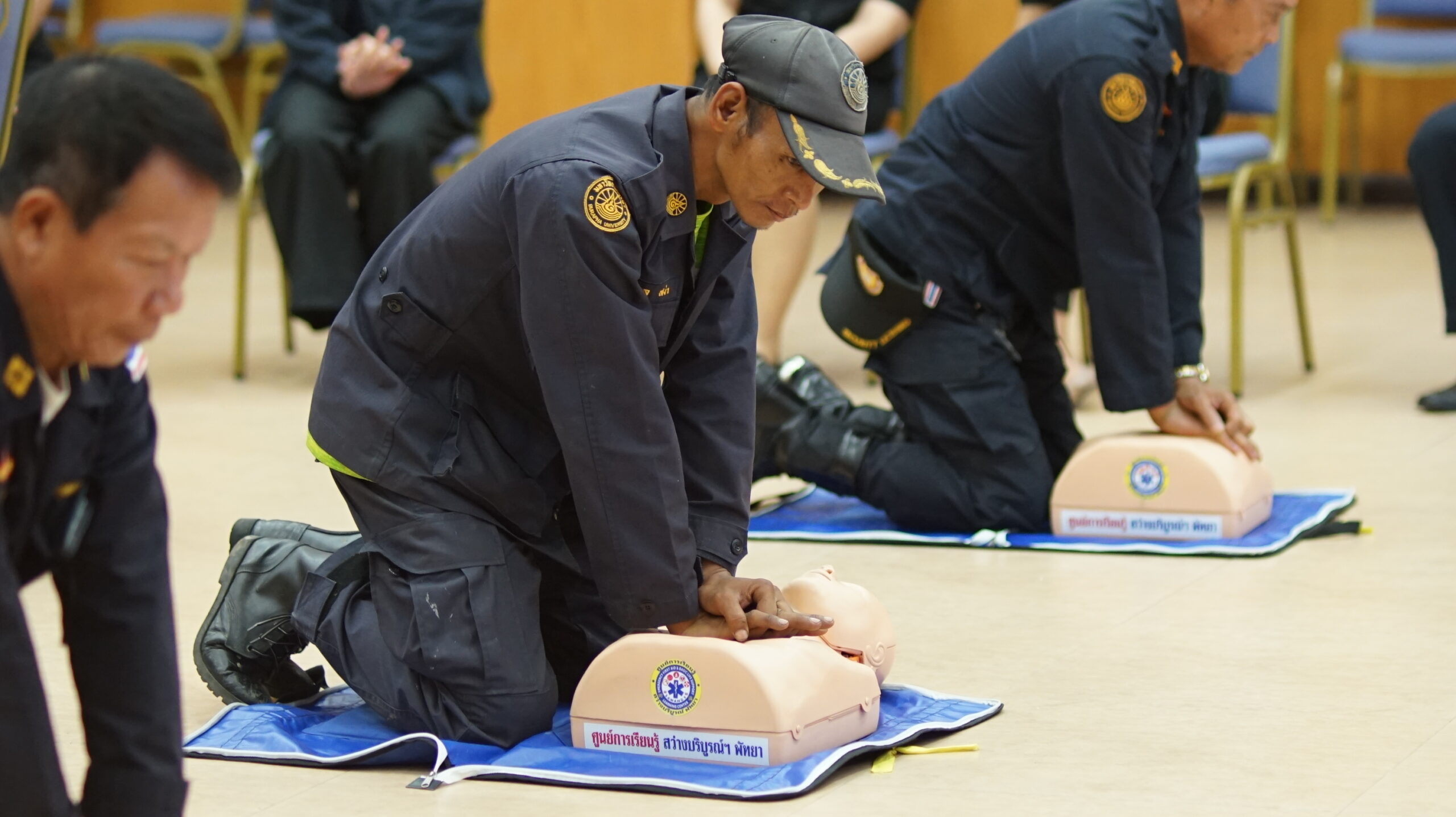
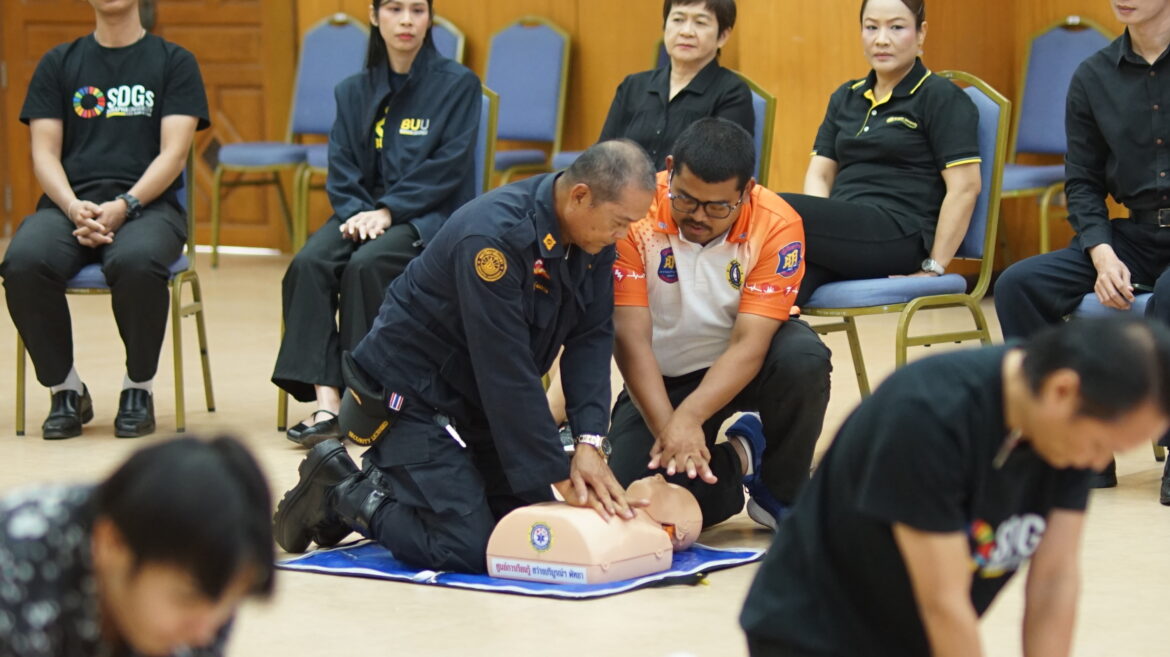
The Basic Life Support (BLS) Training Program to Enhance Emergency Response Skills was organized by the Human Resource Management and Development, Office of the President, Burapha University. The program reflects the University’s commitment to strengthening personnel capacity and ensuring that staff members are well-prepared to perform their duties and respond appropriately to unexpected situations. Medical emergencies such as sudden cardiac arrest, loss of consciousness, accidents, or acute illnesses may occur at any time within the university premises. When immediate and proper first aid is provided, the chances of survival significantly increase, the severity of symptoms can be reduced, and potential losses may be minimized before professional medical care is available.
This training program was therefore initiated to equip university personnel with accurate knowledge, practical understanding, and essential life-saving skills to effectively assist individuals experiencing medical emergencies. The objectives of the project include: providing participants with foundational knowledge of medical emergency conditions; enabling them to correctly perform Cardiopulmonary Resuscitation (CPR); ensuring they can properly and safely operate an Automated External Defibrillator (AED); building confidence in delivering immediate emergency assistance; and increasing the number of trained personnel capable of responding to incidents within the educational setting.
The program was conducted in a comprehensive workshop format. It began with a Knowledge Session, during which participants gained fundamental understanding of medical emergencies, the principles of Basic Life Support (BLS), and internationally recognized CPR guidelines. This was followed by Hands-on CPR practice, allowing participants to perform proper chest compressions under expert supervision. The training continued with AED Practice, where attendees learned how to correctly and safely use an Automated External Defibrillator. Finally, the program concluded with a Simulation Drill, a realistic scenario-based exercise designed to help participants integrate their knowledge and practical skills, ensuring confidence and readiness in real emergency situations.
As a result of the program, participants significantly improved their competency in performing CPR and using AED devices in accordance with standard guidelines. The University has consequently strengthened its organizational readiness to respond to medical emergencies, reduced panic during critical situations, and enhanced staff confidence in carrying out their responsibilities. Moreover, the initiative contributes to minimizing potential losses from cardiac arrest or other sudden emergencies within the campus, fostering a safer working environment that supports long-term well-being and security for personnel.
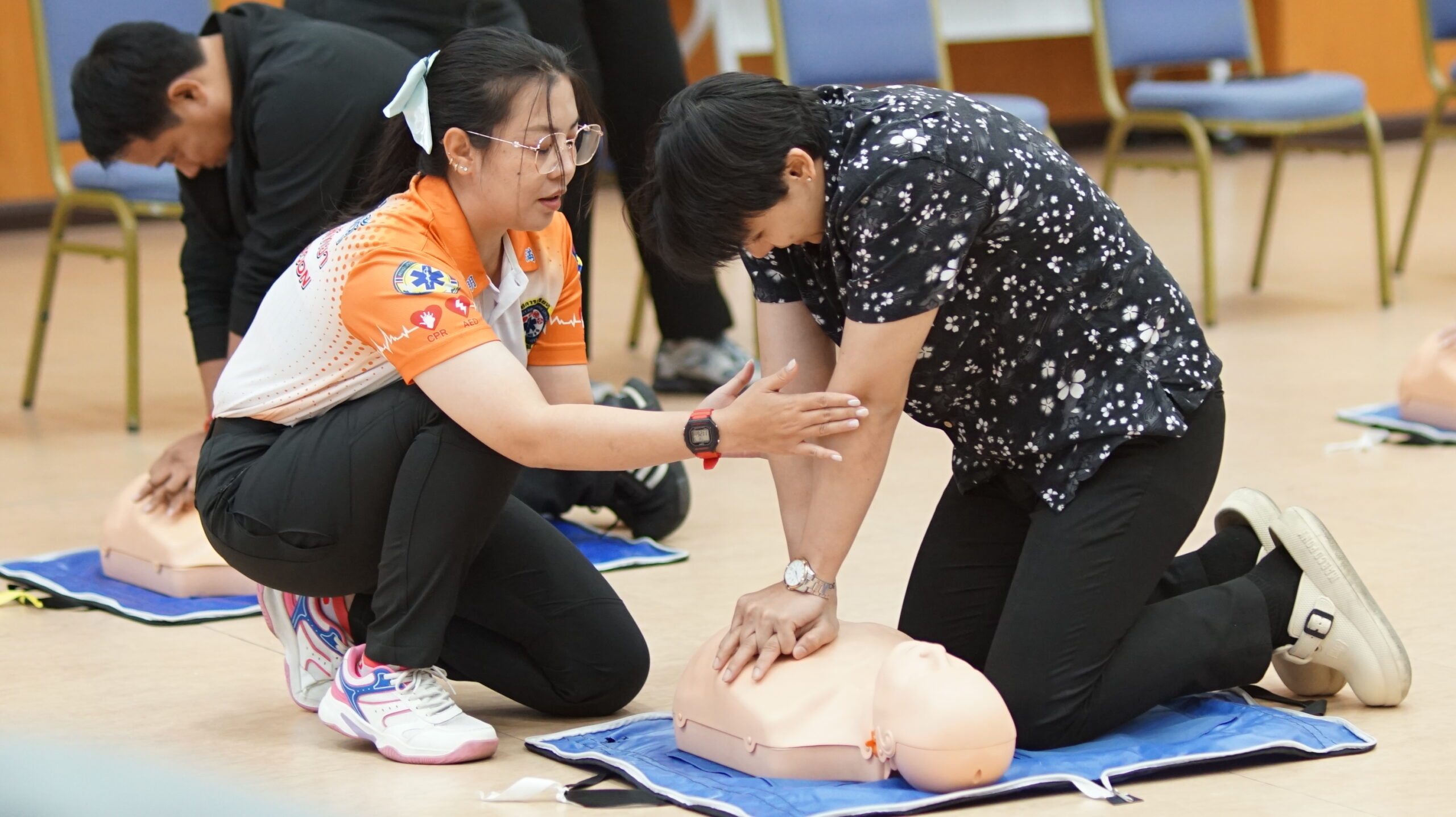
In terms of sustainable development, this initiative aligns closely with SDG 3: Good Health and Well-being, which promotes healthy lives and reduces premature mortality from non-communicable diseases and emergency health conditions. It also supports SDG 4: Quality Education by providing practical, life-saving skills through experiential learning, and contributes to SDG 8: Decent Work and Economic Growth by strengthening workplace safety and promoting a secure and supportive working environment. This program exemplifies the University’s holistic approach to personnel development, integrating professional competence, health, and safety within its institutional mission.
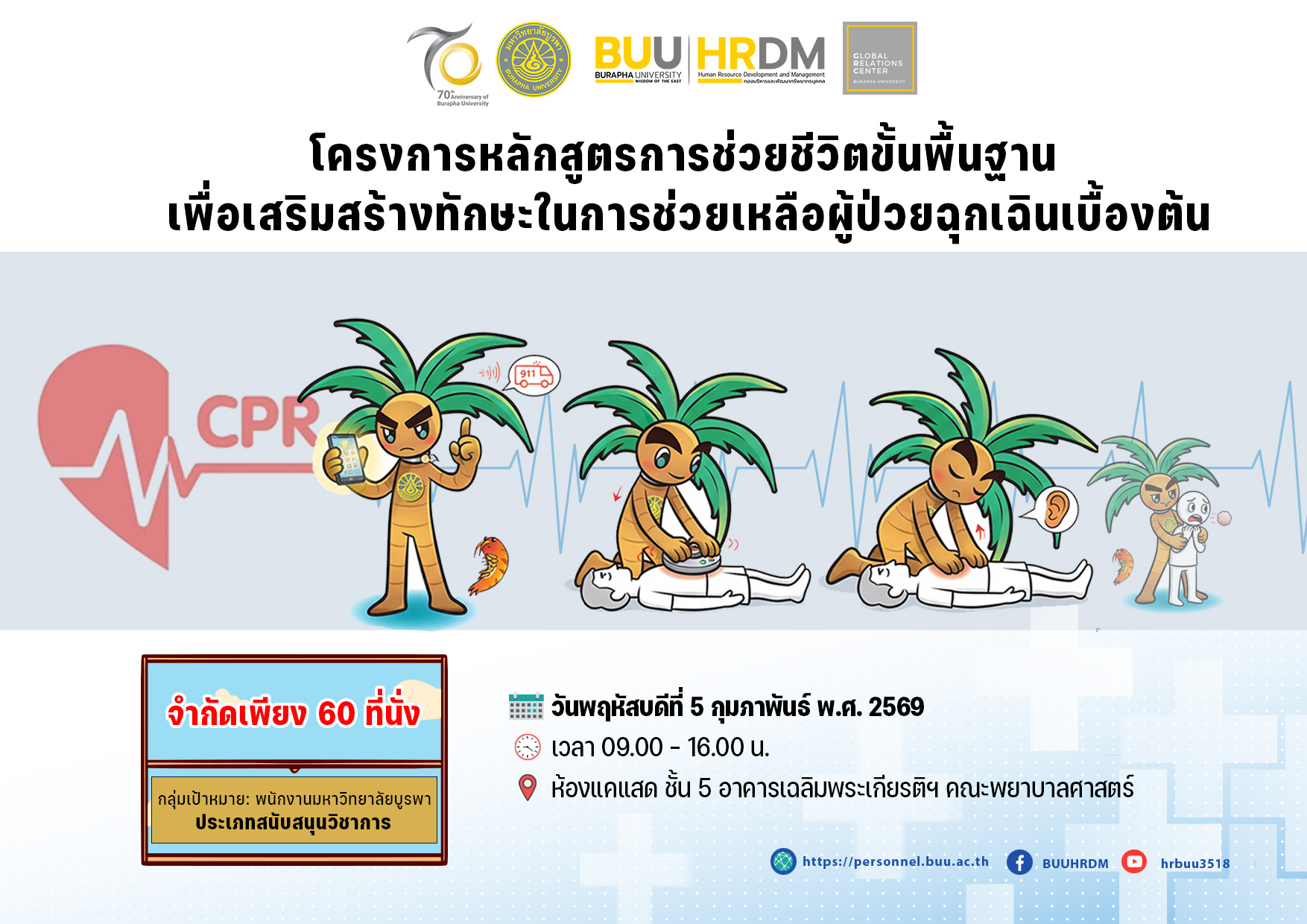
The training was held on Thursday, 5 February 2026, from 9:00 a.m. to 4:00 p.m. at Khae Saet Room, 5th Floor, Chalermphrakiat Building, Faculty of Nursing, with the aim of building a strong network of trained personnel across all units of the University to collectively foster a culture of safety, preparedness, and mutual care in a sustainable manner.